







Works by Lithuanian artists can be found at auctions around the world. Algirdas Petraitis, head of ARS VIA Art and Collectibles Auction, has put together a list of the 10 most expensive Lithuanian artworks sold at various auctions in 2023.
The list is based on the officially published results – the hammer price in euros. All artists included in the Dictionary of Lithuanian Artists were considered as Lithuanian artists while compiling the list.
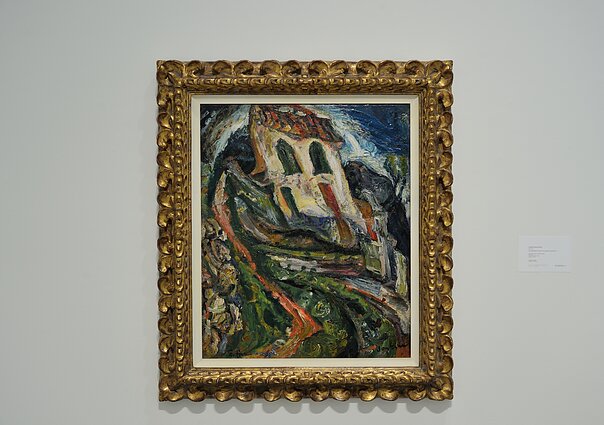
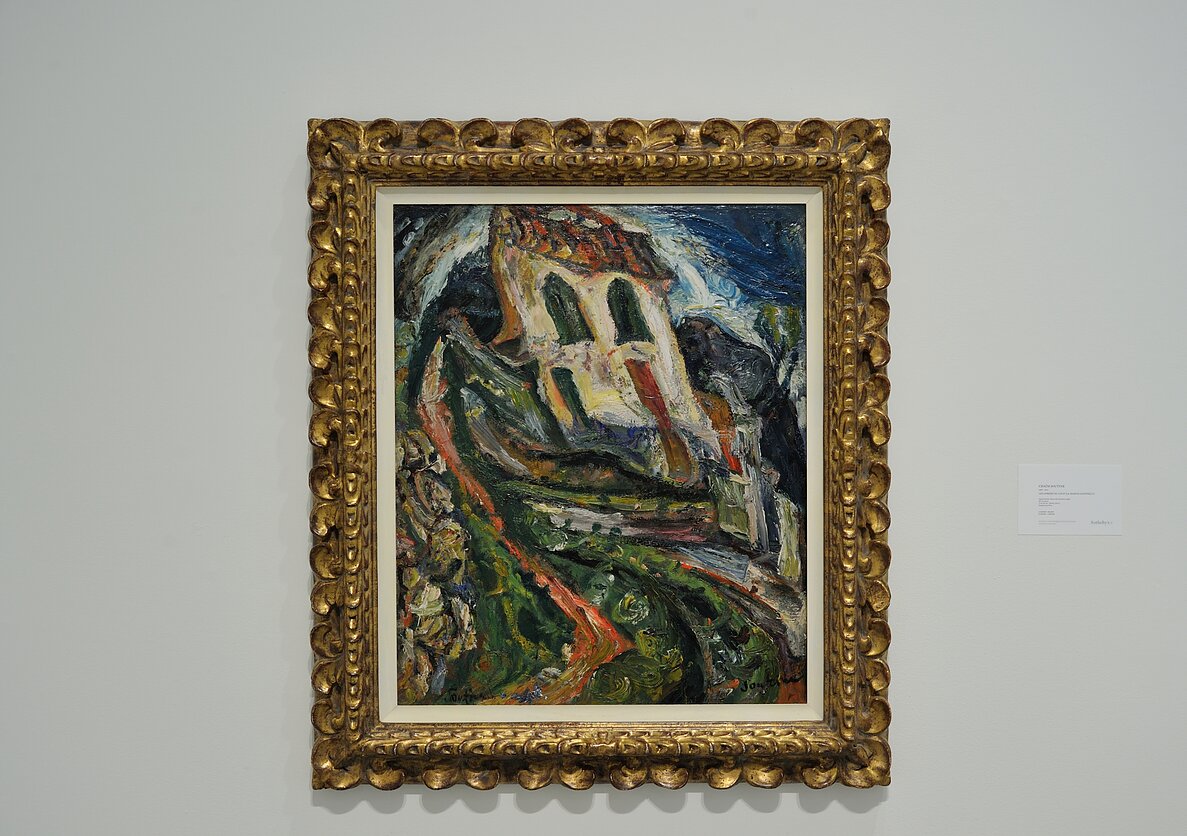
1. Chaïm Soutine’s painting “Les gorges du Loup (La maison hantée) IV” (“The Haunted House”) was sold at Sotheby’s auction on June 27 for 1,046,862 euros (1,322,536 including auction fees).
Chaïm Soutine (1893–1943) was an expressionist painter of Lithuanian Jewish origin. From 1910 to 1913 he studied in Vilnius and later emigrated to Paris.
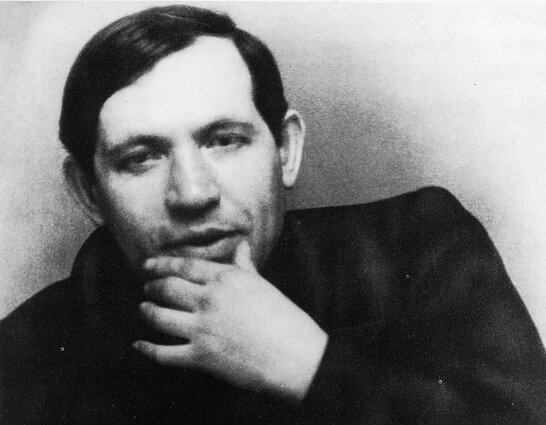
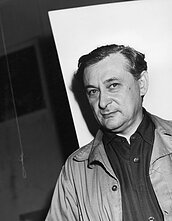
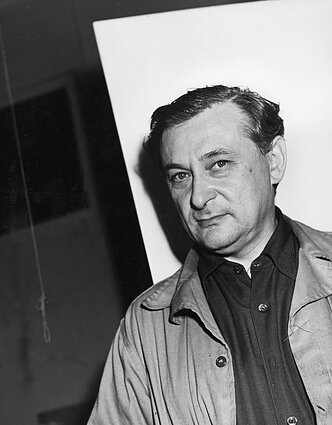
2. Jacques Lipchitz’s sculpture “Sculpture (1916)” sold for 349,501 euros (443,866 euros including auction fees) at Sotheby’s auction on November 14.
Jacques Lipchitz (real name Chaim Jacob Lipchitz, 1891–1973) was a sculptor of Lithuanian Jewish origin, a famous representative of Cubism, who was born in Lithuania’s Druskininkai and later lived and worked in France, the US, Israel, and Italy.
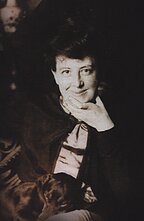
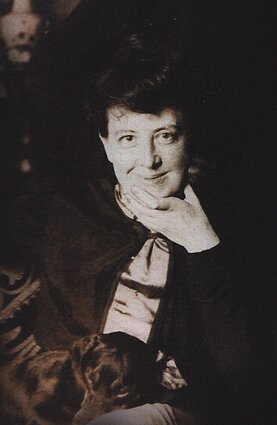
3. Marianne von Werefkin’s painting “Žaliakalnis (Kaunas)” sold at the Bonhams auction on October 19 for 86,182 euros (109,911 euros including auction fees).
Marianne von Werefkin (1860–1938) was a Russian-born painter, a representative of German Expressionism. In the 19th century, she lived in Vyžuonėliai in Lithuania’s Utena District. Until the First World War, she was in constant contact with Lithuania.
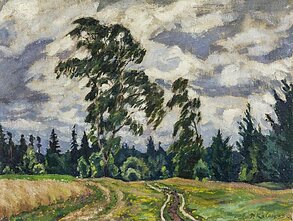
4. Petras Kalpokas’ painting “Grey Day” was sold at the ARS VIA auction on May 23 for 36,000 euros (41,400 euros including auction fees).
Petras Kalpokas (1880–1945) was a Lithuanian painter who mainly painted landscapes and portraits.
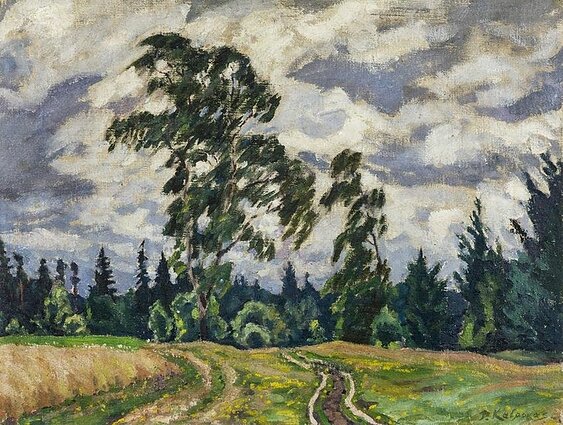
5. Stanislovas Bohušas-Sestšencevičius’ painting “The Market in a Border Town” was sold at the Desa Unicum auction on December 14 for 34,757 euros (41,708 euros including auction fees).
Stanislovas Bohušas-Sestšencevičius (1869–1927) was a painter and graphic artist. He lived in Vilnius from 1895 to 1919, where he founded a painting studio. He painted genre compositions and landscapes, characterised by realism and symbolism.
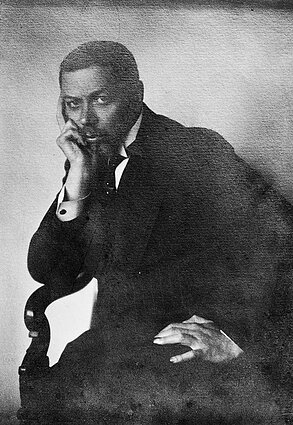
6. Ferdynand Ruszczyc’s painting “Spring Landscape” was sold at the Polswiss Art auction on March 14 for 33,984 euros (40,780 euros including auction fees).
Ferdynand Ruszczyc (1870–1936) was an artist who lived in Vilnius from 1908. He used motifs of Vilnius and its surroundings in landscapes and symbolic compositions.
7. Ludomir Sleńdziński’s painting “Woman against a Landscape Background” was sold at the Sopocki Dom auction on February 8 for 25,315 euros (30,378 euros including auction fees).
Ludomir Sleńdziński (1889–1980) was a painter and one of the most prominent representatives of the Vilnius Neoclassical School.
8. Marco Carloni’s etching “The Roman Public Visits the Ruins of Titus’ Thermae” based on Prancičkus Smuglevičius’ watercolour was sold at the Vilnius auction on June 2 for 17,000 euros (19,380 euros including auction fees)
Pranciškus Smuglevičius (1745–1807) was a painter who headed the Drawing and Painting Department at Vilnius University. In his early years, he produced drawings mainly of ancient buildings and ruins in Rome, as well as Italian landscapes). Later, he worked mainly in the historical genre, with domestic and religious compositions, creating a cycle of drawings on the history of Lithuania and Poland.
9. Kazimieras Žoromskis’ painting “Scientists” was sold for 14,500 euros (16,530 euros including auction fees) at the Vilnius auction on June 2.
Kazimieras Žoromskis (1913–2004) was a Lithuanian painter best known for his op art paintings.

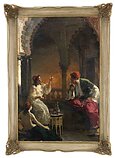
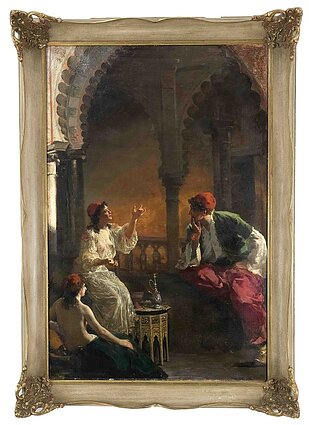
10. Kazimieras Alchimavičius’ painting “Sheherazade beim Erzählen einer Geschichte” (“Sheherazade Tells a Story”) was sold at the Historia auction on June 19 for 14,000 euros (17,780 euros including auction fees).
Kazimieras Alchimavičius (1840–1916) was a painter who studied in Vilnius. He created paintings on historical, legendary, and religious subjects, landscapes of France and Lithuania, and domestic scenes.
Local markets
An artist’s demand and value on the world market is primarily determined by their renown, noted Simona Skaisgirė, head of the Vilnius Auction.
“By their recognition as the author of global art history, by their exhibitions, work on the international market. Their demand must be international, not local,” she told LRT.lt.
According to her, the global market exists only in the segment of extremely expensive, investment and museum works. This segment represents a very small percentage of the total art market, as the main circulation of artworks takes place in local markets.
“Therefore, 99.9 percent of artists should be more interested in the local market. It is here that they are likely to find the highest demand and selling prices,” Skaisgirė said.
The head of the Vilnius auction confirms that the art market as a whole is essentially made up of many local markets, as Poles buy Polish artists’ works, French buy French, and Lithuanians buy Lithuanian.
“Naturally, artists are most appreciated, loved, and sought after in their country of origin or in the countries they were linked with creatively,” the head of the Vilnius Auction stressed.
According to her, works by famous Lithuanian artists, such as Mikalojus-Konstantinas Čiurlionis and others, would also be on the most expensive list if they appeared on the market. However, most of their works are stored in museums.

Newsletter
Every Friday morning.