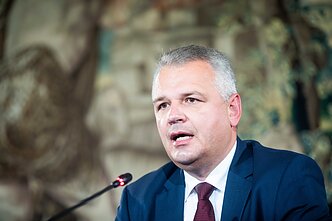












Lithuania is looking into borrowing to fund its defence, among other options, Defence Minister Arvydas Anušauskas has said.
In his words, borrowing would cost the state budget around 1 billion euros in interest over a decade if the country borrowed enough to meet the needs of its national defence system.
“There are all sorts of proposals [...], and yes, one of them is borrowing, but it would cost one billion euros over a decade to repay the debt. This amounts to the need we have now,” Anušauskas told reporters on Monday as a meeting on defence financing is taking place on the prime minister’s initiative.
“The discussion is productive because everyone sees not only the needs but also where the taxes can come from by changing them,” he said.
The need for defence funding is growing because of Lithuania’s plans to host a German brigade, to create a light infantry division by 2030, and to increase the number of young people called up for military service, Anušauskas said.
In his words, the need for funding would change if some projects were to be implemented under a public-private partnership. However, according to the existing data, an additional 400 million euros would be needed to implement the planned projects already next year.

This would bring defence funding above 3 percent of GDP, compared to the existing 2.75 percent, according to the defence minister.
The defence sector will get around 2.52 percent of GDP from the regular budget appropriations this year, and the rest will come from the bank solidarity levy that is set to expire next year.
Anušauskas said the next three to four years will bring the biggest challenge for financing the national defence system, “after which the pressure will ease”.
Politicians are also looking into the possibility of increasing the VAT, he said but refrained to comment on this in detail.
Lithuanian Prime Minister Ingrida Šimonyte on Monday is meeting with political party leaders, business representatives, and trade union officials to discuss defence funding. Šimonyte called the meeting in an effort to find a solution on how to finance national defence after the two-year windfall profit tax on banks expires.
The Defense Ministry estimates that meeting the Lithuanian national defence system’s needs would require additional funding of around 0.7 percent of GDP in the next six years and 0.4 percent in subsequent years, Šimonytė said on Monday.

Newsletter
Every Friday morning.