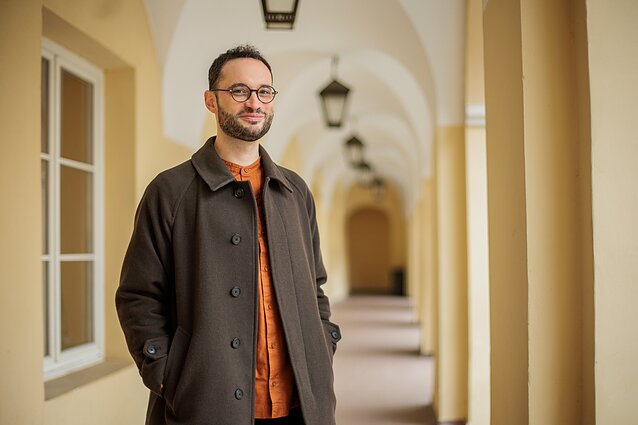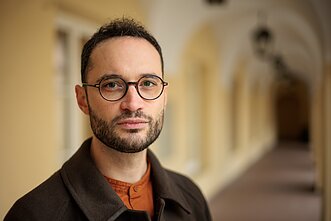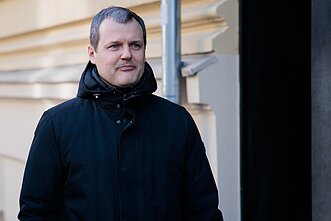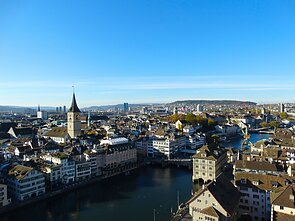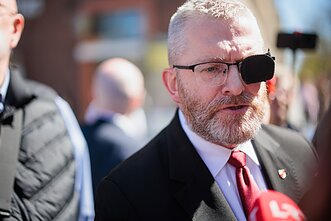












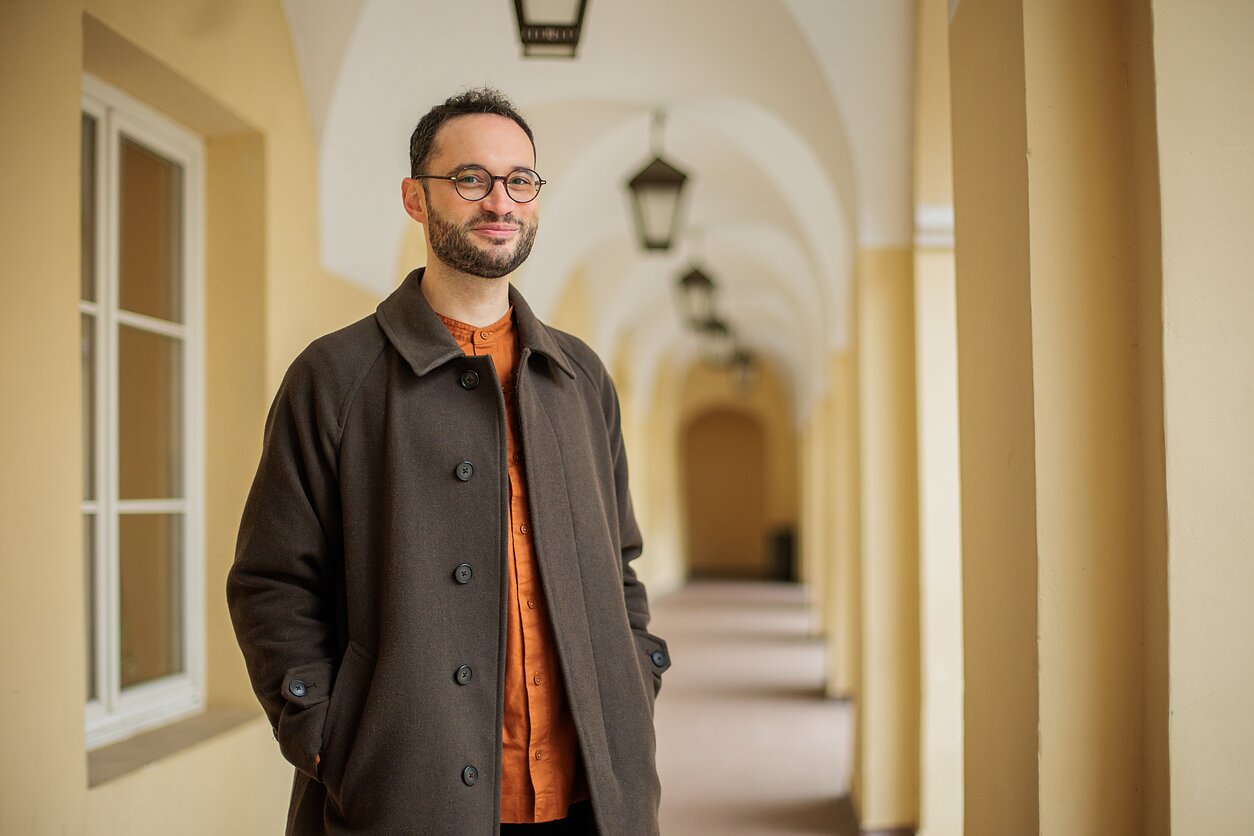
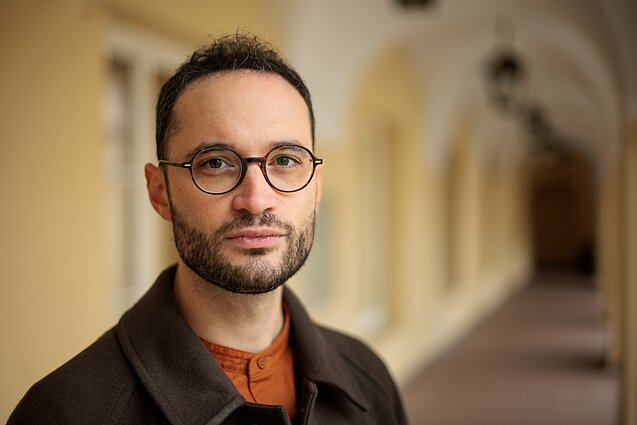
Not many Lithuanians know as much about the history of their country as Italian Giorgio Ruggeri. Born and raised in Italy, today he says he only feels like himself in Vilnius.
Giorgio has “intuitively” been interested in the history of Eastern and Northern Europe since he was a teenager. Little did he know that the love of his life would be a Lithuanian woman called Eglė and he would one day become “an Italian from Vilnius”.
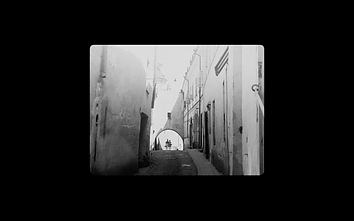
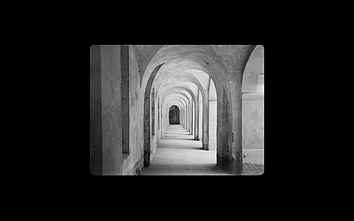
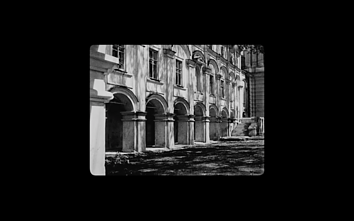
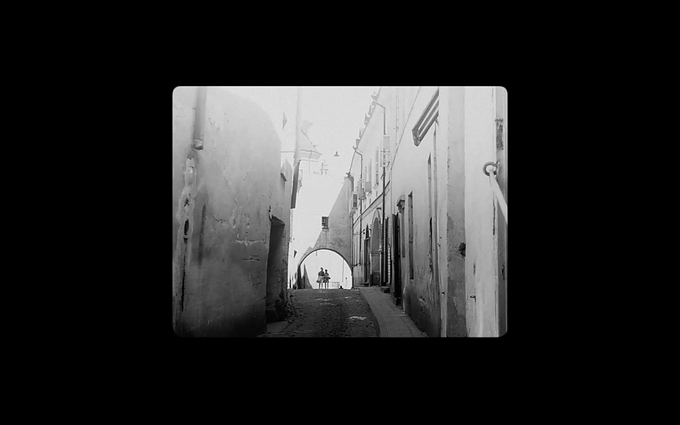
His first short film Piove a Wilno about Vilnius from the perspective of Italian journalists of the early 20th century was included in the exhibition “Vilnius, Wilno, Vilne 1918-1948. One City – Many Stories”, curated by Lithuania and Poland.
The exhibition was first shown at the National Museum in Krakow and is now open at the National Gallery of Art in Vilnius until February 4.
Giorgio, how would you introduce yourself?
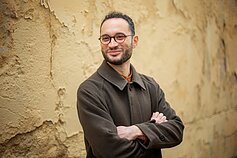
I’m a historical researcher and author of projects on historical themes. I work with different media and create hybrid/experimental narratives that bring archival material up to date and enable it to be presented to a wider audience.
What interests you most in history? When did you find your love for this discipline?
I’m most interested in the history of the 20th century, and especially in how it developed in this region, which has interested me since my early teens. I remember when I was 12 or 13 years old, I used to read a lot of books and watch a lot of films set in Eastern Europe. Although I didn’t have much knowledge of the region at that time, it already seemed very interesting, rich, and mysterious to me, like another Europe that had not yet been discovered.
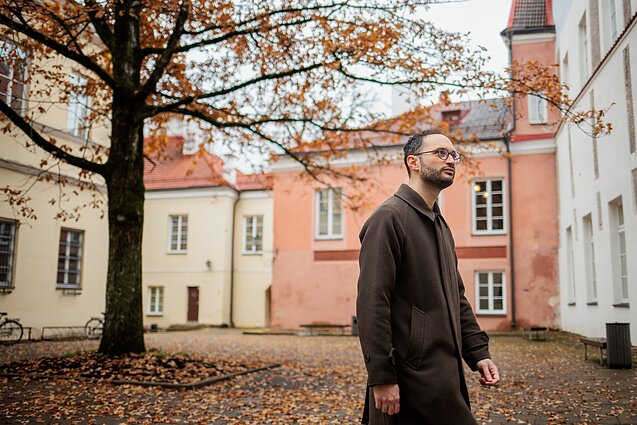
I don’t think it’s a coincidence that Eglė and I met. Of course, I fell in love with her not because she was Lithuanian. But listening to her stories about Lithuania and seeing her close relationship with nature, I got to know Lithuania even before my first visit. And a few months after my visit, I was living here.
I think it’s all part of a bigger story. I don’t know how it started; it’s just happening.
You’re from Italy, a country rich in history. But what was it about this region that interested you?
In Italy, at least when I was studying, everything was very Italo-centric, and we mainly studied our own history and the history of the other major Western European countries. Eastern Europe was just something in the background. But I felt that I wanted to know more.
My interest especially grew when I realised the great divide between ideology and history. Italians, at least at the time when I was studying, did not have much knowledge of Russia and Communism. The myth of the Russian Revolution was alive, and I even had teachers who proudly called themselves Communists.
When I started looking into the history of communism, I was shocked by what I discovered. I remember I was maybe 13 years old when I first read about the concentration camps, the deportations, and everything that the Soviet Union did. Then I decided to find out more because, in Italian books and films, Communism was usually portrayed in a very romantic way at that time.
Today, your film based on archival material is part of an exhibition at the National Gallery of Art. How did you come up with the idea to make this film?
I spent two years in Lithuania, from 2015 to 2017, and then moved to Milan. I loved Vilnius but I couldn’t find a job here, so I left. But in Milan, I started to long for Vilnius, and I realised that my identity was already intertwined with this city, and I couldn’t think of myself as Milanese.
So, I started reading books and taking a deeper interest in the history of Vilnius. [...] Before, my relationship with the city was based on my relationship with the people, the architecture, and the place itself, but not its history. As I got interested, I felt a growing connection and rational explanations for why I had felt that connection intuitively from the start.
Even during the first two years of living in Vilnius, I felt that I didn’t want to be just a tourist or a temporary resident, but I couldn’t explain why. Nowhere else in Lithuania or in the world did I feel myself, part of the place, except in Vilnius.
The more I read, the more this conviction grew. And then Eglė gave me Andrea Griffante’s book Oriente baltico. Un secolo di sguardi italiani su Lituania, Lettonia ed Estonia (Baltic East: a century of Italian views on Lithuania, Latvia, and Estonia). Griffante is an Italian historian living in Lithuania and working at the Lithuanian Institute of History.
This book is about how the Baltic countries were described, how their image was created and how it changed in the Italian press between 1918-2018.
It is a very special book, and the first part of the book, about the interwar period, was the most impressive for me. [...] The Italian journalists’ descriptions of the Baltic countries were romantic, subjective, and problematic. At that time, Italy was ruled by Mussolini’s fascist regime, and the opposition was very quiet, so most people just coexisted with the regime.
The journalists were also influenced by the ideology. Most of their opinions about the Baltic countries came from a colonial point of view, a kind of grandeur complex that saw other countries outside “old” Europe as being in a stage between being “civilised” and “still rather primitive”. At the same time, the journalists described the landscape, the people, and the cities in a very poetic way. The articles of that time were more like travel diaries than newspaper reports.
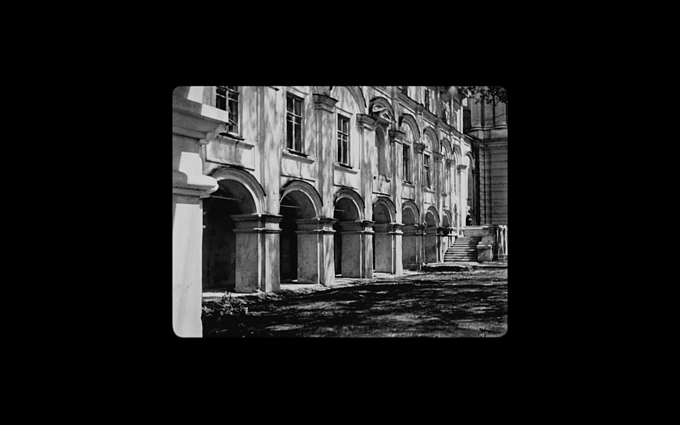
So, after reading that book, I thought that I would like to see a film about these countries from the Italian journalists’ perspective. They described coming to Lithuania as arriving in a new world. They felt like they were discovering a new continent. I realise that this sounds strange now, but it also shows the huge distance that existed between these countries at that time.
Why were the Italian journalists covering the Baltic countries?
They were usually invited to come. Many countries that emerged after the collapse of the Russian Empire and the First World War wanted to establish contacts with Western Europe and tell their people about themselves, their history, and their culture. The Vilnius question was also important.
Both the Polish and Lithuanian governments wanted to have at least some control over their image in the British, French, German, and Italian press. Italy was seen as a valuable partner by governments in Kaunas and Warsaw. On the Vilnius question, both governments wanted it to be presented from their point of view. Therefore, some journalists were influenced by Lithuanian propaganda and others by Polish propaganda, but there was no official position in Italy on this issue.
Where did you look for archive footage? Were the Italian journalists also filming?
No, they were only writing. Although at first, I really thought they must have film but I couldn’t find anything and decided to make a film based on the archival footage.
During my master’s degree in public history in Milan, I decided to return to this idea and try to find video material in other countries. I found the first footage on YouTube just after I started searching. Then I started believing in the possibility of making a film, a kind of audiovisual experience, the history of the Baltic states during the interwar period as told by Italian journalists.
In 2021, we returned to Lithuania, and I started working on this idea.
What surprised you the most in the research and filmmaking process?
Throughout the research, I felt as if I had found material about a city that no longer exists, but at the same time is very similar to the one we live in. There are many shots that could have been taken today. But at the same time, many people and cultures no longer exist.
This tension between what has survived and what hasn’t, the question of whether we can recognise the city, is perhaps what surprised me most.
And what was your impression of Vilnius when you first visited it?
It was snowing. Vilnius immediately showed its “toughest” side to me, even though it was mid-April. I was fascinated by that. I experienced at least two or three seasons in the next few days. A few days later, the snow melted, and it was so warm that I was wearing a T-shirt.
I had no expectations when I arrived, so when I saw the city, I was quite confused, just like the journalists a hundred years ago. Travelling without expectations is the best, and going to Vilnius helped me discover that my teenage intuition and hunch about a different Europe was right.
That’s why I decided to move and study here in the very first days of my visit. I wanted to get to know the country and the city of my then girlfriend. She is originally from Kaunas, but she considers herself to be a Vilnius resident. So do I. I always say that I am an Italian from Vilnius.

Newsletter
Every Friday morning.