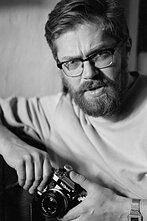





Photographer Tadas Kazakevičius has opened an exhibition about Lithuania's Siberian children deportees at the European Parliament, aiming to shed light on Soviet repressions. According to the photographer, the abduction of children has again become a painful reality following Russia's invasion of Ukraine.
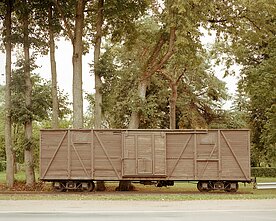
"When I was reading a book Siberian Haiku to my daughter Adelė, we heard the phrase 'orphan train'. [...] So it was natural that the orphan train, recurring in my mind, led me to this topic," said Kazakevičius.
The so-called orphan train was the result of an expedition organised in 1946 when more than 250 orphans were brought back to their homeland. The parents of the orphans had died in exile or were too weak to care for them.
Among the 40,000 Lithuanians deported to Siberia in 1948, around a quarter were children.
According to Kazakevičius, the hardest part was finding and speaking to the survivors.
"I naturally chose to take them to places that are no longer so lovely to them because they are places from which they were exiled. In many cases, these are the places of their old homes," said Kazakevičius.

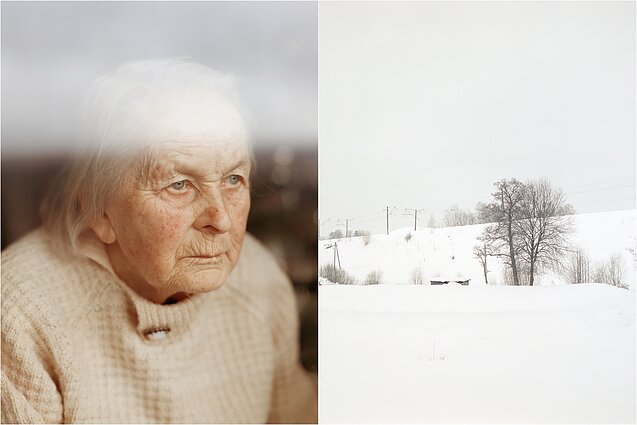
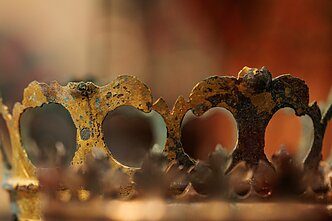
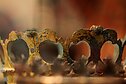
The exhibition Pernykštis Sniegas (The Snows of Yesteryear) tells the stories of 10 deportees. Part of the exhibition is made up of artefacts kept by the survivors, including letters from their parents.
"We remember the cold, we remember that we didn't have much to eat. My sister and I were alone in the dugout, and when my mother came out, she would lock us in and we would shout: We want to eat, there is nothing to eat," recalled Algimantas Stakėnas, one of the children deportees.
And although the stories are tragic, the exhibition is light-hearted, according to Kazakevičius.
"I found them all alive, healthy, often doing very great things, at the age of eighty, ninety-something," he added.
The exhibition became relevant again due to Russia's abduction of children from Ukraine.
"It's being played out today with exactly the same aims – to remove a person's identity and nationality," said Kazakevičius.

Newsletter
Every Friday morning.