














Jobs with EU institutions used to be particularly coveted by Lithuanians, offering secure career opportunities and wages several times above those of national public servants. But things are changing.
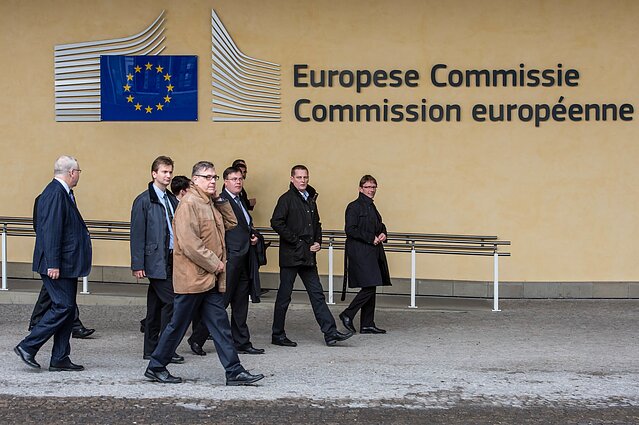
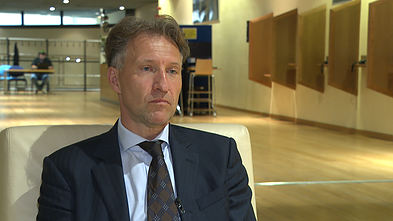
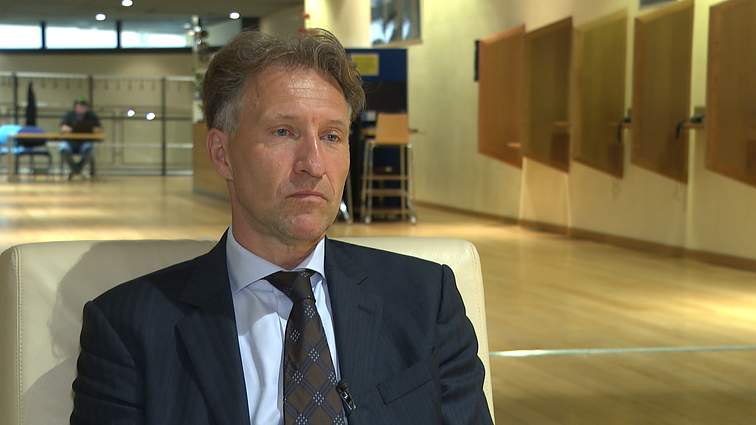
Over 700 Lithuanians work in EU institutions, 450 of them in the European Commission. One of them is Kęstutis Sadauskas, deputy head of the Maritime and Fisheries Service at the Commission, one of the highest-ranking Lithuanian non-politicians in the apparatus.
“It is a huge responsibility, but at the same time on a completely different scale. The opportunity is tempting and sometimes frightening,” says Sadauskas when asked what attracted him to work for the EU institutions.
In a career spanning over a decade, Sadauskas has worked at the Commission’s representation in Lithuania and headed the cabinet of Lithuania’s former Commissioner Algirdas Šemeta. The ability to change roles without leaving the institution is often cited as a major advantage of working for the EU.
Sadauskas says that the international working environment in Brussels is fascinating, as is the opportunity to influence European policy and take decisions that will affect all 27 EU countries.
The European Commission employs 32 000 people. They come from all over Europe, although you are most likely to Belgians who number around 4,500, or 13.9 percent of the workforce.
They are followed by Italians (4,350 workers, 13.5 percent) and the French (3,270 workers, 10.1 percent). Lithuanians represent 1.4 percent of the Commission’s staff – more than twice their share in the total EU population (0.63 percent).
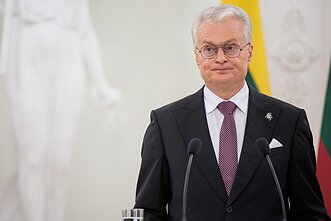
This is a good indicator, says Lithuanian Ambassador to the EU Arnoldas Pranckevičius. However, there is a lack of Lithuanians in some positions.
“We look good in the top positions, but we are still under-represented at the middle level, ie among heads of department and deputy heads,” says Pranckevičius.

While EU staff work for the whole of Europe and cannot exclusively promote their home country’s interests, it is no secret that the more a country’s citizens work for the EU institutions, the more influential it is perceived to be.
Officials share behind-the-scenes information with governments and can help with some national issues.
Unappealing wages, tough selection
Finding people willing and able to work in EU institutions is becoming increasingly difficult in Lithuania, Pranckevičius says.
“We have been in the EU for almost 20 years and it is nothing new, people are used to it. Perhaps in Lithuania itself, career opportunities in the private and public sector are quite different from what they were 20 years ago,” says Pranckevičius.
Finding people to work in Brussels is even harder in rich EU countries like Scandinavia or the Netherlands.

Young professionals just starting out in the EU institutions can expect a salary of just over 2,000 euros a month.
As they move up the career ladder, salaries increase and senior officials earn solid salaries, although often not as high as politicians, such as EU commissioners and MEPs.
Karolina Štelmokaitė, who works in the European Parliament, says she would like to see more Lithuanians in the EU’s backrooms.
“Lithuanians may not have much confidence in themselves, they think that somewhere in Brussels the job is not for me. The selection system is difficult and requires a lot of perseverance and sometimes luck,” says Štelmokaitė.

Often the first step into the corridors of Brussels is a special test, which is said to filter out reject as many as 80 percent of applicants.
“It’s not impossible, it’s not easy. I have taken these tests myself, and they are not easy, but you can pass them. The main rule is that you have to prepare for them, you can’t go in unprepared,” says Sadauskas, who works for the European Commission.
However, according to Štelmokaitė, Lithuanian diplomacy could also do more to find new people and to help existing ones move up the career ladder.
“The Lithuanian institutions could certainly do much more to make use of the people who are already working in the Commission, Council, Parliament or other institutions, and help them move up the ranks,” says Štelmokaitė.
Diplomats say they have paid more attention in recent years to attracting people to Brussels. Especially with the Lithuanian EU presidency planned for 2027, when much more human resources will be needed.

Newsletter
Every Friday morning.