




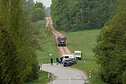





Buses remain the only form of public transport between Lithuania and Belarus.
Although Vilnius and Minsk are less than 200 kilometres apart, they are separated by a political and ideological barrier that arose in the last couple of years. Train services have not been resumed since they stopped during the Covid pandemic, Lithuanian airspace is closed to Belarusian aircraft, and Vilnius has stopped issuing visas to Belarusian citizens.
This does not mean, however, that there is no traffic between the two cities. Minsk-bound buses are leaving from Vilnius Bus Station every hour – and travellers are queuing to get a seat.
One of them is Tatyana. She lives in France and catching a bus from Vilnius is the only way for her to reach her homeland.
“There are no flights from France. Because of the political events, all the planes have been cancelled and this is affecting people’s moods a lot. Unfortunately, we did not choose this,” she tells LRT TV.

“I’m just going to take a break, I’m from Germany,” says another man at the bus station. He has friends in Belarus and is not afraid to travel to the country that has become a pariah.
The Lithuanian government, for example, has a recommendation in place for its citizens not to travel to Belarus.
However, the Vilnius-Minsk route is served by both Lithuanian and Belarusian carriers.
Arūnas Indrašius, director of the passenger transport company Toks, says it used to serve more people travelling for shopping, but now the clients are mainly migrant workers and holidaymakers.

Moreover, he adds, Toks buses used to travel all the way to Kyiv, but now this route terminates in Minsk.
Ordinary passengers say train rides to Minsk used to be much more comfortable than bus trips. “Now we spend a long time at the border,” says a woman.
Another passenger says that while the ride itself is comfortable enough, times spent at the border crossing are getting longer each time.
According to customs spokeswoman Irmina Frolova-Milašienė, buses are given priority at checkpoints.
“Checks may be longer because of the sanctions imposed not so long ago on Russia and Belarus,” she says. “Also because of the NATO meeting in Vilnius, the checks are certainly more thorough.”

Newsletter
Every Friday morning.