













Dozens of Lithuanians went to fight in Ukraine; many more joined the aid effort. Like Ukrainian refugees and those who survived repressions, some of them will likely face psychological issues when they return home. What can you do if you suspect yourself, or your loved ones, suffering from trauma?
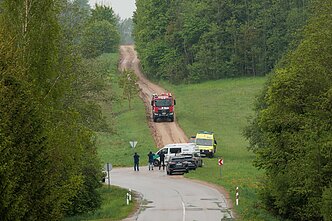
Recently, an incident shocked the Belarusian exile community in Lithuania. Two young men who fought in Ukraine since March last year returned to Vilnius. Although details remain murky, one of them was found dead with a stab wound; his friend has been detained, suspected of murder. The pre-trial investigation is ongoing, with the suspect claiming he had merely attempted to stop his friend's suicide.
The tragedy highlighted a problem that has been widespread in Ukraine since the start of the war in Donbas in 2014 – veterans often do not seek, nor find, help to deal with traumatic experiences. Often, untreated trauma leads to violence or suicide.
Although not on the comparable scale, Lithuania is now likely to face the same problem. Already, the Lithuanian Psychological Association is eyeing to increase the number of professionals able to work with post-traumatic stress disorder (PTSD).
"In 2022, more than 65 people were given help due to events related to the war in Ukraine," the Lithuanian Ministry of Health told LRT.lt.
However, PTSD is not necessarily related to war experiences – it can occur after any other long- or short-term traumatic event, such as a car crash, sexual violence, or after witnessing a devastating event. If the person does not seek help and the traumatic reactions persist, it can develop into PTSD.

"If the difficulties persist for more than a few months, post-traumatic stress disorder may be suspected," according to Help Yourself (Pagalba Sau), a website administered by the Health Ministry. "It’s important to note that difficulties may only begin to appear months after the traumatic event, or they may diminish and then intensify again."
You can read about possible symptoms of PTSD here.
Since January, free assistance is available to all Lithuanian residents insured with compulsory health insurance. Following a request from LRT, the Ministry of Health has provided a detailed list of support available:
– People covered by compulsory health insurance can go to mental health centres (contact details here). The services are free of charge and no referral is required.
– A psychiatrist or psychotherapist may prescribe psychotherapy sessions to patients during a consultation (a referral is required for these services). Thirty sessions are funded by the state and services are provided on a general basis, without distinguishing between a specific illness or cause of illness.
– If a person is diagnosed with post-traumatic stress disorder, acute stress reaction, or adjustment disorders, 10 days of secondary inpatient medical rehabilitation services are available.
– If there is also a significant impairment in functioning, behaviour and social adaptation, psychosocial rehabilitation is provided on an inpatient and outpatient basis. Inpatient psychosocial rehabilitation lasts up to 15 days, providing 50 hours of rehabilitation services; outpatient short-term psychosocial rehabilitation lasts up to 40 calendar days (12 visits), providing 50 hours of rehabilitation services; outpatient long-term psychosocial rehabilitation lasts up to nine months, with an additional 25 visits, providing up to 100 hours of rehabilitation services.

– People who have been involved in hostilities can also find support through the emotional support lines (link here). These hotlines are run by volunteers and mental health professionals.
– There is also a national mental health website, Pagalbasau.lt, where you can find information on various disorders, ways to help yourself and your loved ones, and how and where to get professional support.
– Public Health Offices provide individual or group services to promote the psychological well-being and mental health of the population. Details of the Vilnius Health Office can be found here, list of all health offices in the country is available here.
The provided services include group sessions on stress management, conflict management, self-help group sessions, individual meetings (up to six sessions, which can be provided anonymously on request) or group psychological counselling.
– You can contact the 1815 hotline, which can also dispatch mobile teams in the event of a suicide, sudden death, disappearance, accident causing death or injury, violent crime, or other traumatic cases. If necessary, five additional crisis counselling sessions can be provided remotely.

Newsletter
Every Friday morning.