
















After a year and a half of rising prices, Lithuania is reporting a tiny deflation in May. In addition to giving a reprieve from last year’s double-digit inflation, this, says an adviser to the prime minister, could be a harbinger of a coming recession and the country should prepare for rising unemployment.
In May, according to preliminary statistics, prices fell in Lithuania for the first time since November 2021. The monthly deflation rate was recorded at 0.1 percent.
“We have been waiting for months for such a drop in the consumer price index, and now it has actually happened, at least according to preliminary data,” says Indrė Genytė-Pikčienė, chief economist at INVL Asset Management.
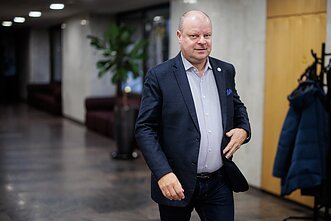
Vaidas Navickas, an adviser to Prime Minister Ingrida Šimonytė, says the deflation could be a sign that the economy is slowing down, with unemployment starting to go up.
As a result, he believes, businesses need to offer jobs to locals first, rather than bringing in migrants from third countries.

“There is a list of occupations in short supply, which includes 175 job descriptions, from trolleybus drivers to plasterers. And this list allows bringing in the first 36,000 migrant workers from third countries without first seeing if there are people in Lithuania that could fill those jobs. Now, with the economy slowing down and unemployment rising, [...] perhaps we should start thinking about reviewing these regulations,” says Navickas.
According to the prime minister’s adviser, last year saw record-breaking immigration into the country. About half of the arrivals, of course, were refugees from Ukraine, but there were also many migrant workers from other countries.
Navickas believes the parliament should review the law that loosened the movement of labour into Lithuania last year.
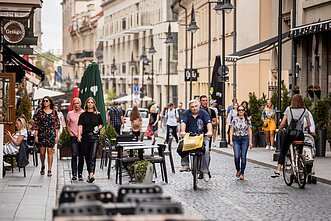
Businesses, meanwhile, vehemently disagree. Café and restaurant owners say they are struggling to find seasonal labour, with students reluctant to spend the summer waiting tables and regular workers asking for vacation. Workers are sought wherever possible.
“It is taking us six months to bring in one chef. He is from Dubai, but of Indian origin, so now he has to go back to India, and it took half a year to complete paperwork. We have an incredible shortage of restaurant administrators, waiters, chambermaids, dishwashers,” says Dalia Remeikaitė, managing director of the Romantic Hotel and Restaurant.

Recently loosened regulation allows to complete procedures for bringing in foreign workers within three months rather than six or seven. Walking back would ruin any progress achieved, businesses insist.
“It’s absurd, it is totally absurd,” says Gediminas Balnis, the head of Amber Food. “If we tighten up the procedure, we will certainly have a big hole after a while.”
According to him, restaurants need to start preparing for the following summer season in autumn.
“And if unemployment indeed rises, we will gladly accept Lithuanians,” he assures, adding that hiring foreigners adds a lot of inconvenience, such as teaching them Lithuanian.
The prime minister’s adviser Navickas disagrees.
“According to the Employment Service, there are 157,000 unemployed people in Lithuania. I struggle to understand what the problem is, why can’t these people work in the catering sector. Is it a lack of qualifications or is it the wages, which are too low to attract these people?” he says.
Economist Genytė-Pikčienė says there is no need for Lithuania to restrict the immigration of low-skilled workers. Even during the economic boom, there were thousands of registered unemployed, which shows that retraining is the real problem.

Newsletter
Every Friday morning.