











While Vilnius is excited to host the NATO summit this July, and welcome a plethora of luminaries the city has rarely seen, it will involve some inconveniences for the residents, from cancelled flights to cut public services.
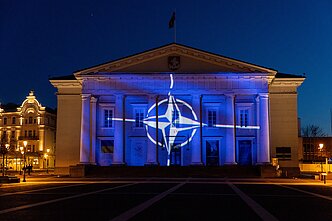
The NATO summit will take place on July 11-12. Leaders of NATO member states and partners will descend on the city, with the guest list including US President Joe Biden and Ukraine’s leader Volodymyr Zelensky.
Because of the summit, getting around Vilnius will be difficult. Public transport, and most likely all other traffic, will not be allowed in the Old Town and around the Litexpo Exhibition Centre, the venue of the meeting.
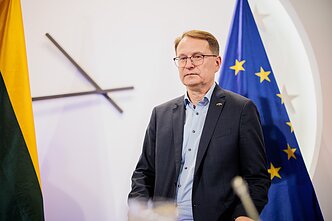
“Public transport will certainly be available and if people need to travel, we will recommend public transport as the first choice, but naturally some routes will be changed and adapted to the needs of the NATO meeting,” says Adomas Bužinskas, deputy director of the Vilnius City Administration.

According to him, car traffic will be stopped during the arrival and departure of delegations, so it will be better to use public transport than one’s own car.
Exactly where the members of the delegations will be travelling and staying is not disclosed, but the guests are likely to choose the best hotels in the city.
“Of course, the delegations will stay in high-class hotels, four and five stars, though there are good new three-star hotels. But probably everything will be occupied because there will be a lot of guests, delegates, journalists. I think that adjacent towns will also receive delegations and guests,” says Evalda Šiškauskienė, president of the Association of Hotels and Restaurants.
Further reading
At the moment, bars in Vilnius are still preparing for the summer season, but they are already thinking about the work to be done during the NATO event, which will fall on Tuesday and Wednesday.
“It’s the middle of the week, when we usually work until midnight or 1-2am. But if there is a demand, we will work until five,” says Raimundas Pranka, president of the Night Economy Association Nakta.
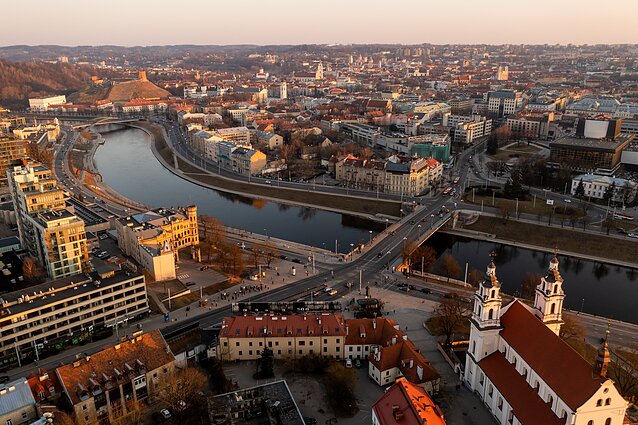
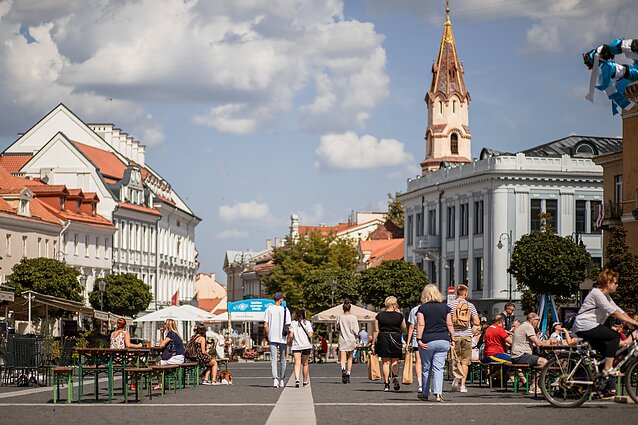
While local entrepreneurs are excited about the opportunities, there may be challenges, as most of the bars, restaurants and hotels are located in the Old Town, which may be completely sealed off during the summit.
“The first issue is logistics – how to supply ourselves with goods and products? The second thing is what to do with events, as some are planned in advance, others are preparing events for the summit. We’ll see,” says Pranka.
“We will coordinate with suppliers when they can deliver food. There will be a lot of guests, we want the food to be fresh and good and we want the restaurants to be full of people,” adds Šiškauskienė, noting that people working in the Old Town may have to walk to work.
Medical services will also be restricted during the summit, with ambulance teams put on alert and ready to attend to summit delegations, if anything happens.
Further reading
“The ambulances have been given a task, they will have to be on duty from Kaunas to Vilnius within a certain perimeter, on duty where events are taking place,” says Jurgita Grebenkovienė, chancellor of the Ministry of Health.
Emergency services will be provided as normal on July, 11-12 July, she adds, but elective medical procedures may have to be postponed at some hospitals in Vilnius.

“The reason for this is that there will be a very large number of guests in Vilnius and we have to take into account the risk of health problems for a larger number of participants,” according to Grebenkovienė.
The general advice from the authorities to the residents of the Lithuanian capital is to stay away from the Old Town if possible during the NATO summit or leave the city altogether.
“If possible, choose to work from home. We recommend renting a country house if possible and plan a short holiday,” suggests Bužinskas of Vilnius City Administration.
However, it’s best not to travel by plane – Vilnius will become a no-fly zone on July 11-12. Vilnius Airport estimates that the measures will affect around 100 flights.
Further reading

Newsletter
Every Friday morning.