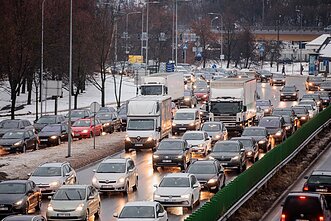










The combined morning and evening rush hours have increased in the past years and are now lasting over 2.5 hours, according to the Vilnius transport administrator JUDU. However, the congestion has not reached the pre-pandemic levels of 2019.
JUDU analysed last year’s traffic flow at 65 busiest intersections.
“We can see that the flow has not yet returned to the pre-pandemic high of 2019,” said Virginija Uzdanavičiūtė, head of analytics at JUDU.
In 2022, traffic flows were 1 percent higher than in 2021, 7 percent higher than in 2020, but 6 percent lower than in 2019.
The traffic is less intense than before the pandemic because many people now work under a hybrid work model, only going to the office a few days a week, according to Uzdanavičiūtė.
Last year, the highest traffic flows in Vilnius were recorded on Wednesdays. There is also a new tendency for the evening rush hour to start earlier.
“On weekdays, traffic starts to pick up as early as 14:00, with the first congestion usually starting at 14:40 or 15:20,” Uzdanavičiūtė said.
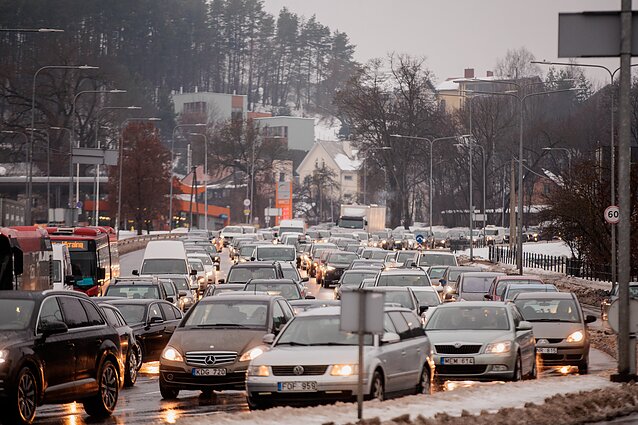
In 2022, the duration of the morning rush hour increased by 5 percent, compared to 2021, while the duration of the evening rush hour was only 1 percent longer.
Last year, the rush hour lasted 67 minutes on average in the morning and 97 minutes in the evening.
However, congestion was already much worse in January and February this year compared to the same month in 2022.
In January this year, the duration of the morning rush hour increased by 23 percent and that of the evening rush hours – by 25 percent. In February, the duration of the morning and evening rush hours increased by 18 and 20 percent, respectively.
More than 887.4 million vehicles crossed the 65 busiest intersections last year, compared to 939.1 million in 2019, according to JUDU.

Newsletter
Every Friday morning.