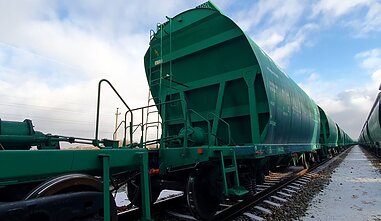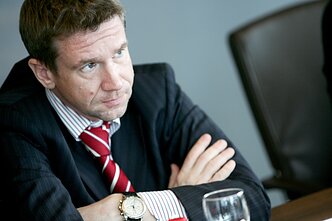













The European Commission is preparing to lift sanctions on Belarusian fertiliser producers, Igor Udovickij, the majority shareholder of Birių Kroviniu Terminalas (Bulk Cargo Terminal), a stevedoring company in Klaipėda Port that used to handle Belaruskali cargo, said this week.
“The plan is to lift sanctions on all operations, including financial ones, which should ensure the unimpeded export of products from these companies,” Udovickij said in a Facebook post.
He quoted an EC working document, claiming that the regulation was initiated by countries such as Belgium, the Netherlands, France, Italy, and Portugal and is overseen by the office of EC President Ursula von der Leyen.
Udovickij shared the document in question with LRT.lt journalists, but its authenticity could not be established.
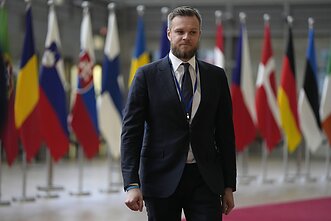
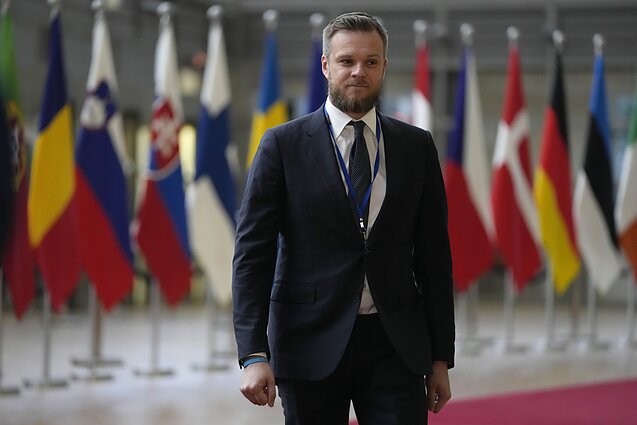
Lithuanian Foreign Minister Gabrielius Landsbergis confirmed that there are initiatives related to Belarusian fertiliser shipments in the EU.

“There are talks. [...] Our position is absolutely clear – exceptions are sometimes unavoidable in order to have a consensus in Europe, but some are too big to justify the very existence of sanctions,” he said.
“No fertilisers should be transported or traded either through the EU or through Lithuania. We have succeeded in achieving this, and we believe that this is a significant political decision. We are therefore categorically opposed to its revocation or any concessions,” Landsbergis added.
But according to the minister, the easing or removal of sanctions on Belarusian fertilisers is not the subject of the current EU discussions.
“I would like to believe that Mr Udovickij does not have better contacts in the EC than the Lithuanian government,” Landsbergis said.
According to information available to LRT.lt, the initiative proposed by a group of countries, including Belgium, Portugal and Spain, is to transfer the exemption included in the package of sanctions against Russia, adopted in December, to the package of sanctions against Belarus.
This exemption provides that if a cargo of fertilisers is being transported to third countries to be used in growing food, it should be allowed to cross the EU. The initiators argue that the transfer is being proposed due to food shortages in third countries.
However, sources familiar with the information said that even if this exception was transferred, Belarusian fertiliser would still not be able to pass through the EU because it is sanctioned as a product.
In the case of the Russian sanctions, they are only imposed on persons involved in the fertiliser business and not on the commodity.
Landsbergis confirmed this information but said the current discussions in the EU still worry Lithuania.
“This would open the door to further discussion, to court proceedings. The person would have the possibility to say that he is transporting personal property or something like that. We believe that once the door is opened, the next step is a progressive easing of sanctions,” he explained.

Newsletter
Every Friday morning.