











Vilnius is looking to elect a new mayor, but not necessarily one who is new to the post. In Sunday’s elections, the residents of the capital city will get to pick from 16 candidates.
The incumbent Remigijus Šimašius is the longest-serving municipal leader but has decided not to seek another term in office.
Artūras Zuokas, who has been mayor of Vilnius three times before, and who has lost the last two elections to Šimašius in the second round, will take advantage of this.
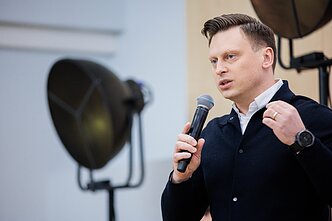
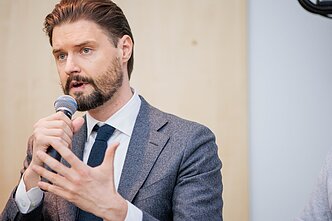
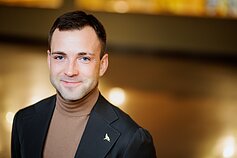
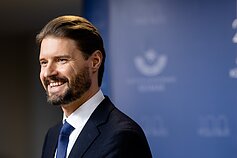
Other candidates with a realistic shot, according to opinion polls, include conservative Valdas Benkunskas, who has served as Šimašius’ vice mayor, independent MP Mykolas Majauskas, who has been recently kicked out of the conservatives, and Tomas Vytautas Raskevičius, an openly gay MP of the liberal Freedom Party.
All, except Zuokas, represent – or used to represent – the national conservative-liberal ruling coalition .
“Zuokas is an option for people who don’t want to vote for the right but cannot find any significant figure on the other side of the spectrum, among opposition parties,” says political analyst Mažvydas Jastramskis.
In total, 16 candidates are running for the mayorship of Vilnius.
According to Jastramskis, the most likely outcome is that either Majauskas or Benkunskas will face Zuokas in the runoff – and beat him.
“Faced with a rival who is more fresh, who is viewed less negatively and more neutrally, he [Zuokas] will be at a disadvantage,” says the associate professor at Vilnius University’s Institute of International Relations and Political Science.

Overlapping problems
The mayoral candidates agree on the main problems of the Lithuanian capital: the poor state of roads and streets, traffic jams, outdated public transport, and the lack of access to kindergartens.
“We are probably all talking about the same things: traffic jams, road infrastructure, queues for kindergartens,” says Tadas Armonas, a 43-year-old entrepreneur from Antakalnis.
He says none of the candidates are to his liking, although he still plans to vote.
“We have to go, even if we don’t have a candidate,” he says.
Most of the other people BNS met on the streets of Vilnius in mid-February also said they were still undecided about which candidate to vote for.
In the public sphere, this year’s local elections are described as exceptionally dull, but Jastramskis disagrees with judging politics by the standards of entertainment.
“I would prefer not to apply to political elections the criteria that we apply when we watch a TV series, go to a concert or read a detective story,” says the political scientist. “What is lacking is content, basic public policy, what the candidates would do if they became mayor and what their priorities are in managing the city.”
Trams and gondolas
Drivers of cars stuck in traffic jams on Ukmergės and Geležinio Vilko streets can see the face of 55-year-old Zuokas beaming from billboards.
“For a Vilnius without traffic jams,” proclaims the slogan of the politician of the Freedom and Justice party.
The politician has more detailed plans how to achieve this.
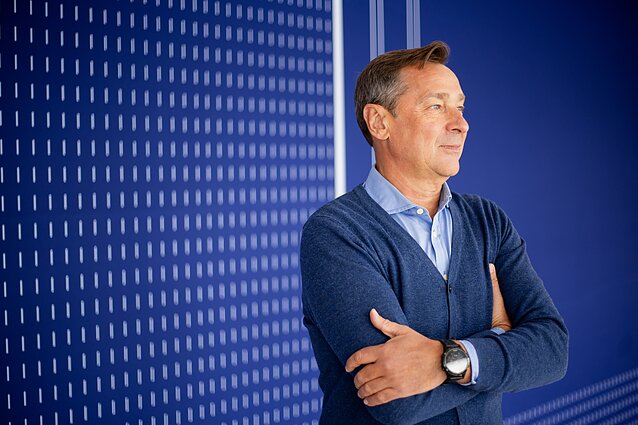
“One of the measures we envisage is the construction of smaller schools and kindergartens in residential neighbourhoods, so that you don’t have to go to the city centre, so that they are nearby. This would reduce congestion and make the city more attractive at the same time,” says Zuokas.
He also promises to develop a “15-minute multifunctional city concept”, which would allow everyone to walk to key education, health and leisure facilities within a quarter of an hour.
“We are returning to the project of building a modern tram line Santariškės-Geležinkelio Stotis. Three lines in total,” is his other proposal.
He also says he will seek to build an “aerial gondola line”, or a cable car, connecting the national stadium in Šeškinė (adjacent to the Akropolis shopping mall) and Europos Aikštė (Europe Square) on Konstitucijos Avenue.
“We are very clear in our programme about what we can do, and what we start, someone will finish,” says Zuokas.
The “Vilnius without traffic jams" programme also envisages entry or transit charges for cars entering the Old Town, underground car parking, and new educational institutions.
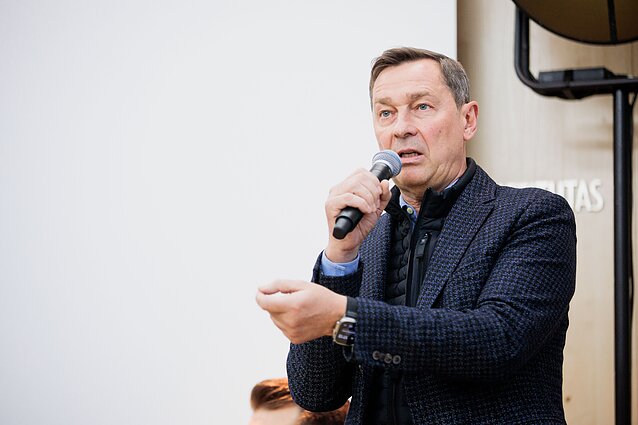
“We plan to have yellow buses in our schools and to have primary school students collected by school transport. That way we give a normal morning to parents and we can push back the start of classes from eight to nine o’clock, thus getting out of that rush hour,” the candidate says.
Zuokas, however, is a controversial figure, not least because he was convicted of bribery, even though he insists he was sentenced for “good deeds”.
Zuokas served as Vilnius mayor from 2000 to 2003, when he was re-elected after a break of a few months and served until 2007. The politician served as mayor again in 2011-2015.
‘It’s not the mayor who should be colourful, but the city’
Valdas Benkunskas, a 38-year-old lawyer and currently a deputy mayor, is the candidate of the conservative Homeland Union-Lithuanian Christian Democrats (TS-LKD). He calls himself “mayor without circuses”.
He points out that the biggest problem in Vilnius is the poor location of public services, such as kindergartens and polyclinics.

“This leads to problems such as traffic congestion, long commuting times,” Benkunkas says.
He also focuses on the lack of pedestrian paths and bike lanes, and promises to repair most of the 230 streets that are in poor condition.
“We have the money to do it, we just need leadership and control,” says the conservative politician.
Mocking his political opponent, Benkunskas says he does not promise “any subways, gondolas and other utopian things” and instead promises to invest in the renewal of traditional public transport.
However, like Zuokas, he plans to build new educational facilities – both schools and kindergartens - in residential areas of the city. Benkunskas also promises incentives to attract more medics to Vilnius.

“My idea is to have a film studio in Vilnius, a film hub, we have a really popular outdoor location where world-class films and TV series are shot. We need a big hub to extend the seasons. Vilnius could become an exceptional city for the development of the film industry,” says Benkunskas.
Criticised by opponents and commentators for his bland personality, Benkuskas retorts he’d be a “mayor without circuses” and uses a phrase that has become his slogan: “It is not the mayor who should be colourful, but the city.”
“A good city leader who gets things done and makes the city stand out is the ultimate goal. At the same time, the mayor will probably become both charismatic and colourful,” says the current deputy mayor in charge of energy and sport.
Conservative rebel
Mykolas Majauskas, who was expelled from the ruling TS-LKD a few months ago, was the last candidate to announce his bid for the Vilnius mayorship.
He put himself up for election immediately after leaving the conservatives and, if elected, would not have a group backing him in the Council.
“At the moment I see a city that is drowning in traffic jams, and this is one of the city’s biggest problems. Every citizen spends a good hour a day in traffic jams. [...] Therefore, our priority is to allocate resources to tackle congestion by stopping the narrowing of streets and redirecting funds to street repairs,” says the candidate.

Like most other candidates, Majauskas promises to increase the capacity of intersections, invest in public transport and bring public services closer to where people live.
Another point in his platform sees promoting physical activity among kids.
“Today, about 20 percent of children take part in sports, and we need to aim for 70-80 percent of children to be physically active. To achieve this, it is important to introduce a physical activity funding package that follows the child,” Majauskas says, adding the programme would cost up to 15 million euros a year.
To tackle the challenges of energy, the candidate intends to instal solar panels on apartment blocks and municipal buildings.
“I feel that I have the experience and knowledge to manage the city and make it one of the most liveable cities,” says Majauskas. “Vilnius is my hometown and I see great potential in it.”

As soon as he started fundraising for the elections, the 41-year-old politician was criticised by his former colleagues and opponents because some of the donors were related to the catering sector. Majauskas voted for a favourable tax break – something the government opposed – which is what triggered his break with the TS-LKD.
The Special Investigation Service, which examined the situation, refused to open an investigation, finding no evidence of corruption, and the Central Electoral Commission also found no violations of the Electoral Code.
Continuing the Šimašius agenda
According to polls, the chances of the Freedom Party’s candidate, MP Tomas Vytautas Raskevčius, to make it to the second round are much lower than those of the three rivals above.
However, the liberals hope to beat the odds, as they did in the 2020 parliamentary elections, when they won 11 seats and entered the ruling coalition.

Determined to qualify for the second round and defeat Zuokas, Raskevičius promises to continue his predecessor’s programme of “narrowing of the streets” – expanding cycling lanes and sidewalks at the expense of car lanes – that has been the main target of his opponents. Raskevičius himself calls the initiative “humanising the streets”.
“I don’t think that the vision of mobility in Vilnius can be developed in a sustainable way by increasing the amount of concrete, asphalt and petrol, because this is adding more fuel to the fire. The wider they [streets] are, the more cars there will be, the more congestion there will be and the more pollution there will be,” says the politician.
He stresses the need to create more alternatives to car transport and make it easier to get around on foot, by bike or public transport.
“Today, every second trip in the city is made by car, and by 2030 our goal is to bring it down to one in three,” he says.
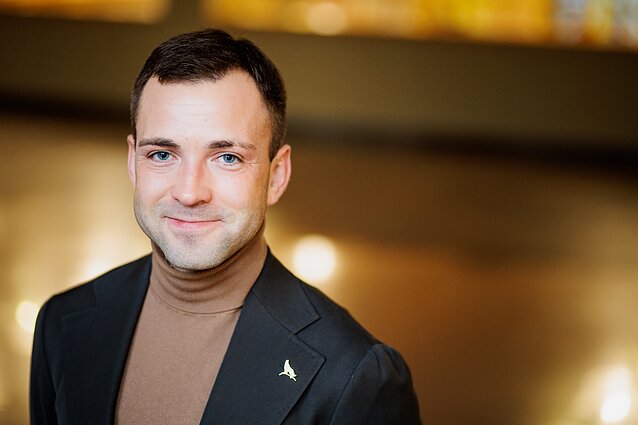
In order to facilitate access to kindergartens, Raskevičius intends to promote private providers and introduce a flat basket system, giving each child an allowance to be used either in public or private kindergarten.
Although he promises to continue the work started by his fellow Freedom Party member Šimašius, Raskevičius has some criticism for his potential predecessor.
“The first thing is clear communication of the benefits of the changes to the citizens. [...] I have found this lacking from the current mayor and the administration,” says Raskevičius.

Newsletter
Every Friday morning.