






The past year was marked by Russia's full-scale invasion of Ukraine and the fallout that followed. Amid the turmoil, there were also other events that had an impact nationwide, including laws on narcotics, consent, gay rights, and more. Here are some of the key milestones from the past 12 months.
JANUARY
January 7. Lithuania announces it had paid compensation to Abu Zubaydah, one of the organisers of the 9/11 attacks in the US. The settlement, awarded by the European Court of Human Rights, was paid out for Zubaydah's unlawful imprisonment in the alleged Central Intelligence Agency (CIA) prison near Vilnius.
January 18. Benefiting the Polish community, the parliament allows using “x” and “w” letters to spell the names of Lithuanian citizens. The letters, used commonly in the names of the Polish minority, do not exist in the Lithuanian alphabet.
January 21. Lithuania announced it will hand over Stinger anti-aircraft missiles to Ukraine.

January 27. The European Union appeals to the World Trade Organization (WTO) against China's sanctions against Lithuania over Taiwan.
January 29. A new party, the Union of Democrats "For Lithuania", is founded with Saulius Skvernelis, a former prime minister, as its leader.
FEBRUARY
February 11. The Lithuanian Hydrometeorological Service says that climate change has caused the average air temperature in the country to warm by 1.2 degrees.
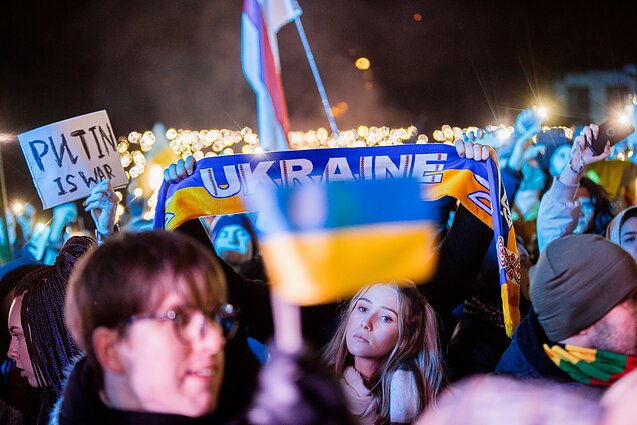
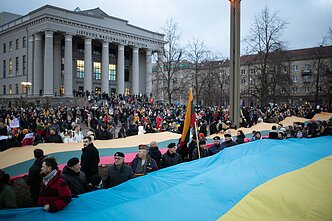
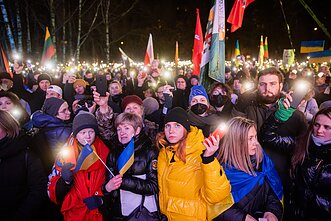
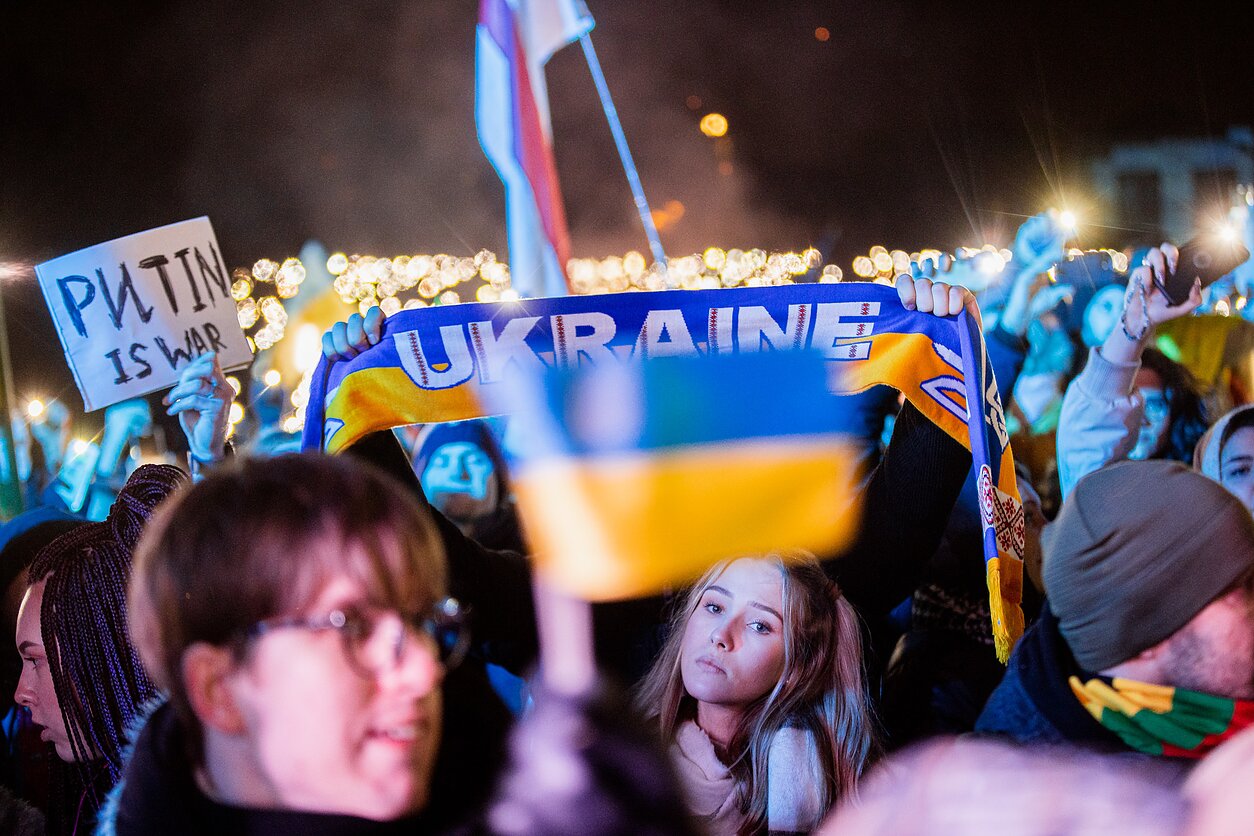
February 24. For the first time, President Gitanas Nausėda imposes a nationwide state of emergency following Russia’s invasion of Ukraine. The first solidarity rally is held in Vilnius.

MARCH
March 9. Lithuania’s anti-corruption watchdog announces a pre-trial investigation into allegations of bribery against Vilius Šiliauskas, the director of the Kaunas City Municipality Administration. He allegedly took a bribe of 140,000 euros, the highest on record.
March 29. The famous Serbian performance artist Marina Abramović arrives in Kaunas to open an exhibition and give a lecture as part of the European Capital of Culture programme.
APRIL
April 1. Prosecutor General Nida Grunskienė opens a probe into child trafficking in connection with 43 children brought to Lithuania from Ukraine.
April 2. Lithuania stops all Russian gas imports.
April 3. Lithuanian and Ukrainian media report on the murder of Mantas Kvedaravičius, a 45-year-old film director, during the Russian siege of Mariupol, Ukraine.
April 4. All face mask rules are lifted.
April 4. Multinational and Russia-based tech companies are no longer allowed to relocate to Lithuania.
April 4. Lithuania expels the Russian ambassador and closes the Russian consulate in Klaipėda. A few days later, Lithuania recalls its ambassador to Moscow, Eitvydas Bajarūnas. In response, Russia closes the Lithuanian consulate in St Petersburg.

April 5. Šarūnas Matijošaitis, CEO of Vičiūnai Group, one of Lithuania’s largest food production companies, says it will withdraw from Russia within three to four months. This was not done by the end of the year.
April 11. Prime Minister Ingrida Šimonytė visits Ukraine for the first time since the start of the war. Two days later, President Gitanas Nausėda also visits Kyiv.
April 15. Three Lithuanian Orthodox clergymen are dismissed from their posts for criticising Russia's invasion of Ukraine. The Lithuanian Orthodox Church announces it would seek independence from Moscow.
April 19. The Seimas bans the public display of symbols associated with Russia’s war against Ukraine, including the letter Z.
April 19. The Vilnius Regional Court acquits the defendants in the MG Baltic political corruption case, the largest corruption investigation in Lithuania’s history.
April 19. Culture Minister Simonas Kairys signs a decree giving the country's municipalities a free hand to remove Soviet monuments.
April 20. Lithuania's government lifts the so-called emergency situation, a legal regime declared over Covid-19. It had been in place for more than two years and expired on May 1.
April 20. In its annual report, Lithuania’s intelligence service, the VSD, says Russia does not pose a direct military threat to Lithuania. VSD also says Belarusian officers had intercepted the phone data of Lithuanian border guards during the migration crisis and have used it for blackmail.

MAY
May 1. In one of Lithuania’s landmark projects, the gas pipeline (GIPL) with Poland becomes operational.
May 2. Following legal changes, homosexual people are de facto allowed to become blood donors.
May 6. The Lithuanian Court of Appeal upholds the six-year prison sentence of Algirdas Paleckias, convicted of spying for Russia.
May 10. The Seimas unanimously recognises Russian actions in Ukraine as genocide and Russia as a terrorist state.
May 12. The Seimas approves a plan to compensate for electricity and gas prices, with a budget of 570 million euros.
May 26. The Seimas adopts two alternatives to regulate the relationship between same-sex couples, but the opponents counter with another bill. Both drafts are still pending in parliament.
JUNE
June 7. Lithuanian President Gitanas Nausėda and German Chancellor Olaf Scholz issue a communiqué stating that "Germany is ready to lead a robust and combat-ready brigade in Lithuania to deter and defend against Russian aggression". The document eventually sparks a political dispute in Lithuania over Germany’s actual commitments expressed in the declaration.
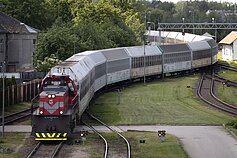
June 17. Lithuania suspends the transit of sanctioned Russian goods to the exclave of Kaliningrad, citing EU sanctions. A few weeks later, after the Commission publishes its guidelines, rail transit resumes under stricter conditions.
June 28. The Seimas approves proposals to make small quantities of cannabis an administrative rather than a criminal offence. The amendments are not yet adopted following further discussions in parliament.
June 30. The Seimas recognises Vytautas Landsbergis as the first president of restored Lithuania.

JULY
July 7. The government approves the transfer of a Bayraktar drone to Ukraine. It was purchased following a public fundraising initiative by public activist Andrius Tapinas but was later gifted by the Turkish manufacturer.
July 12. Some 35 percent of Lithuanian students fail the maths exam.
July 13. For the first time, a woman is appointed head of a battalion in the Armed Forces. Major Jurgita Savickaitė took command of the Communications and Information Systems Battalion.
July 15. The leaders of parliamentary parties sign a new defence agreement at the Seimas. It aims to maintain defence funding of at least 2.5 percent of GDP and increase the number of conscripts.
AUGUST
August 1. The prosecutor's office announces a probe into the International Good Neighbourhood Forum, founded by Algirdas Paleckis, who was convicted of spying for Russia Two further investigations follow.
August 10. President Gitanas Nausėda removes ice skaters Margarita Drobiazko and Povilas Vanagas, who live in Russia, from the list of state honours recipients after their performance in Sochi.
August 29. Lithuania completes building a barrier on its border with Belarus.
SEPTEMBER
September 1. Following his death, Vilnius City District Court dismissed a civil case against Mikhail Gorbachev over the January 13 Soviet crackdown.
September 19. The Baltic States and Poland close their borders to Russian citizens. Exemptions apply to diplomats, dissidents, transport company workers, and family members of European Union citizens.
September 26. The Lithuanian Russian Theatre adopts a new name in response to Russian aggression – Vilnius Old Theatre.

OCTOBER
October 3. Lithuania expels the Russian chargé d'affaires Sergey Ryabokon. In response, Moscow expels Virginija Umbrasienė, head of the Lithuanian Embassy in Moscow.
October 4. Law enforcement officials detain Lithuanian citizen Mantas Danielis, suspected of spying for Belarus.
October 10: Annual inflation in Lithuania reaches 24.1 percent, the highest since 1996.
NOVEMBER
November 3. Belarusian media reports that Yelena Cimbalist, a teacher with Lithuanian citizenship, has been detained on charges of "extremism".
November 7. Lithuania opens a trade mission in Taiwan.
November 19. The US State Department authorises Lithuania to purchase eight HIMARS systems for an estimated cost of $495 million. The contract between Lithuania and the US was signed on December 15, becoming the largest arms purchase in Lithuania’s history.

November 22. The Seimas adopts the 2023 state budget.
November 24. The Seimas bans free transparent plastic bags from July 2023.
November 26. Kaunas wraps up its European Capital of Culture 2022 programme.
DECEMBER
December 5. An open-ended strike by public transport workers begins in Vilnius to demand better conditions and higher wages. The industrial action ends on December 22 after the municipal company reaches an agreement with the trade union.
December 6. The 2022 Freedom Prize is awarded to President of Ukraine Volodymyr Zelensky.
December 9. Vilnius begins removing Soviet monuments at the Antakalnis Cemetery.

Newsletter
Every Friday morning.