















As Lithuania marks All Saints’ day on November 1 and All Souls’ day on November 2, people flock to the cemeteries to visit the graves of their relatives and loved ones. However, for some, dealing with death is an everyday life. In an interview with LRT.lt, Juozas Čiplys, head of Vilnius funeral home Ligamis, explains how the deceased are prepared for burial.
How long does it take to prepare the body for burial?
Physically, it takes between one and three hours, depending on the physique of the body, the procedures required (for example, whether it needs to be embalmed), and the situation, as more time is needed after accidents involving head and face injuries.
How is the deceased prepared for the wake?
There are several options. Firstly, embalming can be carried out if a longer wake is planned. This procedure is carried out by introducing special agents into the body to slow down the decomposition process. This may be followed by suctioning of fluids from the stomach or abdomen if necessary. Then, the traditional washing, combing, trimming of nails and beard, dressing and make-up take place.
What clothes and make-up are used – normal or special ones?
Men’s suits are ordinary. Women’s clothing is special for funerals – there are classic funeral dresses. Both everyday make-up and special products for restoration are used.
Which bodies are the most difficult to prepare for their last journey?
It’s always hardest to work with children’s funerals. Thank God, they are very rare.

Do the relatives of the deceased have any unusual requests?
Most of the clients are rational, and their requests are usually simple and normal, if I may say so. But there are clients who, either out of pain or desperation or simply because they have a different understanding of funerals, start asking for something unusual.
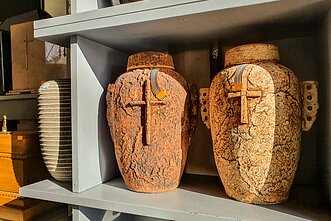
For example, when cremating, they ask for the ashes to be divided into two parts because the deceased person’s children are going to bury one urn in Lithuania and the other somewhere else. Or the relatives don’t recognise the deceased and say that this is not the right person. Then, we have to help them identify the deceased using photos, like detectives.
Does a dead person’s appearance change?
Under normal conditions, it doesn’t change so much as to be unrecognisable. For example, if a person lives in a nursing home, his or her appearance changes somewhat in six months or a year. So, if relatives don’t recognise the deceased, you can assume that they haven’t visited him or her for a long time.
Is it true that dead people’s nails continue to grow for some time?
I haven’t investigated this myth myself, but I’ve read the findings of a scientific study. It found that after death, a person’s skin dries out and begins to shrink, so the nails appear to continue to grow.
Working with the dead may seem unusual. Are people surprised by what you do?
I’ve been running this business for many years, but I haven’t met anyone who was surprised by my work.

Such a job might change one’s attitude towards death. How do you feel about it?
This is a philosophical, maybe even religious, question. The attitude towards death depends on each person’s worldview. For some, it may seem like the end of everything, while for others, it might be the discovery of a new world. I try to refrain from generalisations.
What are the most challenging days or responsibilities at your work?
Every funeral is important to us, so I cannot single out any day. The greatest responsibility falls on the shoulders of the morgue workers, who prepare the body for the wake, and the gravediggers, who have to lower the coffin smoothly into the grave. On the other hand, the administrative staff also have a big responsibility because they must listen to the client’s expectations and fulfil them. The entire company must run like a Swiss watch.
You face death every day. How do you avoid the difficult emotions involved?
I think you just get used to it. When we talk to the staff, sometimes it seems much more difficult to work in a hospice or a retirement home than in the funeral business.
Does the realisation that you are mortal change your attitude to life?
I think it depends on a person’s awareness. I think we should all be aware of that, but most people live as if they were immortal.

Newsletter
Every Friday morning.