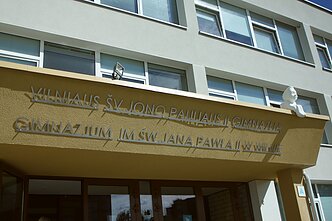








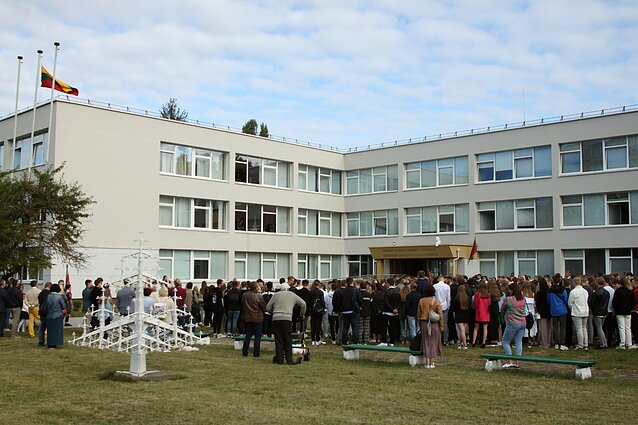
The Polish St John Paul II Gymnasium in Vilnius was ranked among the 10 best high schools in Lithuania. What could other schools learn from it?
The integration of national minorities has long been a debatable issue in the Baltic states. Experts agree that the integration process starts in school.
For example, Latvia is preparing for a new education reform, which will start phasing out minority schools as of next academic year. All educational institutions in the country, which has a significant Russian minority, will have to teach only in Latvian. The initiators of the reform say it is the only way to ensure the full integration.
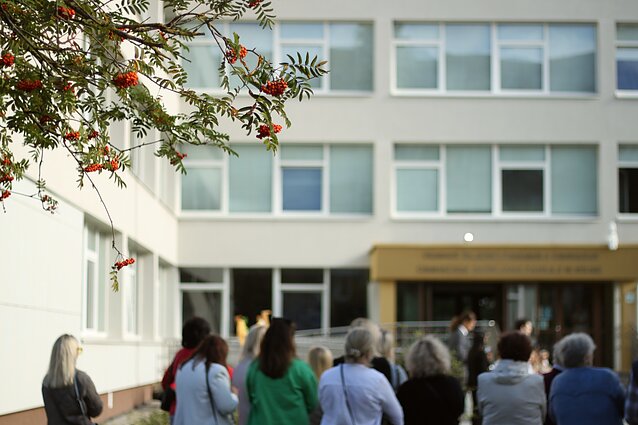
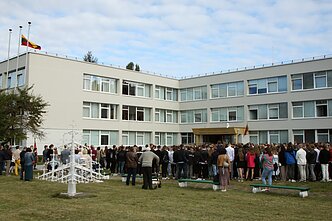
But in Lithuania, the minority Polish school is among the best in the country. The magazine Reitingai has ranked Vilnius St John Paul II Gymnasium 9th among the non-selective Lithuanian high schools. In 2021, the school was ranked 40th.
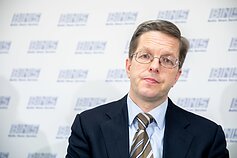
The Polish school is among the leaders in students’ achievements in chemistry, physics, and computer science – the subject where Lithuanian schools struggle to perform, according to Gintaras Sarafinas, editor-in-chief of the Reitingai magazine.

According to him, Lithuanian language achievements in the Polish school are also surprising: “Some Lithuanian schools have some catching up to do to achieve such results.”
Fostering Polish culture
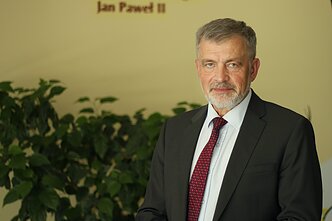
According to the school’s headmaster Adam Blaškevič, teaching quality is highly valued at St John Paul II Gymnasium. It is also important that experienced teachers are willing to work with students after lessons, he says.
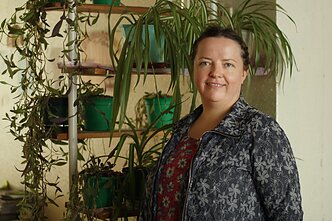
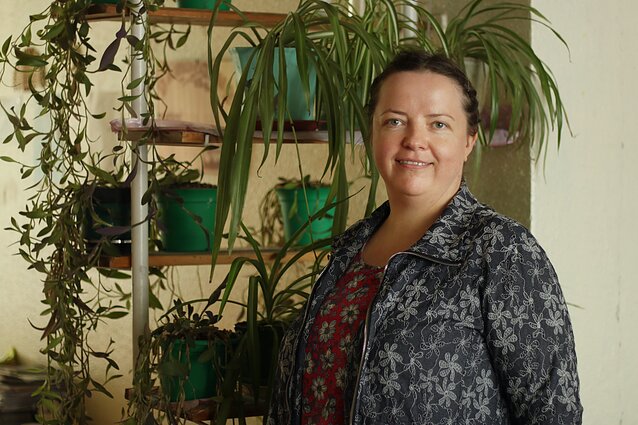
For example, Audronė Kuisytė-Zubkaitienė, a Lithuanian language teacher, organises a film club at the school. According to her, the extracurricular activities aim to integrate both Polish and Lithuanian cultures.
“If the Lithuanian teachers organise events, they are in Lithuanian, but we also aim for integration,” she said. “For example, we organise events where both Lithuanian and Polish are spoken. As such, we get to know Polish culture and students get to know Lithuanian culture better.”
“The other thing is that the students realise that nobody is trying to alienate them from their own nation,” the teacher added.
The school’s headmaster Blaškevič notes that not only the extracurricular activities but also cooperation with the Lithuanian schools help students to achieve better results.
“We organise competitions and participate in competitions organised by other friendly schools. Maybe this also brings some synergy and an additional result, as we don’t stay in our own circle,” he said.
However, the headmaster notes that the school is facing the challenge of ageing staff. Although the school has enough teachers for this academic year, it will be looking for younger specialists next year.
“The situation is the same as in all Lithuanian schools. The percentage of young people who choose pedagogical studies among Poles is probably the same as among Lithuanians. In general, they don’t choose it very often,” Blaškevič said.
Optimal size
Editor-in-chief of the Reitingai magazine Sarafinas points out that Vilnius St. John Paul II Gymnasium is performing well because of its optimal size. It has 433 students and can attract the best teacher in Vilnius.
“Both Vilnius District and Šalčininkai District municipalities have chosen a different tactic – many small schools. There are some schools with only 20 pupils. With so few pupils, you cannot hire good teachers, as you cannot pay high salaries,” Sarafinas said.
According to him, a significant number of St. John Paul II Gymnasium graduates get state-funded places at Lithuanian higher education institutions or go to study abroad. There are other minority schools in Lithuanian districts the graduates of which have not received state-funded places for several years, the expert said.
Right conditions for integration
When it comes to minority schools, politicians often stress the issue of integration. However, the headmaster of Vilnius St. John II Gymnasium stresses that integration can only happen under the right conditions.
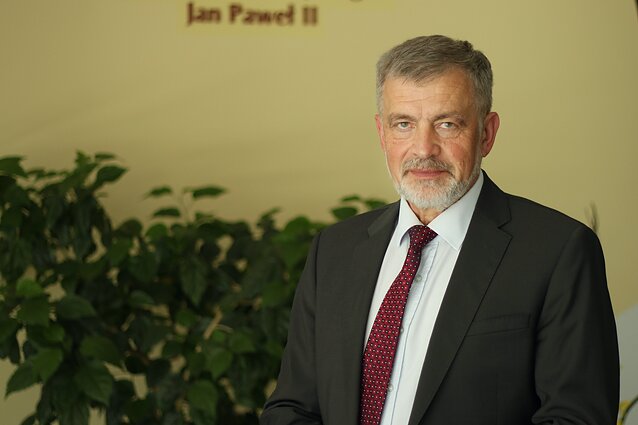
According to Blaškevič, minority schools that are far away from big cities are in a more difficult situation because they must spend more money to organise trips for their students.
“It is easy for us to talk – we get on a trolleybus and go to any event in Vilnius. This is an advantage,” he said.
“If we plan integration, it is not good. It must happen naturally. The conditions must be in place for it to happen,” the headmaster added.

Newsletter
Every Friday morning.