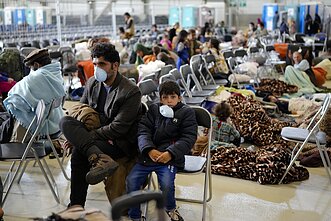











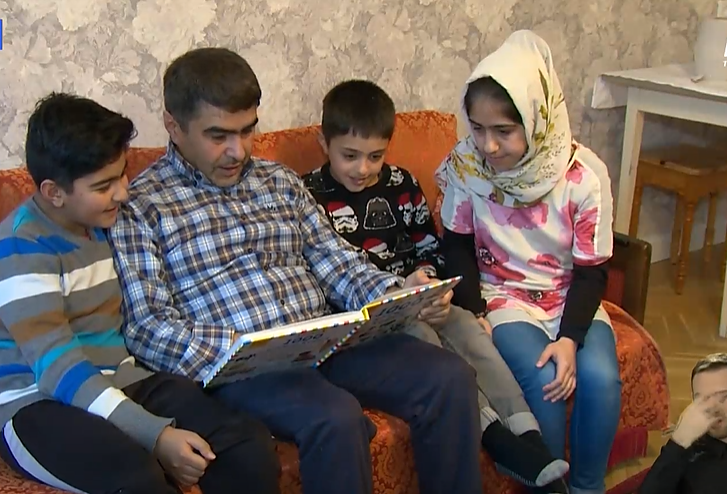
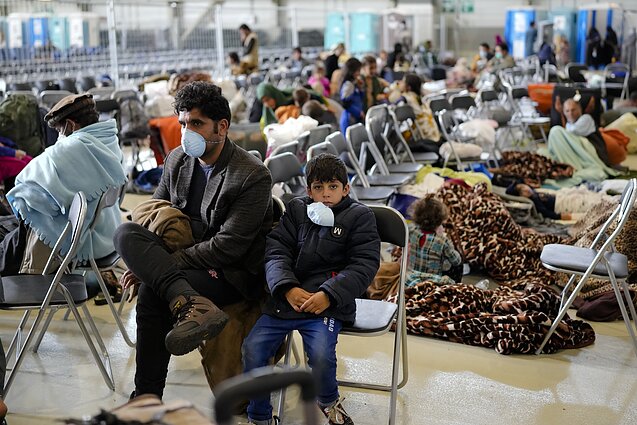
Most of the Afghans who fled potential persecution by the Taliban after it took power in Kabul and were brought to Lithuania a year ago remain in the country and continue their integration.
Thirty-four families of soldiers and translators, totalling 170 people, were flown to Lithuania a year ago. According to the Social Security and Labour Ministry (SADM), only two families have left Lithuania.
Of the remaining, 107 Afghans have settled in Vilnius, with others living in Kaunas or Klaipėda. Almost half of them are children. Moreover, six Afghan babies have been born in Lithuania over the year, said Aistė Gerikaitė-Šukienė, advisor to the SADM’s Foreigners Integration Unit.
Lithuanian Armed Forces were tasked with bringing Afghans safely to Lithuania. Andrius Dilda, Major of the Lithuanian Defence Staff, says that some of the troops who took part in the repatriation operation became friends with the translators, who helped them in Afghanistan, and have been in contact with them ever since.

Urtė Petrulytė, the coordinator of Malteser Foreigners, points out that the support of the Lithuanian society is very important for the integration of Afghan citizens.
“Friendships have also been established with people who have helped them by giving them their belongings and clothes when they needed them. The Afghans are still in contact with some of them to this day,” Petrulytė told LRT RADIO.
According to her, the Afghans feel comfortable in Lithuania, although they have also encountered unpleasant situations.
“There were cases when women were harassed on the bus, they had to ask for help from the people around them. Also, some of the foreigners were fired from their jobs for some reasons,” Petrulytė said.
Although many of the Afghans are university graduates, in Lithuania, they work in unskilled jobs as tailors, carpenters, support staff, or cashiers, according to Gerikaitė-Šukienė.
Currently, 32 Afghans are employed. Most of them are men as due to cultural peculiarities and having large families, Afghan women usually stay at home to raise children.
Nevertheless, several women plan to finish school in the near future and are acquiring qualifications. Most of the men say they plan to pass their driving tests, and several also plan to study at higher education establishments.
“Among the young people, there are students and those preparing to study. One person is currently volunteering at Kaunas Clinical Hospital,” Gerikaitė- Šukienė told LRT RADIO.
“Most of the women have small children. The children attend schools and kindergartens. Some parents cannot start working because they are waiting for their children to get a place in kindergarten,” she added.
According to Petrulytė, some Afghans want to also bring their families who stayed in their homeland. Meanwhile, others have relatives in other European countries and visit them, but they do not plan to leave Lithuania.
“While living in Lithuania, they keep in touch with other family members in Afghanistan. Some of them work here and send money to Afghanistan, while some are trying to bring their family members to Lithuania,” the coordinator of Malteser Foreigners said.
“Others have relatives in other European countries and go to visit them there, but when they come back, they say that it is more expensive in other countries than in Lithuania and they want to stay here. Most of them do not want to move abroad, but it all depends on the job and education opportunities,” she added.

Newsletter
Every Friday morning.