










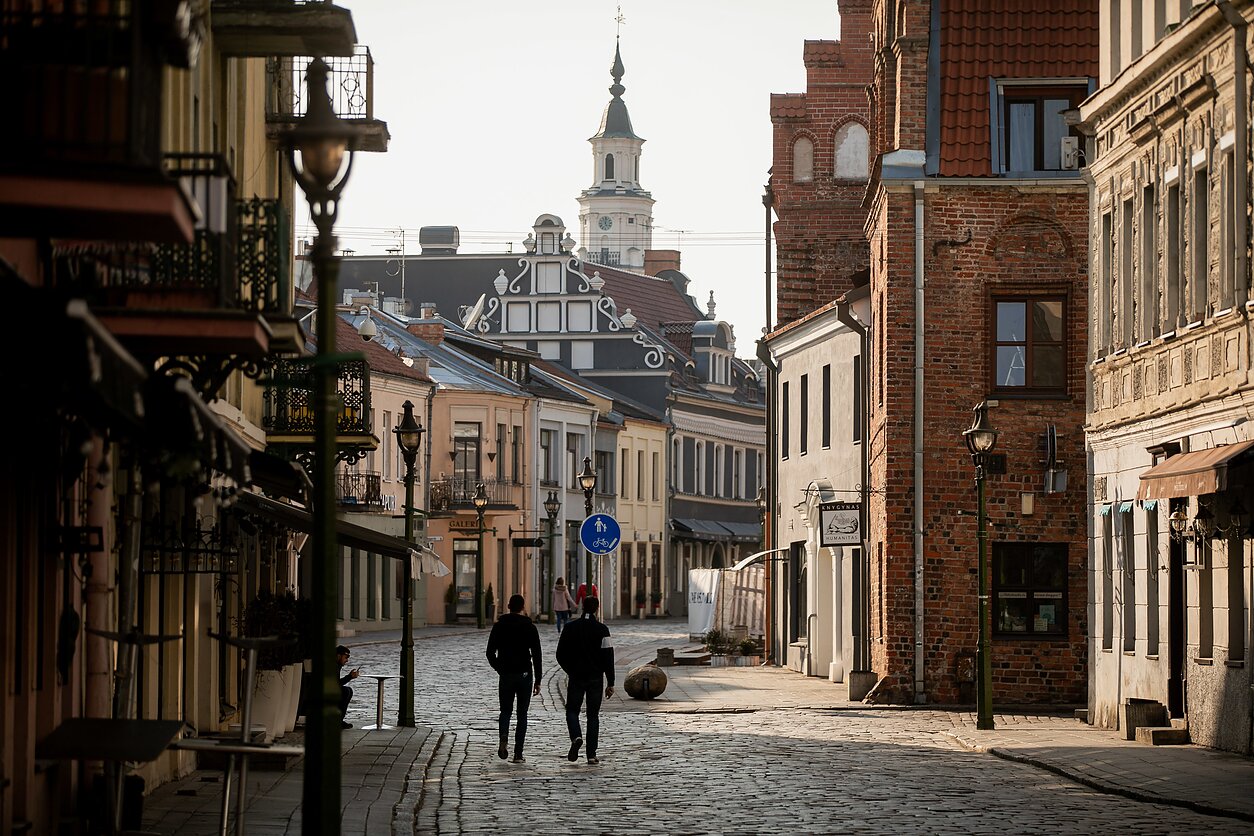
An overwhelming majority of people in Lithuania think life is getting worse, according to a new Baltijos Tyrimai poll. The last time the figures were so low was in 2009 during the height of the financial crisis.
In July 2022, 8 percent of the Lithuanian population surveyed said the situation in the country has been improving, while 72 percent said things are getting worse. Some 20 percent had no opinion on the matter.
Only in 2009, during the global financial crisis, the situation in Lithuania was worse than it is now, when only 5 percent of respondents thought things were improving.
Indrė Genytė-Pikčienė, Chief Economist at INVL Asset Management, highlighted several aspects of why people think life is getting worse.
"The spike in inflation, the energy crisis, the rise in the price of services, which is especially felt in the summer, the increase in food prices – such circumstances naturally do not cause optimism among the population and consumers," said Genytė-Pikčienė.
According to her, Lithuania ranks among the most optimistic EU countries in terms of consumer expectations.

Last year saw record consumption volumes, she said. The recovery of the catering sector after the pandemic – almost all macroeconomic indicators in 2021 were impressive.
This reflected an excellent financial situation, rising wages, and record deposits. This year, as Genytė-Pikčienė said, the opposite is true – the curves of expectations are slowly sloping downwards due to changes in various geopolitical and macroeconomic circumstances.
The pessimism is related to global issues, not to the situation in Lithuania, Jūratė Imbrasaitė, an associate professor at the Department of Sociology of Vytautas Magnus University, told LRT.lt . The war causes a feeling of insecurity, and there has been a lot of talk about the upcoming recession, she added.
"Every time you turn on the TV, you see not only what is happening in Lithuania but also abroad. Everybody is talking about how we will have to survive, how we will have to save money,” said Imbrasaitė.
Do people feel insecure?
Out of the 10 institutions evaluated in the survey, the respondents trusted the Lithuanian Armed Forces the most (77 percent trusted and 17 percent distrusted), followed by the Police (73 percent trusted and 23 percent distrusted).
Two out of three people in Lithuania also trust the Church and Sodra, the social security fund, while six out of ten trust the institution of the president and municipalities.
The support for the media is split fifty-fifty, while more than half of the respondents said they distrusted the courts, the government, and the parliament.
Over the last month, the share of people who trust the Lithuanian Armed Forces and the Lithuanian media has increased by 5 percentage points, the share of people who trust the government has increased by 4 percentage points, and the share of people who trust the courts and the Seimas has improved by 3 percentage points.
The ratings of other institutions have remained unchanged since June.

"There has always been a tendency for people to trust hierarchical institutions more. In reality, this means that people lack security and are looking for a saviour, a protector," Imbrasaitė told LRT.lt.
Paulius Gritėnas, a philosopher, told LRT.lt that the military, the police, and the Church were able to gain such trust of the population because of the stability of these institutions.
"Unlike the parliament, the presidency, the government or ministries, the army, the police, and the church are more or less composed of the same leadership and structure, and the same operational methods and principles," he said.
“We are now in a situation where trust in these institutions is determined by certain human factors: people often trust law enforcement and policing institutions during wars and disturbances not because they objectively assess their work, but rather because they want these institutions to be strong, to reflect the state's security, to provide some kind of protection," Gritėnas added.
According to Gritėnas, the same factors are reflected in the support for the church, "which responds to the need for spiritual meaning, for a stronger morality".
The government becomes a ‘scapegoat’
The parliament has never been trusted by people in Lithuania, according to the Baltijos Tyrimai researchers.
Some 25 years ago, 28 percent trusted the institution and 63 percent did not. A decade ago, only 15 percent of the surveyed population trusted the Seimas and 82 percent did not.
Similar figures hold true today.
"We have an interesting understanding of democracy: democracy is elections and it is not always understood that democracy is debate. That is why, for example, there is an attitude that 'the Seimas doesn’t do much'," Imbrasaitė said.
According to her, the government faces many challenges and the problems are global – the migrant crisis, war, and rising electricity prices. As a result, she said, the cabinet is a "scapegoat".
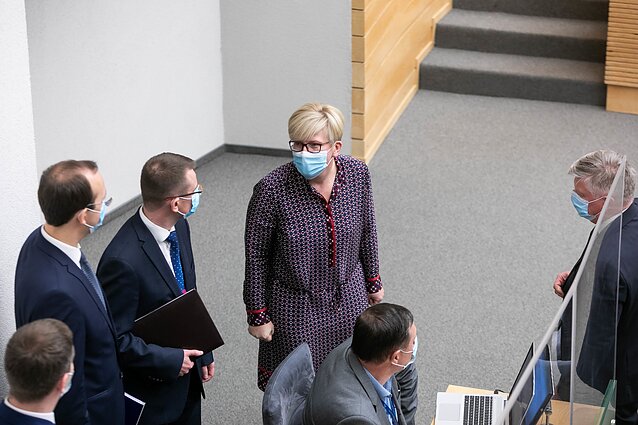
If the population does not trust the parliament and the collective institutions, it is a sign of an immature democracy, Imbrasaitė said.
"On the other hand, the government is what people see most in the media and our daily affairs depend on the performance of the government. People somehow imagine that the government is responsible for everything and can improve life. But if you look at it, in a globalised world, the government is not always able to offer solutions," she added.
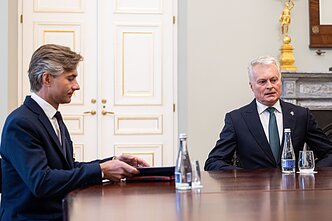
The fact that more than half of the population relies on the president is also nothing new.
According to Imbrasaitė, this is because the institution is one-person and more relatable. On the other hand, she wondered whether people might not be fully aware of the powers of the president.
If the government and the Seimas work constructively, these institutions are trusted much more than the president, who does not have special powers, she added.
According to philosopher Gritėnas, if the president opted to participate in the political debate with the Seimas, it might threaten his ratings.
"But in Lithuania, presidents prefer the role of a commentator above other institutions, and it is natural that the president has the luxury of commenting on the decisions of the parliament and the government and expressing the emotions of the public," said Gritėnas.
“This gives him points because the public sees him more as its representative. He has the right to criticise, to step aside in uncomfortable decisions or to be a judge", Gritėnas added.

Newsletter
Every Friday morning.