














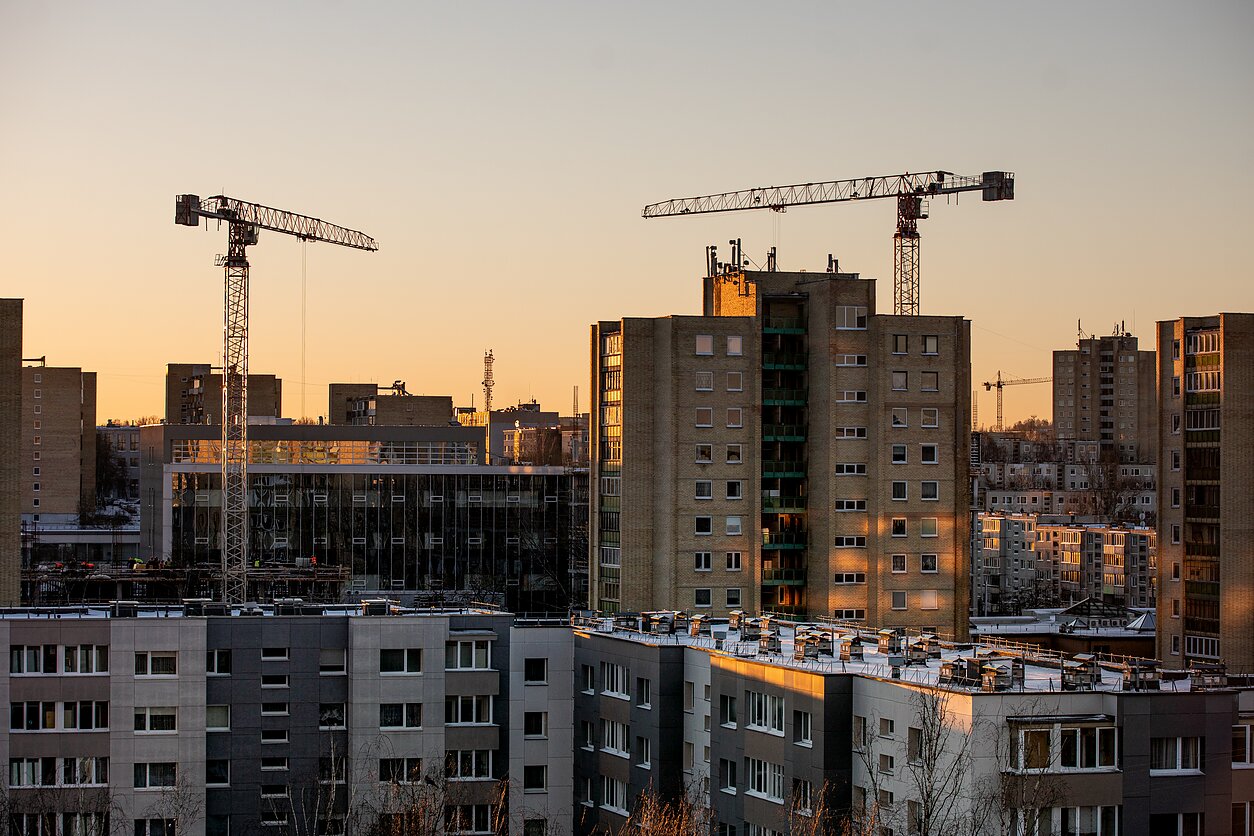
With the cost of renting a flat in Lithuania’s main cities going up dramatically, students in particular may be squeezed out of the market. Some politicians are even suggesting rent caps.
“On average, rent prices in Vilnius have risen by about 20 percent, in Kaunas by about 16, and in Klaipėda by about 30,” says Viktorija Steponavičiūtė, head of the property listing service aruodas.lt, summarising price jumps over the last year.
A budget apartment in Vilnius with a bathroom and a shared kitchen, for example, would go for over 400 euros a month. Last year, similar apartments cost around 100 euros less.
For students, price is an important factor, says Marius Čiulada of the real estate agency Oberhaus.
“You don’t rent on your own, so you look for someone to rent with, maybe not necessarily close to the city centre, somewhere remote. It won’t be that there is nothing on the market, you will find solutions, but maybe not in the conditions that existed two or three years ago,” according to Čiulada.
At the moment, students need to compete with people from Ukraine and Belarus for economy-class properties, he adds.
According to a representative of the Lithuanian Students’ Union (LSS), university dormitories are a much more attractive option for students in terms of price, but they are not acceptable to everyone.
Opposition MPs from the Social Democratic Party have even proposed that the government intervene and consider a cap on housing rents.
“The government has the right to set such a cap. We are not suggesting that they should regulate the housing market, that there should be strong supervision from the government, but we cannot ignore the problem now,” says MP Rasa Budbergytė.
The idea has not been received favourably by representatives of the real estate market.
“In our country, the black market for housing is quite large, and additional regulation or additional rules would push even more people into the shadow,” argues Čiulada of Oberhaus.
Liberal MPs are also hostile to the idea.
“These populist proposals that we have to regulate everything – when a person gets up, when he goes to bed, who he goes to bed with, who he can have dinner with – seem strange,” says Andrius Bagdonas, an MP of the Liberal Movement, which is part of the ruling coalition.
“I think that the state should not interfere in people’s lives to that extent. As I said before, it should take care of young families, young people who do not have assets,” he adds.

Newsletter
Every Friday morning.