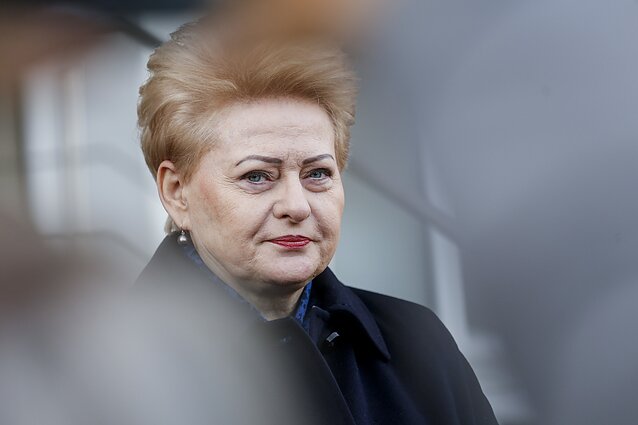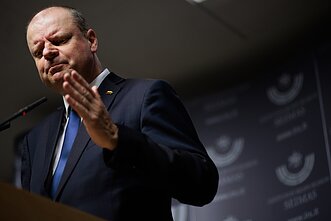




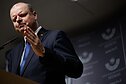




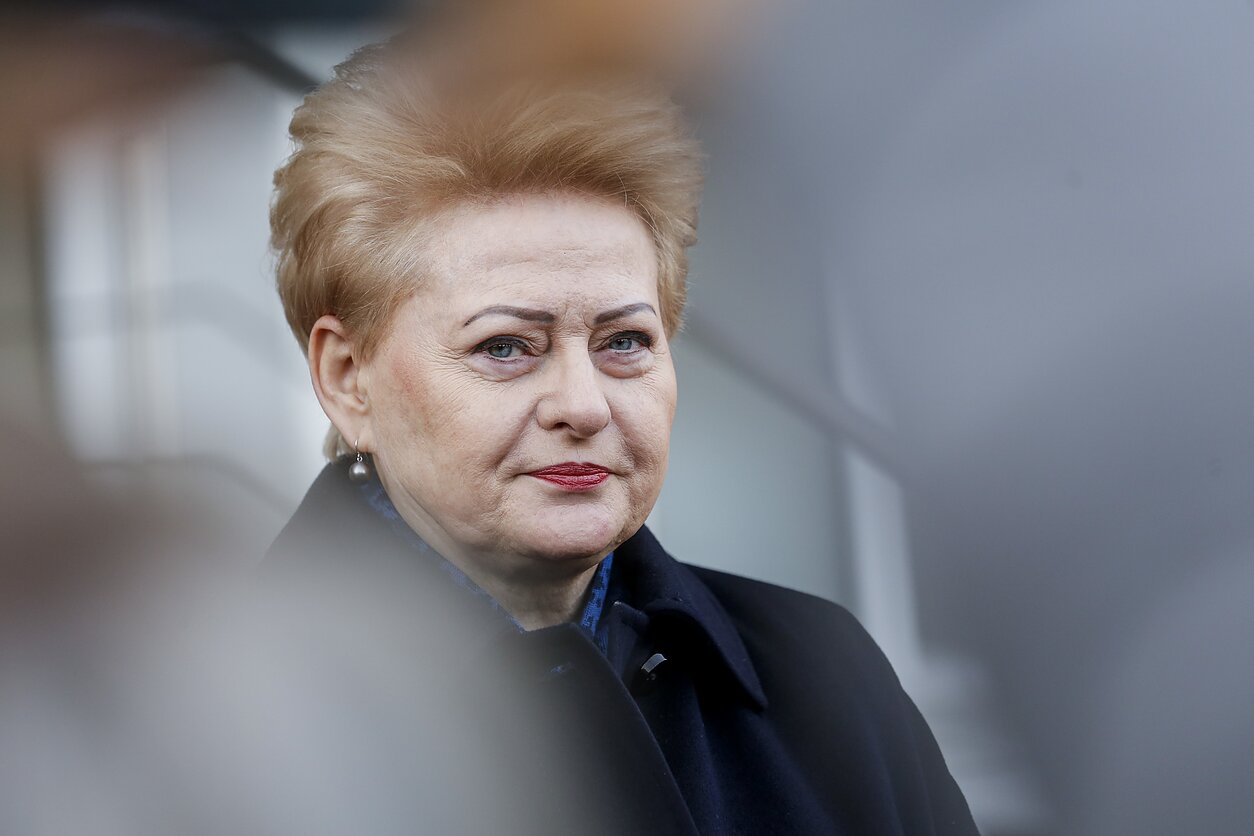
Lithuania’s former president (2009-2019) Dalia Grybauskaitė has slammed the EU’s response to Russia’s invasion of Ukraine. In Grybauskaitė’s view, rambling over sanctions shows the weakness of democratic countries, causes great reputational damage to the West and, at the same time, gives Putin the green light for further aggression.
The war in Ukraine has been going on for 100 days. How to stop Putin? Is it still possible to achieve a negotiated peace?
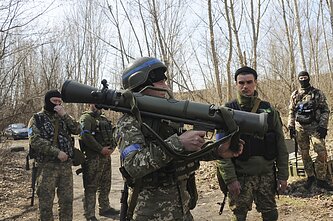
When war breaks out, there can be no negotiation, there is war, and I have said from the beginning that Putin can only be stopped on the battlefield. That means direct involvement: feet on the ground or the supply of adequate, essential, modern armaments. We picked the second option, for the time being, but we’ve been slow, sending insufficiently modern and effective weapons, and we are now seeing the consequences of that, with Russia pushing forward in the east, slowly but surely. Both sides, the Ukrainians too, are suffering huge losses in terms of men and equipment.
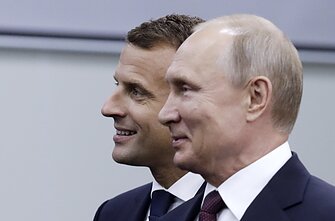
What then should we make of phone calls between some European leaders and Vladimir Putin?
I will probably be blunt because I can speak more directly and openly now that I am not in office. Phone calls to a terrorist, a murderer and an aggressor must be seen as such – phone calls to a terrorist.

You called Russia a terrorist state back in 2014. That attracted a great deal of attention then, and now, the attitude of the West has changed somewhat. Not all countries are yet in favour of tough sanctions, some are taking a more moderate view of the war. Why is that?
We are close to both Belarus and Russia, so we feel things immediately, quickly and in a much more realistic way than our more distant neighbours, our partners in the West. That is why we are in a situation where, if you are further away, it is as if you are not affected. But the nature of the aggression makes us draw parallels with 1939, when European countries tried to make concessions to the aggressor, not seeing what was happening, agreeing to slice off parts of Czechoslovakia.
Unfortunately, Europe did not learn from its mistakes before and during World War Two. During the Cold War, we saw those mistakes creeping back and sprouting like beans, again and again and again. And we have to explain again, remind of the historical parallels, of our experiences. Everyone in our region is doing this, and we must continue.

The EU recently agreed on the sixth package of sanctions on Russia. How effective are they?
This is not a simple question. Sanctions are, in principle, a political demonstration of punishment, which is what the Western democracies and we are trying to do. Unfortunately, you cannot affect Russia with economic sanctions alone because Russia can bear very heavy economic sanctions, and so can its people. So, there will certainly not be an immediate and direct effect, especially as the sanctions are both piecemeal and not immediately imposed, and accomplished with ugly public disputes and jostling.
Indeed, it seems that sometimes they are more of an embarrassment to the West itself. They do more reputational damage than good. Finally, we agreed and we are pushing them through. Of course, all these sanctions will, to a large extent, work in the medium and long term – we probably cannot expect something immediately.
You said Western countries were slow in providing modern weapons to Ukraine. Why is that?
Looking at the history of our Europe and our countries, at least over the last several decades, we have seen all sorts of governments, all sorts of leaders, all sorts of bravery or cowardice in making decisions. Now, unfortunately, especially in Europe, there is lot of looking over one’s shoulder, of being afraid of one’s own shadow, of cowering. It is unpleasant. It is disappointing to see leaders standing up and trying to explain themselves, rather than taking courageous decisions to help their neighbour because, after all, Ukraine is fighting not just for itself but for the security of the whole of Europe, and this is an absolutely direct duty of European leaders.

Unfortunately, we are witnessing what I would call cowardice, and this has been repeated since the beginning of the war, and it is being repeated now. We give a little more armaments, a little better armaments, showing a little bit of courage, but again, Putin just taps his foot and we are off. This appeasement, this fear of taking decisions, is costing blood, it is costing huge losses of life in Ukraine, it is doing a huge reputational damage to the West. Putin is taking advantage of this. He sees signs of cowardice, he sees the indecision, and he continues to do what he wants. We saw this after the occupation of Crimea and after the occupation of parts of Georgia in 2008. We, the West, have bred Putin’s aggression through our cowardice.
The NATO summit in Madrid is due later this month. Lithuania’s ambition is to strengthen the defences on its eastern flank. Can Lithuania succeed in getting what it wants?
We want what we believe we must have. I think we will get most of the security measures, perhaps in a slightly different form than we imagine. But the most important thing is to put pressure on our partners that the Baltic countries and Poland and the whole eastern flank of NATO must be seriously defended. We used to talk about deterrence, now we have to forget that, now we have to ensure defence.
I believe that NATO is ready for this and that decisions will be made. To what extent the whole list of requests that we have made will be met is perhaps not so important because the most important thing is not only the quantity but also the quality of defensibility, that is, the quality of the equipment, the anti-aircraft defences. This is even more important, perhaps, than the number of boots on the ground in Lithuania.

How should one view Ukraine’s aspiration to become a full member of the EU or at least getting candidate status?
This country will get candidate status. Whether it is in June or later, it does not matter, what matters is that this country is earning its membership every minute on the battlefield, fighting for itself and for the security of Europe.
The road to membership will not be easy, just as it has not been easy for us because there is a great deal to be done, as Ukraine tried to do before the war, and now, the reconstruction of Ukraine awaits us all. We will have to help the country get back on its feet. I am convinced that Ukraine’s future lies in the European family – it is a European state, a civilised European country, a friend of ours, a member of our future family.
The French leader said that it could take several years. Is that realistic?
I do not want to comment on what is said by state leaders who are making phone calls where they shouldn’t and when they shouldn’t. It is up to Ukraine how quickly it will become a member of the European Union, how quickly it will rebuild itself. The most important thing now is to end the war and rebuild Ukraine together. Ukraine’s future will surely be in the European Union. How long this takes and how it happens – that is not for the French to decide.

Newsletter
Every Friday morning.