




Solidarumas, a Lithuanian trade union, has suggested nationalising a Kėdainiai-based phosphate fertiliser manufacturer Lifosa whose indirect owner is subject to EU sanctions.
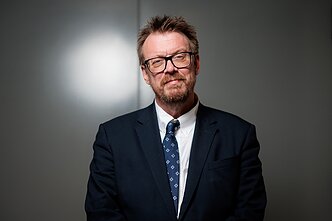
Kristina Krupavičienė, the union’s chairwoman, has presented the proposal to Prime Minister Ingrida Šimonytė, saying that the move would help save jobs, government and municipal revenues. Some of the company’s profits could be used to support Ukraine, she added.
Read more: Lithuania's sanctions-hit fertiliser producer asks for state help
“Nationalisation would allow the company, which can operate without supplies from Russia and Belarus, to continue to produce phosphate fertilisers, an important product for agriculture which will be in short supply around the world this year, and would help preserve jobs and state and municipal budget revenue,” the union said in a statement on Tuesday.
The union is also asking the authorities to allow using Lifosa’s currently frozen bank accounts to pay employees and suppliers so that the company can continue to operate.

Prime Minister Šimonytė commented later on Tuesday that she doubted whether Lifsa would be able to continue its operations.
“As far as I know, there are not only issues related to the shareholder, who is on the list of sanctioned individuals, but also to raw materials. It is wrong to believe that if the state nationalises a company, it will somehow have other conditions to operate, especially if the source of its raw materials is in the Russian Federation,” she told reporters on Tuesday. “It is an interesting proposal, but I will certainly not comment on it any further.”
In 2020, Lifosa bought raw materials from the Russian phosphate mining company Kovdorskiy GOK, NAK Azot, a producer of ammonium, nitrogen and mineral fertilisers, chemical product producer Novomoskovskiy Khlor, as well as Switzerland’s EuroChem Trading, another company linked to Lifosa’s shareholder. The total value of procurements from the Russian companies exceeded 45 million euros, and Lifosa paid 6.9 million euros to the Swiss company.
Lifosa’s accounts were frozen last Thursday after Russian oligarch Andrey Melnichenko, its indirect owner, was placed on the EU sanction list.
Lifosa said on Monday it was unable to it meet its obligations and had turned to state authorities for help.

Rimantas Proscevičius, the company's CEO, said state support was “vital” for continuing the plant’s operations.
The company in Kėdainiai, central Lithuania, employs more than 1,000 people.
Two Lifosa trade unions on Monday appealed to several ministries and parliamentary committees for help.
The Lithuanian company is 100-percent owned by the Swiss-registered Eurochem Group, in which AIM Capital, a Cyprus-registered firm of Melnichenko, holds a 90-percent stake.
EuroChem Group said on March 10 that Melnichenko had resigned from its board of directors as of March 9, and that he was no longer the group’s main beneficiary.

Newsletter
Every Friday morning.