


Albertas, a Lithuanian man who came to Kyiv for medical treatment, was planning to go home in March. But Russia’s invasion of Ukraine has changed the 28-year-old’s plans.
He signed up as a volunteer with Ukraine’s Territorial Defence Forces.
Albertas asked for his last name not to be revealed for safety reasons. We talked to him on Wednesday morning, while after a few hours of sleep, he was getting ready to go to a duty station near his home.
“If I had left, I wouldn’t have forgiven myself. I wouldn’t have been able to live peacefully with the fact that I was in Kyiv, that I could have been useful, but I just left,” Albertas told BNS.
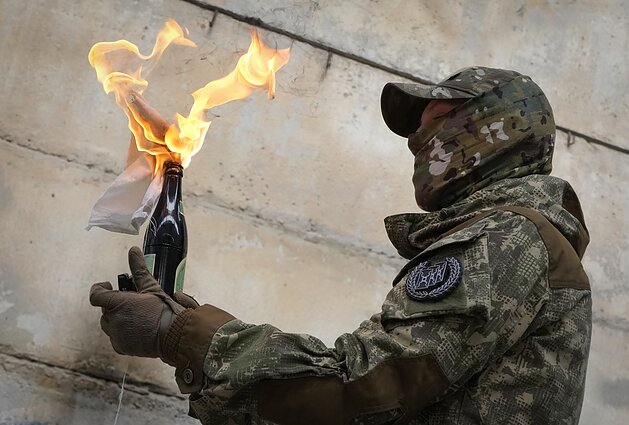
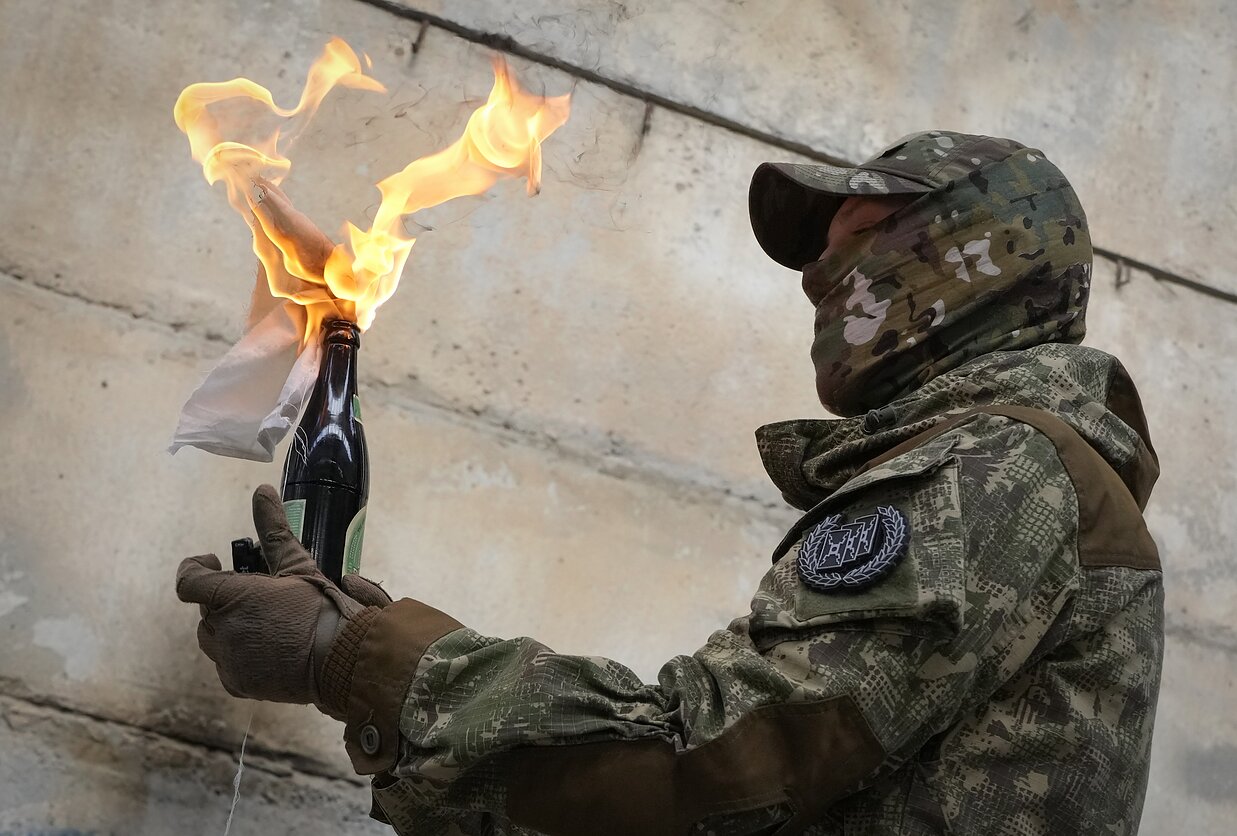
After talking to us, he said he would go to a duty station in Kyiv’s old town, where he checks cars and makes Molotov cocktails for clashes with Russian soldiers.

‘I’ll stay until the end’
Albertas has been living in the UK since 2008. There, he worked in a nursing home and volunteered. He went to Ukraine in mid-December last year.
“I came to Kyiv for treatment of my teeth, spine, and knee because I was doing sports and needed a bit of medical attention. There is a very good clinic in Kyiv, and people I know recommended it to me,” Albertas said.
“I was planning to leave in mid-March, but now, I will stay until the end. I cannot give up everything and leave. It just seems to be fate, it’s just the way it is,” he added.
He keeps his friends on social media informed about the situation in Kyiv by uploading photos and videos every day. While some call for him to return home, others praise his determination and courage.
“I’m not a military professional. My support is more psychological. Psychologically, it helps the Ukrainians to have a Lithuanian citizen working alongside them. Everybody knows me, I’m always in one post or another,” Albertas said.
The Lithuanian man is currently assigned the duty of medical officer because of his medical knowledge and experience of working at a nursing home. On Tuesday, he attended a paramedic course in Kyiv. It focused on stopping major bleeding, according to Albertas.
Taking up a gun
Albertas is currently on duty without a weapon. But just a few days ago, he had a gun in his hand.
Last week, when Russia attacked Ukraine, he decided to volunteer and went to the conscription centre, coordinated by the Territorial Defence Forces.
"There were advertisements with three addresses where they would be registering volunteers. I went to one of them, but at that time, there was no decision to allow foreign nationals to volunteer,” the man said.
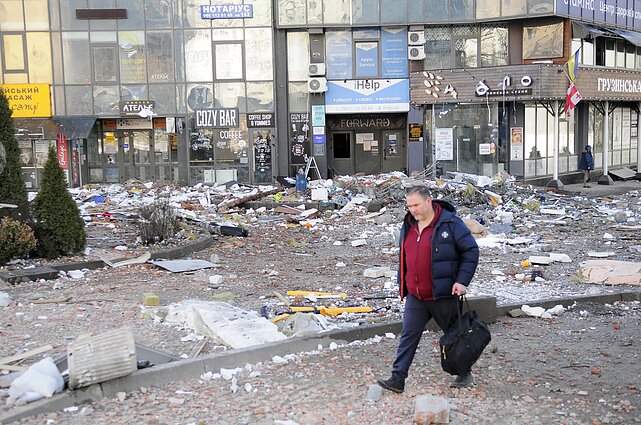
“I tried to go to another address, and when I got there, I heard shots – a mobile tactical group of Russian Special Forces had broken through, and there was a big battle going on near the conscription centre. There was a Russian fighter jet flying over us,” he added.
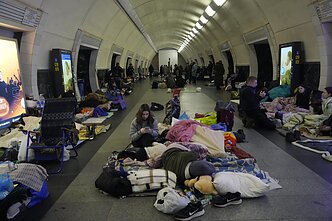
“At that time, there was a threat that the tactical group would break through our base to the centre of Kyiv, and they just handed out weapons, asked for our names and addresses. When that group was liquidated, we were sent to patrol and guard the metro station, to look for saboteurs. We also guarded a strategic intersection for a day.”
After becoming a medical officer, Albertas gave up his gun. On top of medical duties, his current tasks include making barricades, Molotov cocktails, and catching saboteurs.
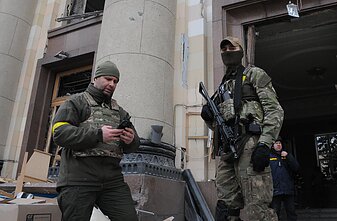
After the curfew, which runs from 20:00 to 7:00, people walking on the street are checked. Volunteers on duty also protect various establishments in the area from looting and theft.
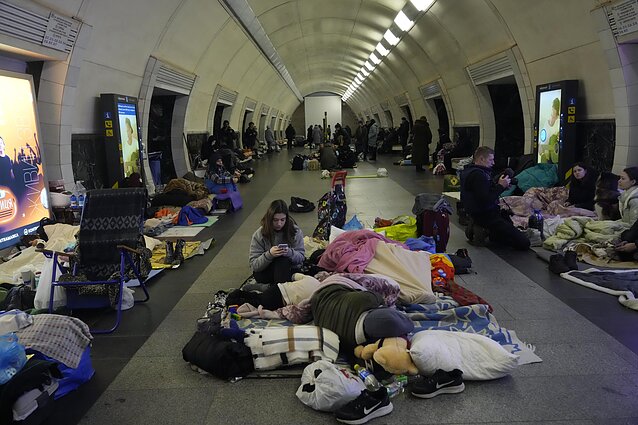
The most difficult thing at the moment, according to the Lithuanian, is allocating his time between service, rest, and contact with his loved ones.
“My parents are going through a lot, but I'm an adult, and I can afford to make this decision. My dad is supportive, even though he is worried, and my mum would obviously like me to go home,” Albertas said.
According to the man, war is scary, but one can get used to the fear of dying.
“Fear is a normal reaction of the body. It was scary on the first day of the battle when we were given weapons. The fear […] was not for myself but for my mother, that she would not survive losing me,” he said.
“And since the first day of the war, every day that fear has been diminishing... It evaporates somewhere, you get used to it,” Albertas added.

Newsletter
Every Friday morning.