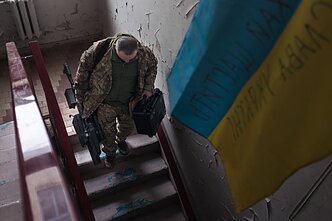













The frontline is not as static as it may seem. Although the trenches and bunkered down soldiers evoke images of the First World War, a modern war unfolds around and above them – with Lithuanian weapons and Ukrainian “partisans” playing a key part.
“Someone called us the Ukrainian Taliban,” says Slava. He is one of a select group of Ukrainian volunteers who use the all-means-to-an-end approach to wreak havoc upon Russian-led separatists.
“We have blown up an officer,” he says, showing a video of a man in a Russian uniform disappearing in a plume of dark smoke.
Although it’s only a small group that call themselves “partisans”, due to the covert nature of their work, reconnaissance groups formed from volunteers fight all along the frontlines. Their tactics include using drones to take out commanders and officers, as well as raiding and sniping trenchline positions.
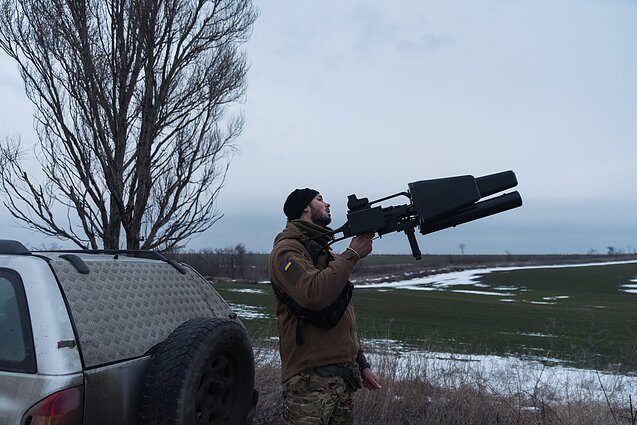
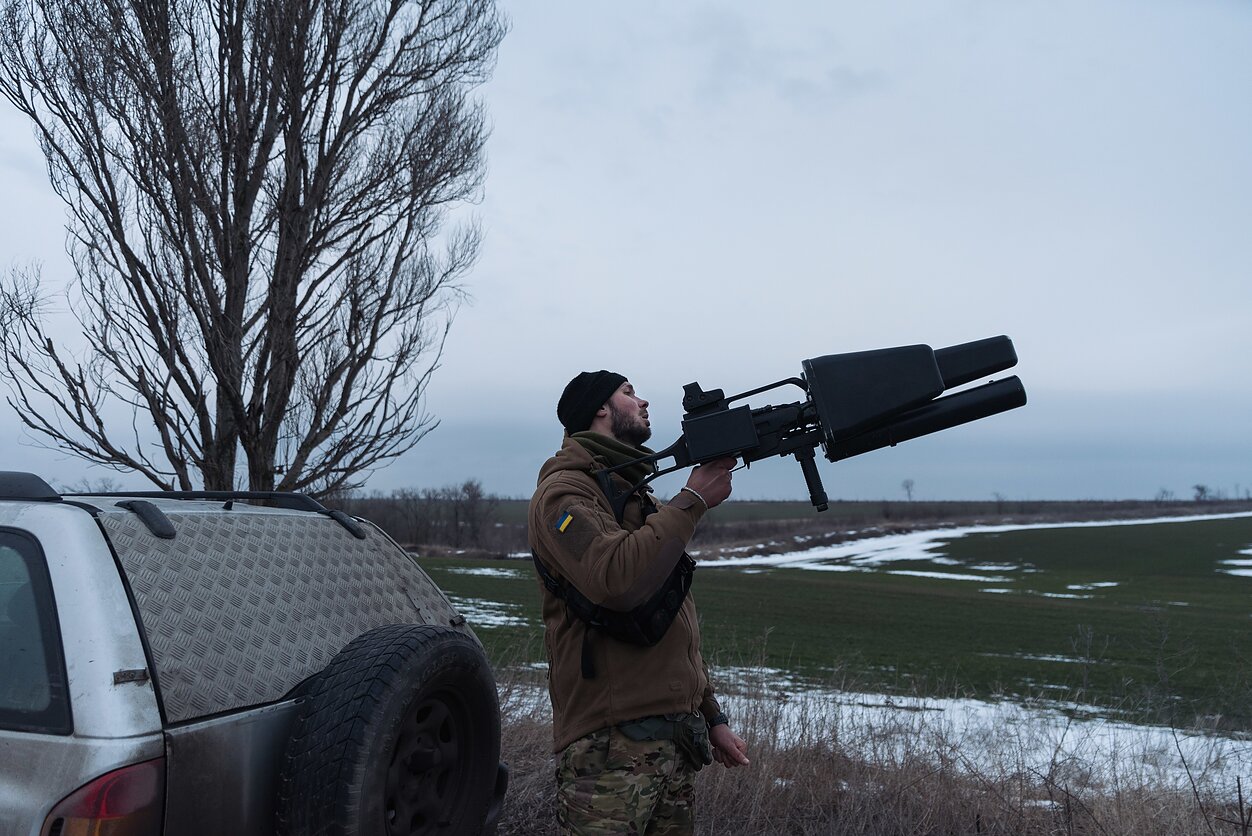
They have also built up an anti-drone network that uses Lithuanian systems to bring down Russian drones.
LRT has been given access to see inside the silent war unfold in Donbass.
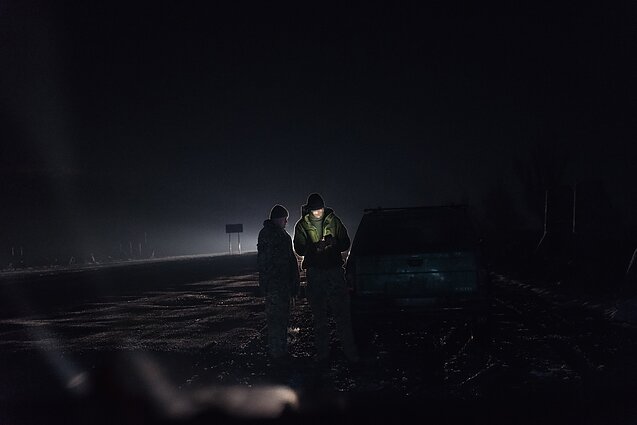
‘We are broadcasting killings’
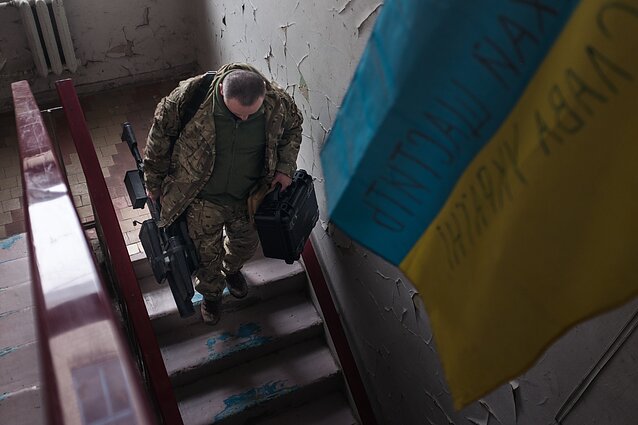
A man in civilian clothes sits down in front of me, a map of separatist-held areas plastering the walls behind him. His nom-de-guerre is Slava. Normally, he is a sniper. Today, however, he is out of his camouflage uniform to speak about another frontline unfolding in Ukraine.
“We show to all Ukraine that you can beat the Russian troops, that you can kill them, and they can’t do anything about it,” says Slava.
His group has followed the “principles” of Russia’s playbook – they have started an aggressive information campaign via Telegram that targets the opposing troops.
“It is built on shock content – we are broadcasting killings,” he adds.
The Telegram channel is just one of many ways the group is looking for ways to demoralise and defeat the Russian-led troops. In videos posted on their channel, which has amassed thousands of followers in just several months, they show deadly sniper attacks, booby trap explosions, and artillery strikes.
“This annoys [them] very much,” says Slava. In one example, he says, a separatist brigade has threatened its soldiers with imprisonment if they continue following the content that attracts audiences on both sides of the trenchline.
“We troll them constantly,” says Slava. He shows a video with an Animal Planet-type voiceover about monkeys which plays over Ukrainian sniping footage. The reel is then followed by the personal details and funeral pictures of the killed Russian soldier.
“A few days ago, we received [intelligence] that a [separatist] soldier was still subscribed to our Telegram channel, [...] he had his phone pinned down with nails,” adds Slava.
They have also spread fakes alleging homosexual relationships between separatist officers. They were shared widest amid an alleged proliferation of the Russian prison subculture.
“We wrote that we have video proof about the brigade commander having sex with a battalion commander,” which was made to look more real by including their actual nicknames, says Slava. The commanding officers were subsequently ostracised, even if many understood that the information was not true.
Their other cyber activities include bringing down websites, allegedly with the help of hackers in Lithuania.
“You pay them 5,000 US dollars and they can block any website,” alleges Slava. “We work with two hacker groups in Lithuania [which help] on a voluntary basis.” His claims could not be verified.
“If I am asked today if I am ready to shoot you, I will – without a question. It doesn't matter that we may speak the same language or share the same faith. [...] I was not ready for it in 2015,” Slava says. “We drank vodka together, but today I find that he [tortures] prisoners. I know these people. Good that many of them are not alive anymore.”
Now, all eyes are on Russia’s next steps – “for some time we will be able to hold our own. For some time.”
Drone wars
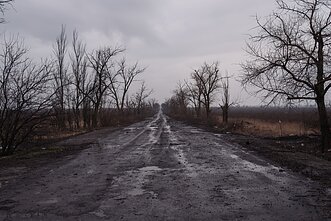
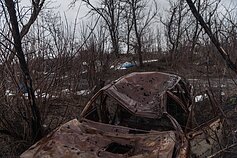
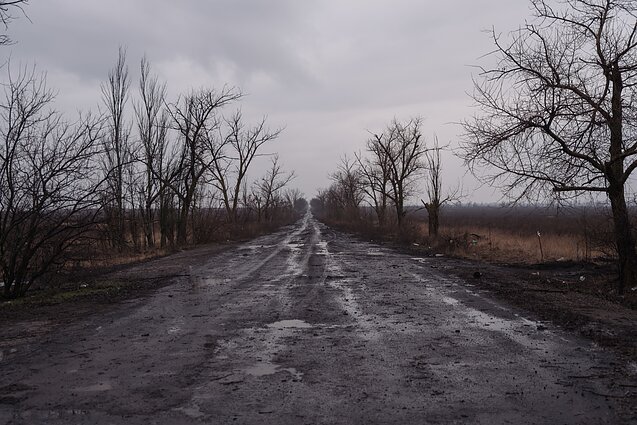
The road to the frontline is marked by remnants of explosions and trees torn apart. What's left of the tarmac is soon replaced by trenches of mud.
“If there was no ‘Litofskaya pushka’ [Lithuanian cannon], there would be dozens more dead,” says Yuri, pseudonym Grek, as he speeds toward one of the positions wrecked by successive artillery strikes.
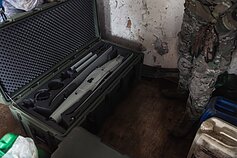
He plans to bring to Ukrainian trenches another piece of Lithuanian weaponry. Its purpose – to shoot down drones flown by Russian troops and Kremlin-backed separatists. “This really does save lives,” he says as we near the trenches.
In May 2021, drone footage published on the separatists’ social media showed a car belonging to a Ukrainian battalion commander arriving at a frontline position. Moments later, the first artillery shell strikes, several hundred metres short. A few more rounds and the artillery guided by the drones start raining down on the trenches. Within minutes, the first Ukrainian soldiers lay dead or wounded.
Grek rushed there with his team, holding the rifle-like Lithuanian weapons that are able to scramble the navigation, video, and guiding functions of the drones.
“My guys stood a few hundred metres back to cover me and I sped up to pick up the wounded,” says Grek. The rest of his team kept jamming and bringing down drones using the pushka.
In the same separatist footage, the drones appear further and further from the action, forced to veer away. The video footage becomes shaky, navigation interrupted by the waves hitting them from the Lithuanian anti-drone weapons.
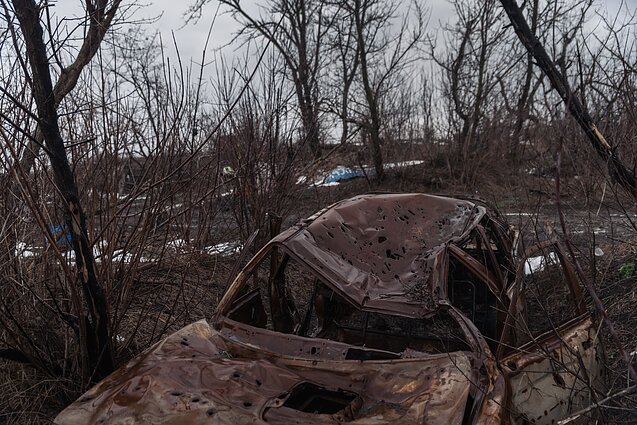
Today, the position still lays abandoned, littered with rusty wrecks of destroyed vehicles in front of ripped-apart trenches. Grek and his team, however, continue to work along the frontlines, in close contact with the regular troops stationed at the hotspots, as well as in contact with “partisans” like Slava and other diversionary and reconnaissance teams.
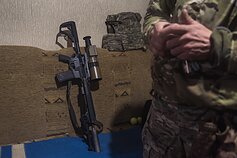
One such outfit is stationed a few kilometres from the frontline. According to Grek, they have killed up to several dozen separatists on some of their missions. Their kit includes Lithuanian-bought semi-automatic weapons equipped with locally procured thermal optics, the same anti-drone equipment, as well as their own UAVs.
“Now why should you look via binoculars if you can put a camera on the roof and sit indoors?” says Semion, one of the volunteer members of the unit. “There is a small war of technology unfolding here.”
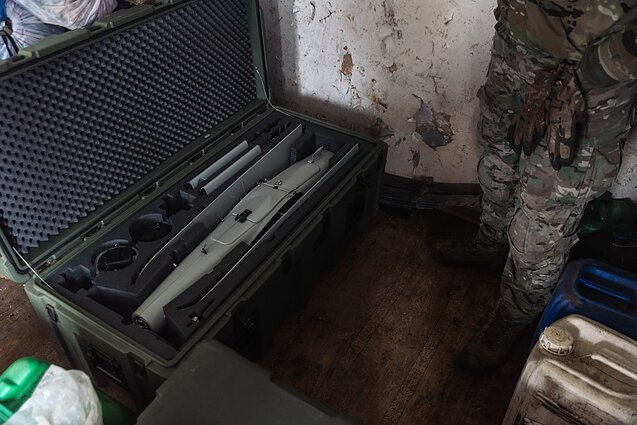
Pictures taken by Grek’s comrades show Ukrainian troops deep behind enemy lines, lying in wait for several days at a time to record enemy movements. Now, drones are used instead to guide artillery strikes, as well as undertake reconnaissance.
They still, however, sneak across to the other side to lay explosives and take hostages. Although the frontline is mined, this hasn’t prevented the dreaded raids by diversionary groups – on both sides.
Not all Ukrainian missions were successful. In one video published by the separatists, a man behind a skewed voice spots for a sniper facing the Ukrainian lines. Once a soldier there pops his head up for the second time, a shot rings out, and the man falls. The Russian voices ring out in euphoria. The fallen soldier was one of Grek’s men.
“I told him not to shoot from the trench,” Grek says.

Other pictures show Ukrainian troops from the specialist groups laying dead with bullet holes in their heads and bodies. “He went out to kill a sniper,” Grek comments while showing a picture of a Ukrainian soldier in a pool of blood.
Ukraine’s services, as well as InformNapalm and other cyber activists, have previously exposed Russian military snipers rotating through Donbass.
Blocked by Germany and the Netherlands
The need to counter Russian-built drones was carried to Lithuania by Jonas Ohman, the head of the Blue/Yellow organisation supplying aid and non-lethal weapons to the frontline since the war began in 2014.
The system saves lives, Ohman previously told LRT.lt. “This is modern warfare, and we – Lithuania – are at the forefront,” he said.
The initial purchase of the anti-drone weaponry via NATO Supply Support Agency (NSPA) was blocked by Germany and the Netherlands, the Build tabloid revealed in December last year. The ban was eventually lifted toward the end of Angela Merkel’s term as the German chancellor.
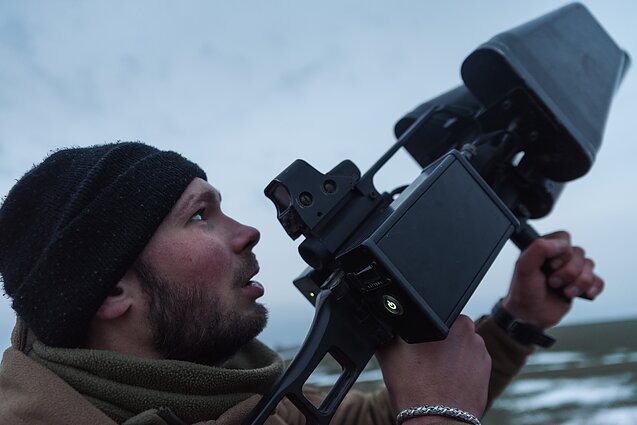
Dozens of units of non-lethal equipment were eventually brought to Ukraine by volunteers, some were gifted during visits of the Lithuanian president and the foreign minister.
The president’s office did not provide a comment in time for publication. The Foreign Ministry said it had never supplied "any kind of equipment" to Ukraine.
According to a representative of NT Service, who did not want to give his name due to personal safety concerns, the company manufacturing the systems expects the first batch of NSPA-approved systems to be shipped to Ukraine “in the near future”.
The rep also pinned part of the blame on pervasive bureaucracy in Ukraine, hindering import of weapons, as well as steps to block the procurement of non-lethal, defensive systems at the political level.
At first, the company that maintains contact with those on the ground advised them to shoot at the drones with regular rifles, while using the system to hide its existence. This led to the other side reporting that “foreign snipers are accurately shooting the drones”, according to the company rep.
This meant the “surprise factor” was maintained for a time, the rep added.
“I think the big advantage is that both friends and enemies took notice of us,” said the company representative. “We are trying to help them as much as possible. If the Ukrainian government tried as much, more could be done.”
The drones are increasingly kitted out to carry explosives, which can be dropped directly on the troops. The Russian-led separatists are also experimenting with drone swarm tactics.
“But for every weapon there is a counter-weapon,” says Grek.

Newsletter
Every Friday morning.