

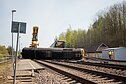



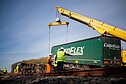





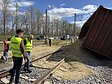



The state-owned company Lithuanian Railways (LTG) has received a letter from the Council for Rail Transport, which brings together 20 railway companies from various countries, confirming a ban on the transit of rail freight from Lithuania via Belarus, a spokesman said on Wednesday.
The ban will take effect on February 7 and will apply to shipments of oil products and fertilisers from Lithuania via Belarus, Mantas Dubauskas, LTG spokesman, told BNS.
Read more: Belarus bans Lithuanian cargo transit in retaliation for sanctions
He said he did not know if the ban would apply to non-transit freight.
Belarus' Foreign Ministry announced the ban earlier on Wednesday, a move that comes in response to the recent halt of the transit of Belaruskali potash fertilisers via Lithuania.
LTG has told BNS earlier that there have been an average of 18 trains from Lithuania to Belarus going daily since February 1, excluding empty potash fertiliser wagons that are returning to Belarus after being unloaded in Klaipėda.

“In February, trains loaded at Lithuanian stations should make up about 30 percent of all trains crossing the Lithuanian-Belarusian border from the Lithuanian side, with most of them going to Belarus, Russia and Ukraine,” it told BNS in a comment.
Trains formed in Lithuania mainly carry oil products, fertilisers and ferrous metals, according to the company.
The US imposed sanctions on Belaruskali, one of the world's biggest potash producers, last August. The sanctions came into force in early December.
LTG has terminated its long-term contract with the Belarusian potash giant as of February 1 after the Lithuanian government decided it was in the country's national interest.
In response to Belarus' actions, some Lithuanian producers are already trying new routes through Poland, according to Vaidotas Šileika, president of the Association of Lithuanian Stevedoring Companies.

Šileika says Lithuanian carriers could transport cargo by trucks or by rail via Latvia or Poland.
“One option is to shift some of the freight from rail to road and bypass Belarus or, if the transit of road transport is not closed, to cross Belarus by road,” he said in a comment to the media.
“Another option would be to bypass Belarus and try to move goods by rail via Latvia, but it is doubtful whether sufficient transit capacity would be ensured on this route.”
“Yet another alternative is to ship goods via Poland, which has been tried by some Lithuanian producers.”
Šileika said the ban on rail transit via Belarus could disrupt the flow of 2 to 3 million tons of freight or even more from the port of Klaipėda.
It is not clear yet if the Viking train that transports containers to the Lithuanian seaport will be blocked, he noted.
With the measures making supply chains more expensive, cargo owners could start thinking of moving their shipments out of Klaipėda, according to the association's president.

Newsletter
Every Friday morning.