










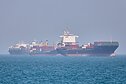






This year, Lithuania’s Klaipėda Port has lost over four percent of cargo due to the stoppage of shipments from Belarus. Next year, the expected loss could be up to 40 percent because of Lithuania’s soured relations with China, said Vaidotas Šileika, President of Lithuanian Association of Stevedoring Companies.
In 2021, Klaipėda Port lost shipments of some Belarusian petroleum products and fertilisers. According to Šileika, the oil company Klaipėdos Nafta has lost two million tonnes of oil products coming from Belarus and suffered the greatest losses.
No employees have yet been laid off over reduced cargo at Klaipėda Port, but this could change next year, Šileika added.
“There have been no job cuts so far. But we should not rule out that in the future, when even stricter sanctions on Belarus come into force, with possible Chinese sanctions on Lithuania as well, that could have an impact on jobs,” he told LRT RADIO.
Diversifying shipments by signing with new clients is also difficult as the transit of products is often organised via Belarus.
“Port companies are doing their best to compensate for the losses by reaching out to new customers, but given today's geopolitical situation, this is not easy,” Šileika said.
“As far as I know, there are some restrictions on transit via Belarus because there are no approved railway plans or routes to transport cargo from other countries,” he added.

According to the president of the Stevedoring Association, Klaipėda Port is already feeling the impact of Lithuania’s tense relations with China as well.
“There was a new project to divert some of the Kaliningrad-bound Chinese containers to the Port of Klaipėda. This was not done due to objections from the Chinese side,” Šileika said.
“We see that some customers are starting to avoid Klaipėda Port because of possible Chinese sanctions, so they are diverting their containers to Latvian or Polish ports,” he added.
According to Šileika, in a “rather pessimistic scenario”, the Lithuanian port’s cargo volume could drop by 30 to 40 percent next year.

Newsletter
Every Friday morning.