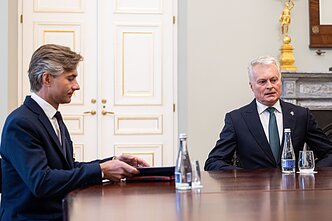






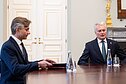








During a meeting with business organisation, Lithuanian President Gitanas Nausėda was asked to consider changing the country's immigration policies to allow more workers from “culturally proximate” countries.
The meeting last Friday addressed economic growth and challenges faced by the country's employers, particularly in the regions.
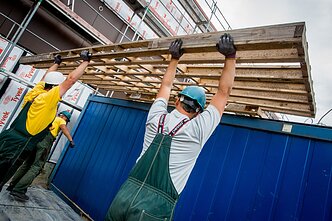
“Representatives of business associations emphasised a severe shortage of workers and the consequent crisis for fast economic growth,” the president's adviser Irena Segalovičienė told reporters after the meeting. “In the president's view, we should better tackle the issue of balancing labour supply and demand in this country. We've got several directions we should work along.”
Read more: Lithuanian businesses complain of labour shortages, ask for more migrant workers

These include more focus on retraining and policies to encourage repatriation of the Lithuanian diaspora.
“The president also heard the position of business associations on the real need to consider bringing in the needed workers from third [non-EU] culturally proximate countries,” she added.
Migration has been a hot topic in the country in recent months, as over 4,200 irregular migrants from the Middle East and Africa have crossed into the country from Belarus. They have been accommodated in migrant camps and are not allowed to work while their asylum applications are processed. Around 6,000 more migrants have been turned away by Lithuanian border guards.
However, Vidmantas Janulevičius, president of the Lithuanian Confederation of Industrialists, maintained they could not help alleviate the country's labour shortage.
Read more: Migration crisis in Baltics and Poland

“In the short term, we'd probably need to decide on immigration from countries that are closer to us culturally. Among the refugees who are currently near the Lithuanian border, there are probably 5 or 7 percent who could be integrated into the Lithuanian or EU labour market. These are educated people, maybe doctors, but integrating most of them would take longer [than integrating migrants from other countries],” Janulevičius said.
“So our suggestion is to try and expand immigration from the countries we know, namely, Ukraine, Belarus,” he added.
Read more: Lithuanian employers blame labour shortage on benefits, unions call out exploitation

Newsletter
Every Friday morning.