















Internal divisions in the EU have allowed authoritarian leaders to weaponise migration. Poland and Lithuania were only the next two countries to be hit.
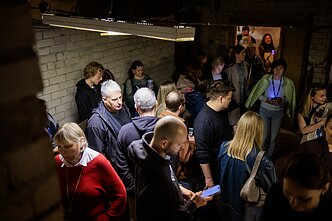
For several days, Kurdish posts on social media called for everyone to gather in one place in Belarus and head collectively to the border.
“We are now in a group of 16 cars and are following the buses,” a Kurdish-speaking man says on one of the multiple videos published on Telegram channels used by the migrants. The footage shows people in cars heading along the forest-flanked roads in Belarus.
“The organisers are waiting for you,” read a post on a popular Kurdish Facebook group used by the migrants.
Some days later on Monday, November 8, the mass of people appeared at the Polish border fence, some with shovels in hand, attempting to break their way into the EU country.
“It was supposed to be a protest organised by the refugees [against the border policies], but it got hijacked by Belarusian forces,” said Natalia Gebert, head of the Dom Otwarty NGO in Poland.

This version of events was supported by Pavel Latushka, one of Belarusian opposition leaders based in Warsaw. Citing “sources high-up in Belarusian intelligence services”, he said the Minsk regime was training select Iraqis and Afghans individuals. They would then infiltrate the crowd of migrants and use weapons on the EU border, Latushka told EUobserver.
Baltic and Polish officials maintain that the situation is unprecedented. However, several other crises over the past years have shown that authoritarian leaders are not averse to using migrants, or creating a migration crisis, to pressure the EU into concessions.
In May, up to 12,000 migrants arrived at the Spanish enclave of Ceuta in northern Africa over the course of two days. It was an attempt to pressure Spain into handing over a rebel leader who was hospitalised in mainland Spain with Covid-19.

Moroccan authorities went as far as “telling children they would get to see a Cristiano Ronaldo match if they swam across the border”, according to Politico Europe.
Hours later, Spain approved a 30-million-euro aid to Morocco border policing, in a transaction “reminiscent of Turkey’s deal with the European Union under which it was paid to stem the flood of migrants onto European shores”, the New York Times reported in June.
When Turkey launched its military operation against Western-backed Kurds in late 2019, NATO and the EU were less than keen to back the destruction of the Kurdish forces it had supported over the previous five years.
Ankara responded to the lack of support from its NATO allies by sending some 4,000 migrants to Greece. “We opened the doors,” Turkey’s strongman leader Recep Tayyip Erdogan said in a televised speech, before the country’s authorities bused migrants to the EU border.

Clashes with Greek security forces ensued, similar to the confrontation that would be seen in Poland over a year later.
In both Spain and Greece, the European Union coupled paying off the threat with turning a blind eye to pushbacks, the forced return of migrants in breach of both EU and international law. This then laid grounds for allegations of a moral crisis at the heart of Europe’s response.
On the Polish border, “we all are perfectly aware that instigator here is the Belarusian regime, and Lukashenko’s dream to become second Erdogan [...] and to gain a tool to blackmail the EU”, said Gebert, who is also one the many Polish activists working along the border with the Grupa Granica.
“But it doesn’t change the fact that the pawns in this game are human beings,” she added.

Lukashenko using EU’s ‘Achilles heel’
“The tactic of the weaponisation of migration starts with Erdogan,” said Anna Vallianatou, academy fellow at the Chatham House think tank. “[He] showed how you can blackmail the EU.”
However, the situation on the border with Belarus “carries a different political weight” due to an existing stand-off between Minsk and the EU which sanctioned the regime for its violent crackdown on opposition following the August 2020 presidential election.
Migration allowed Lukashenko to target the EU's “Achilles heel”.

“The political climate [and] hostility around [migration] allows authoritarian governments, like that of Lukashenko, to instrumentalise that fear [of refugees],” Vallianatou said. “It’s a vicious circle.”
Lukashenko knows it will hurt the EU, as it targets the internal divisions over the bloc’s approach to migration, she added.
“There needs to be a change in migration policy, an internal EU political solution to neutralise the power that these countries are exerting with the fear of a [migrant] crisis,” according to Vallianatou.
Escalate to negotiate?
On Monday, Russian Foreign Minister Sergey Lavrov said the EU should provide funding to Belarus the same way it did to Turkey. “Why is it not possible to help the Belarusians in the same way?” he said.
According to Judy Dempsey, a senior fellow at the Carnegie Europe think tank, Lavrov is “twisting” the situation.
“We are not winning this propaganda war. Belarus and Russia are saying we are to blame,” said Dempsey, adding that they are pointing at the alleged double standards of “liberal values” for not allowing people into the EU.
“What Lukashenko and [Russian President Vladimir] Putin are doing is exploiting and misusing the precedent that the EU established with Turkey after 2015,” said Dempsey.

According to Dempsey, the EU should break away from its previous playbook by taking stronger measures, including “closing borders [with Belarus], as this will also affect Russia, and the final permission for [the Russian–German gas pipeline] Nord Stream 2 should not be given”.
“Lithuania has to call Article 4 of NATO,” which asks for urgent consultations among allies, as “the country is cyber and hybrid attacked”.
Before the sharp escalation on the Polish border, Lukashenko claimed in July that he could halt migration, “but not for free”.
Earlier this week, more statements emanating from Minsk have signalled an alleged willingness to negotiate, possibly indicating that the Minsk regime and Moscow are aiming to push the European Union toward a settlement.
But “the EU cannot negotiate with Lukashenko, this is out of the question. This is exactly what he wants,” said Dempsey.

Newsletter
Every Friday morning.