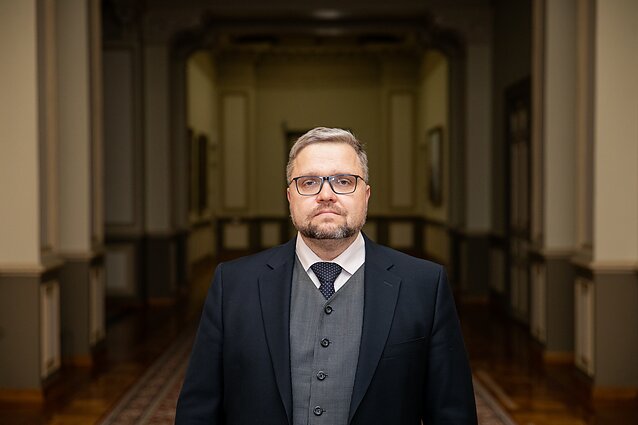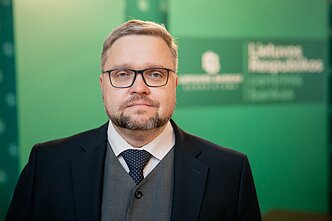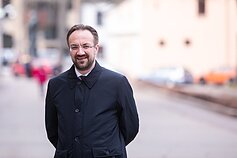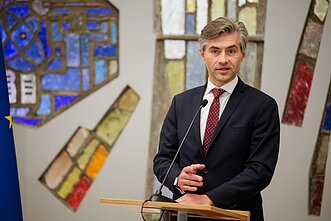













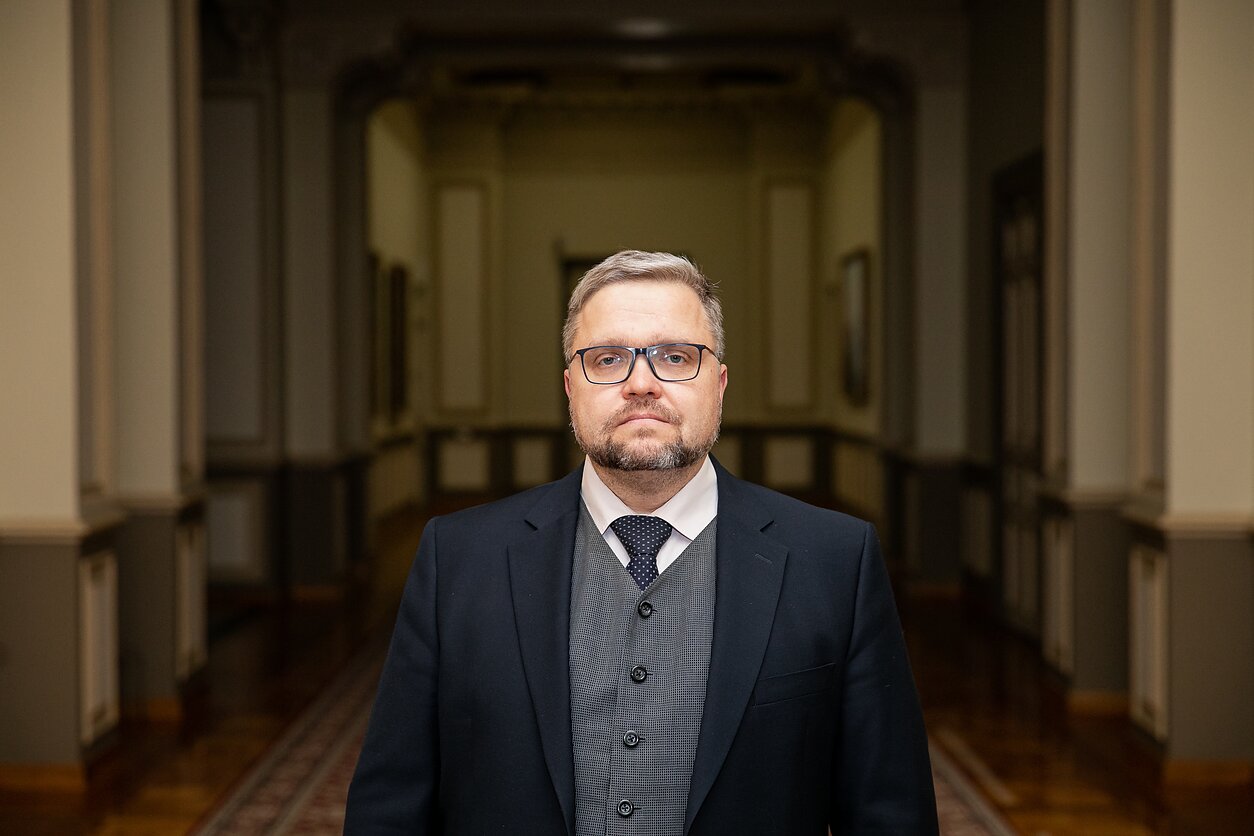
Vitas Vasiliauskas, until recently the chairman of the Board of the Bank of Lithuania, is set to join the Board of Governors of the International Monetary Fund in 2023. Reflecting on his 10-year term at the helm of Lithuania's central bank, Vasiliauskas says among his biggest concerns is the growing concentration in Lithuanian banking.
He spoke with LRT.lt in late March, right before ending his term.
How are you feeling these days now that you end your term as Lithuania's central banker?
Ten years ago I was moving in, now I am moving out, it‘s a fairly normal process. I feel fine and ready to work, I don‘t look back.
You started working in the State Tax Inspectorate when you were 22, became the head of Tax Exaction Department at 25, director of the Finance Ministry's Tax Department at 26, and a vice-minister of finance at 28. Was it your dream to work in finance?
No, I studied trade law. I never thought my occupation would have anything to do with finance, especially public finance. It just so happened that my work would always be related to public finance.
What occupation did you dream of when you were a child?
Usually I would spend my summers in Klaipėda with my godparents, so I wanted to be a captain. There was a college in Leningrad that I wanted to apply to. My uncle would tell stories of sailing the sea. I found out later that he only did it once, but the dream was still there.
Why didn‘t you become a captain?
I don‘t know, everything changed at some point. I became interested in history and, to be honest, when I was about to graduate from school, I was picking between economics and law. I chose law.
You were the manager of Dalia Grybauskaitė's presidential campaign in 2009. Did you intend to be appointed to head the Bank of Lithuania once Grybauskaitė was elected president?
No, I had no idea this would happen. We were just discussing my involvement in her presidential campaign, it was supposed to be a temporary venture. I took an unpaid leave from an attorney‘s office I was working in at the time, and started managing the campaign. I had no plans for further involvement in politics.

Is it easy to leave the post you had for ten years?
Yes, I feel completely at ease. Much like in life, there were moments of success and bad luck. The central bank has evolved, I witnessed its growth and feel confident about leaving it. Two terms, I think, is quite a long time, so this change is natural for both the person and the institution. After two terms, you become too familiar with the bank, and may miss certain things.
As you said, a lot has happened in 10 years. What did you find in the Bank of Lithuania back in 2011?
I found an organisation. I‘m not someone to complain how bad everything is. The country and the people were developing, so did the organisation. I succeeded at certain things, others will succeed at something else; I couldn‘t handle some things, someone will fail doing others. Such is life.
During your 10-year term, you've overseen liquidations of two banks and several credit unions, as well as the euro adoption. Which event do you think was the most important?
I think the most important achievement was that we introduced the Quantitative Economics study programme in Vilnius University. I am grateful to my alma mater and my colleagues in the bank for helping to make this happen.
In terms of economics, this is a big step forward. It‘s a pity, however, that we still don‘t have a joint doctoral programme in economics; it would be beneficial for a small country like Lithuania to have all education institutions cooperate running a doctoral study programme. We‘ve tried mediating in hopes of achieving this, but we did not yet succeed.
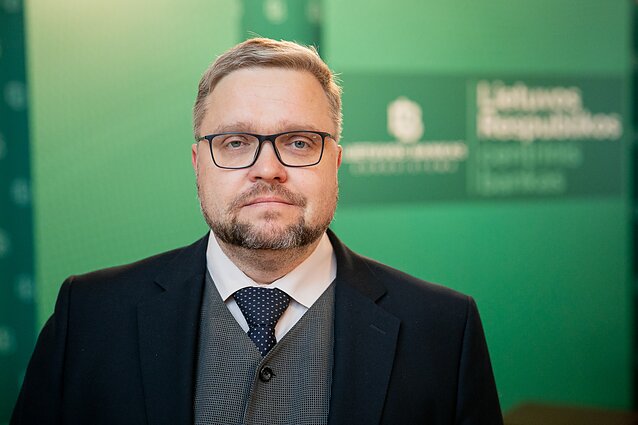
What is more, the Bank of Lithuania adopted a research-based culture and founded the Centre for Excellence in Finance and Economic Research (CEFER). I am also happy that we successfully attracted young researchers, graduates of doctoral studies; young Lithuanians who have acquired their degrees in Western countries. This elevated the bank to a new level.
The things you mentioned just had to be done, by me or someone else. It was homework that was not completed on time. The public finance system was unstable, and we worked to fix it.
Is there anything you would like to change, anything you have not done but would like to have done?
Any such ambitions I will probably take with me, but I think that the central bank should keep working on the issue of concentration in the banking sector. When decisions made in 2011 to 2013 led to fewer financial institutions in the market, we started encouraging the development of financial tech companies. This still needs time, as the sector is very concentrated. This would be a way to increase competition.
Another thing to consider is cooperation among institutions. It is no secret that we did not have a very good relationship with the former government, and there is definitely room for improvement here.
No matter how much you try to convince someone otherwise, the presumption prevails that there is just one Pan-Baltic market.
What do you think are the reasons for this degree of concentration in Lithuania's banking sector that is dominated by a handful of banks?
I look at the Baltic states and I see that we all seem to share the same problem. I'd say the reason is a small market. Another thing is that we would not have this issue right now if the financial institutions we had to liquidate back in 2011 to 2013 were solid, well-functioning banks [Snoras and Ūkio Bankas].
There were many circumstances that led to where we are right now. That is why we think that, with finance digitisation initiatives making their way forward, there is some potential in New Financing, and that these initiatives could also assist in democratising finance.

Are you, as a user, satisfied with banking services and fees in Lithuania?
Absolutely.
Did you not feel too detached from the problems of the common man and woman during these 10 years? Many would have liked to see someone who seeks to lower banking fees, and you did not do that.
I never really considered myself a banker. Yes, the Bank of Lithuania is the central bank, but overseeing banks is only one of its functions. We do a lot more, including economic research, forecasting, and managing the payment system. Our bank is one of the very few in the eurozone allowing figures outside the banking sector access to the payment system. There are many things involved.
When you work with economic data, you are bound to have a bird's-eye-view of the world, but once I leave work, I am just a simple person.
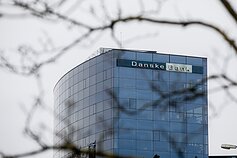
Lithuania has witnessed several large-scale money laundering schemes during your second term, involving Danske Bank in 2018, and Swedbank a little later. Despite there being little involvement from Lithuanian subsidiaries in these scandals, we still acquired a reputation as a money laundering state. Why haven’t we dispelled these associations yet?
It is not like everything goes away once you say a word. This is just one more proof that the Baltic states are still regarded as a unit.
We, without a doubt, would talk to different audiences about how Lithuania stands out. Yes, the business of transactions in our country mostly revolved around two banks that had to close under different circumstances between 2011 and 2013.
You’ve correctly observed that, historically, there are much fewer deposits held by non-residents in Lithuania than in the other Baltic states. We tried talking to institutions from across the Atlantic about this. These conversations would usually start with explaining the difference between the Balkans and the Baltics. It is not easy.
Read more: Swedish regulator considers sanctioning SEB over money laundering in Baltics

What is more, pretty much the same banking groups operate in Lithuania, Latvia and Estonia. No matter how much you try to convince someone otherwise, the presumption prevails that there is just one Pan-Baltic market.
We should also keep in mind that we are judging these money laundering scandals from five or ten years ago from today’s perspective. Our understanding of money laundering prevention was different back then. Regulations have changed. It is hard to predict how the financial technology sector of 2020–2021 will be seen in 2031. The thing about retrospective approach is that the object of such approach is always behind.
In 2023, you will be joining the Board of Governors of the International Monetary Fund (IMF), where you will represent the Baltic states and the Nordic region. Do you have any ideas for improving Lithuania's image?
You see, there I will be representing eight countries, so no personal agenda is allowed. Of course, I will participate in discussions, since, I believe, the questions of de-risking and correspondent banking will still be relevant, and on the agendas of international organisations. There will be many more opportunities to showcase the expertise of Lithuania.
In 2010, Kęstutis Glaveckas headed the parliamentary investigation and, in 2018, Stasys Jakeliūnas initiated a new one into the causes of the 2008 economic crisis in Lithuania. [Jakeliūnas later accused the Bank of Lithuania of uncooperativeness.] You seemed quite sceptical about these investigations. Is it because everything was already clear, or because you did not like the methods they used?
Read more: Scandinavian banks ‘caused’ financial crisis in Lithuania, Seimas investigation finds
First of all, we should debunk the myth about the lack of cooperation from the Bank of Lithuania. Considering the amounts of information we provided, and the ways we provided it, I do not see what else we should have done to cooperate. Yes, we received eight questions. They were broad in scope and outside our area of expertise, so we immediately asked for a meeting, to specify the questions or to discuss ways we could provide the information. The Bank of Lithuania was deemed uncooperative instead of allowing us to clarify the details over a meeting.

The investigation itself is not a bad thought. There were many such investigations carried out in other parliaments as well; the problem is whether they are objective. What is more, if the investigation is selective, or if facts are being interpreted in ways that suit the investigators before the investigation is even complete, it is a problem.
People can try and investigate this again later, but I would like to repeat that I have never seen an investigation so politicised. I want to apologise to archaeologists for calling such investigations financial archaeology, but I think that that’s what it is. Not only that; it is also a politically incorrect financial archaeology.
Has the Bank of Lithuania initiated any internal discussions or investigations, for example, regarding the increase in Vilnius Interbank Offered Rate (VILIBOR)? [There were allegations in 2008–2009 that commercial banks manipulated the rate in order to crank up interest rates.]
Read more: Prosecutors drop investigation over mortgage interest hike during financial crisis
Naturally. Such investigations were being carried out prior to my term at the bank, and then later when I was already there. Most economists, all except one, did not see any abuse on the part of commercial banks. The Bank of Lithuania is a democratic institution, and the economists have differing opinions. We make decisions through discussion, but if someone thinks differently than the majority, we provide arguments, make conclusions, and that’s that.
Are you talking about Tomas Ramanauskas?
I don’t want to give names, as that can create legal problems.
Read more: Group of MPs demand resignation of Lithuanian central bank's chief
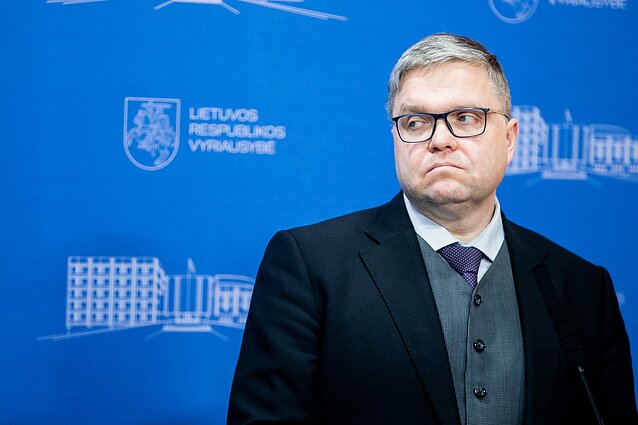
You have said once that, in terms of your career, you had reached the top. Last month you were announced as a future member of the Board of Governors at IMF, not to mention the first representative of the Baltic states on the Board. Were you expecting this?
I believe, and will probably still believe later, that the 10 years I spent at the central bank was the peak of my career.
Discussions about gender balance in institutions are on the rise. Why is there only one woman on the board of the Bank of Lithuania?
Good question. I am glad she is there, because at one point there were no women. It seems like we can still make more progress. In general, looking at the general management team of the bank, there is definitely room for improvement in terms of gender balance. We have even established the Committee on Equal Opportunities to address these issues.
Do you know the percentage of men and women working at the bank?
I don’t think there is much of a difference in terms of employees, it’s around half and half, but among the heads I would say the percentage is 30 percent women and 70 percent men. I would need to double check these numbers.
A decade ago, you were called a ‘non-politicised’ person. However, if we were to forget Lithuanian politics, which political ideology do you support?
I do not want to say as I am still the head of a non-political institution. [The interview was conducted before Vasiliauskas left the post earlier this month.]
However, a person cannot be apolitical, I have the right to my own worldview, yet I choose not to get involved in politics within my field of work. Sadly, sometimes I can’t escape it. Someone else would involve me by throwing unfounded accusations at me, for which I would later have to answer. That does not mean that I, as the head of the Bank of Lithuania, have any preference towards one or another political system.
I do have my own worldview; I value responsibility, diligence, and professionalism. The central bank actually holds the same values as I do; I support pro-Europeanism, that is very important to me. I do not understand going to extremes, nor do I understand over-the-top nationalism, or forcing your opinions on someone else.
Do you lean more towards the economic left or right?
Depends on the situation; as facts change, so do my opinions. However, I do not agree with the thought that the state only gets in the way and that we should let the market dictate the rules. Certain historical examples, for example, the financial crisis, show that market-based mechanisms do not work.
However if you ask me about human rights and the persons’ ability to act, yes, I do believe in such things.
What do you do in your free time?
I read, travel, and also am interested in history.
Which historical period are you most interested in?
I’d say I enjoy more modern history. I am interested in the period of the Polish-Lithuanian Commonwealth, also the period between the two world wars.
I do not agree with the thought that the state only gets in the way and that we should let the market dictate the rules.
Will you take the coronavirus vaccine?
Naturally.
Which vaccine would you prefer?
No difference. Of course, not the ‘satellite’ one [referring to the Russian Sputnik V vaccine].
Even AstraZeneca will do?
Of course.
Do you hold any expectations towards the new chairman of the board?
No, I don’t think it would be ethical to, let alone discuss it publicly.
How would you describe Gediminas Šimkus [who took over as the head of the Bank of Lithuania earlier this month]?
He was a member of our team for a while, and is an expert within his field. I‘ve known him ever since I started working in the central bank. He worked at the European Central Bank at that time, while here in Lithuania we were trying to convince people to return to the country, as well as return what the state had invested into them. Šimkus was one of the people who returned.
Read more: Cooperative banking and deregulation among priorities for Lithuania's central bank chief
Back in 2019, you said that Lithuania has reached its golden age. Would you say the same today and, if not, what are we missing?
In terms of safety, integration, and geopolitical orientation, we truly are in the golden age, I think.
Of course, we still have issues that need to be addressed, such as income inequality and happiness of the society. However, before we, as a society, can solve these problems, we need to agree on what our goals are, how we see ourselves in 10 to 20 years from now, and stay focused on that path.
Sometimes I think that we are too categorical, too aggressive, to the outside eye as well. So I wish for us to talk less and do more. Do more both with our partners and while occupying those invisible front lines, and throw around statements or accusations less.
If you had a magic wand and could adopt any act, or make any decision, what would you do?
I would use the magic wand to try and solve the problem of distrust in our society, because the distrust and constant state of suspicion prevent us from achieving what we need to achieve, even though we have already achieved quite a lot. Distrust prevents us from moving forward. We need to communicate, agree on certain strategic aspects, and just move forward.

Newsletter
Every Friday morning.