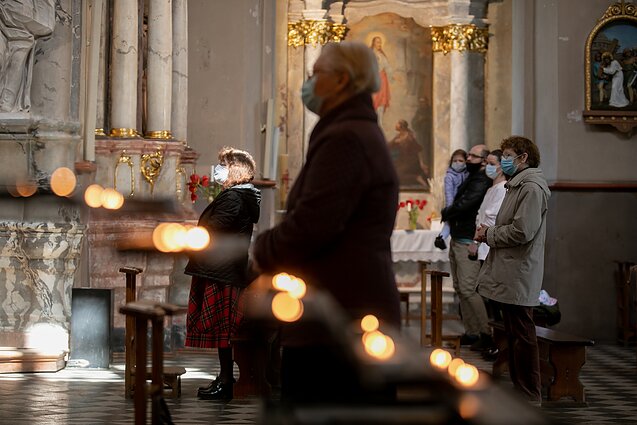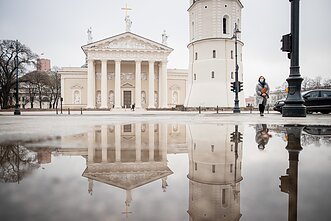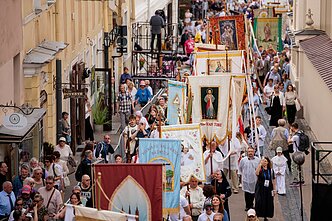









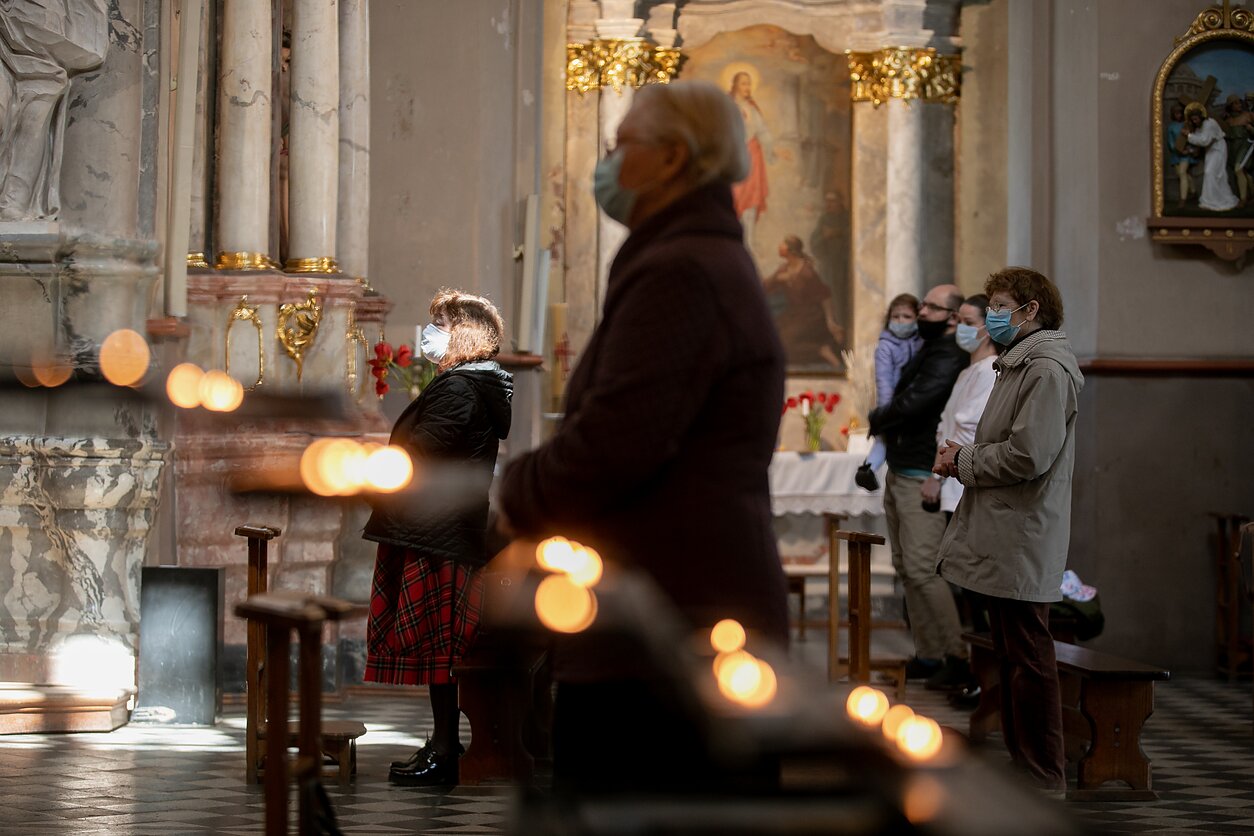
Catholic churches in Lithuania will hold live services starting next week, the Bishops' Conference announced on Tuesday, even though public events are banned under coronavirus lockdown rules.
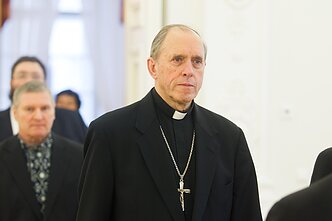
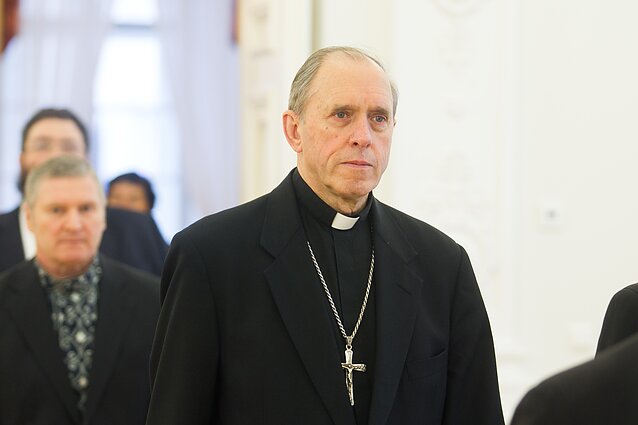
“Yes, we have made such a decision, since people have been asking and demanding it. I think people need spirituality, they are starving for it,” Eugenijus Bartulis, the archbishop of Šiauliai, told BNS, confirming the reopening of church services.
The country is currently under a coronavirus lockdown, with non-essential services and shops as well as all public events suspended.
The Bishop's Conference, the leadership of Lithuania's Catholic Church, announced in mid-December that churches were also suspending live services in order to avoid the risk of infection. Worshipers were still allowed to visit churches for individual prayer.
However, Bartulis said, live services do not pose any danger, as few people usually attend them and churches will maintain safety measures, such as facemasks and at least two-metre distances between worshippers.
“I don't see any threat, because they [worshippers] stay in a church a short while, distances are big,” Bartulis told BNS. “If it's a rural church, three or four people show up.”
While the Lithuanian government imposed mandatory restrictions on a number of activities in the country, it only recommended that houses of worship suspend services or hold them online.
“We appreciate that the Lithuanian church leadership switched to remote services during the holidays, a time very important for believers,” Rasa Jakilaitienė, the spokeswoman for Prime Minister Ingrida Šimonytė, commented to BNS. “We hope that after public services are resumed, people will be considerate of their own and others' health and observe all safety measures.”
The Lithuanian Catholic Church enjoys a special legal status under the 2000 agreement with the Holy See, which allows it broad autonomy in organising activities.
However, while the church is legally within its right to resume live services, it might not be a responsible decision in view of the pandemic, says Vytautas Mizaras, a law professor at Vilnius University.
“One may reasonably question whether such actions and their possible results have been well considered and responsible,” Mizaras told BNS.
“I personally have doubts whether this decision is justified in the current situation,” he added.
Meanwhile Vytautas Nekrošius, a law professor at Vilnius University, believes church services should be subject to the same regulations as other public events.
“The agreement [between Lithuania and the Holy See] does not give the Church immunity from Lithuanian laws,” he told BNS. “When it comes to the safety and health of the public, the Church must observe the rules just as any other organisation. The general ban on gatherings applies to gathering in any place, including churches, unless the government's decree or a law makes explicit exemptions.”

Newsletter
Every Friday morning.