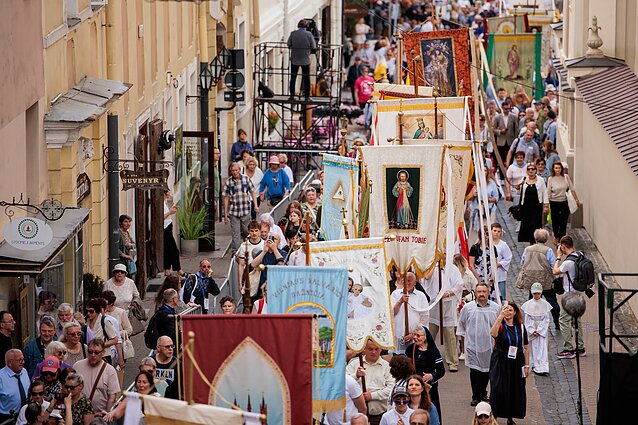











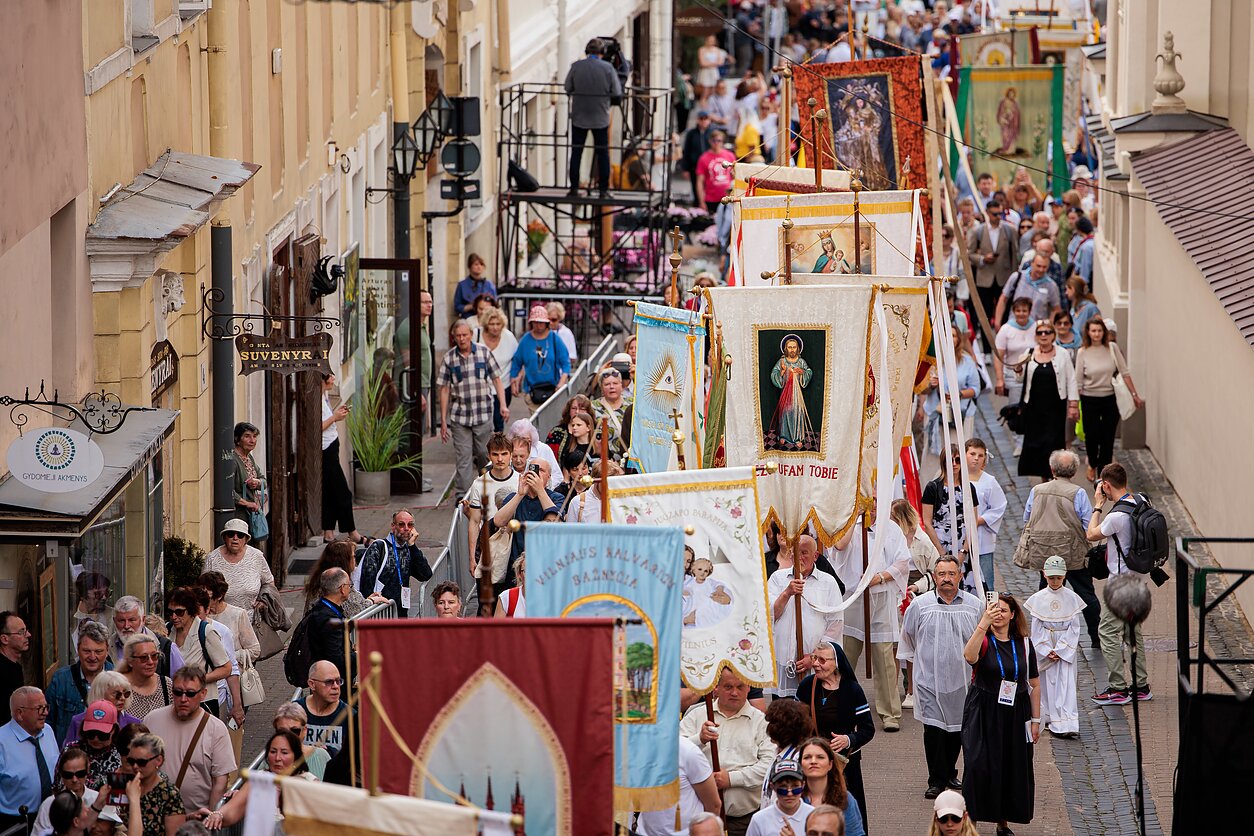
The first international religious tourism forum was held in Lithuania’s northern Šiluva town, famous for its Catholic indulgences (atlaidai) ceremony. Organisers hope pilgrims will opt for longer stays in Lithuania and that the country's regions will attract more attention.
"The motivation of religious tourists is quite different, and they are less affected by the geopolitical situation. Interest in this area of tourism is growing rapidly," says Suleiman Farajat, a professor of cultural tourism at the University of Jordan.
More than 130 participants from different countries, including Poland, Uruguay, India, Argentina and Jordan.
According to forecasts by the United Nations World Tourism Organisation, pilgrimage tourism in Europe could grow by 6-7% a year.
Sigita Maslauskaitė-Mažylienė, Lithuania's ambassador to the Holy See, says pilgrimage tourism has every opportunity to showcase the country's cultural and historical identity to visitors.
"We should tell them not only why that Gothic church is important as a pilgrimage site, but also about the Ukrainian flag flying nearby, because it raises questions too. It is essential to link these two elements, and that is what makes us interesting," Maslauskaitė-Mažylienė says.
Around 100,000 pilgrims visit Šiluva in the northern Raseiniai district each year, most of them from Poland.
"They stay in the pilgrims' centre; we welcome them, they eat, attend Mass. This is an integral part of their visit. Then we organise excursions and, through educational activities, try to ensure that people have things to do," says Silvija Čižaitė-Rudokienė, head of the Šiluva Pilgrims' Centre.
Tourism experts say that in order to become an attractive religious tourism destination, municipalities with sites that attract pilgrims need to work together and create a joint range of experiences.
"A traveller is unlikely to come just to Šiluva. When someone arrives or lands in one Lithuanian city, they need to have a way to travel from one place to another, as well as opportunities to experience things along the way and at the different destinations they visit," says Olga Gončarova, head of Lithuania Travel.
Religious tourism is not seasonal, with people travelling at different times of the year. In recent years, the average age of travellers has also been falling, with most pilgrims now under 50. The main destinations are not the capital or the major cities, but the regions.
"I would like to highlight the opportunities for the regions and communities – what we create can be showcased to people coming from other countries," says Lidija Bajarūnienė, vice-president of the European Travel Commission.
Foreign tourists typically stay in Lithuania for two or three nights. Slower-paced religious tourists interested in itineraries spanning several municipalities are forecast to stay in Lithuania for four or five nights.
Up to 1.5 million foreign tourists visited Lithuania last year.

Newsletter
Every Friday morning.