








Lithuania’s parliament has taken the first step toward removing a constitutional ban on weapons of mass destruction being present on its territory, a move supporters say would allow the country to participate more fully in NATO’s nuclear deterrence arrangements.
The Seimas voted 106-18, with six abstentions, in favour of removing Article 137 of the Constitution. The provision prohibits weapons of mass destruction and foreign military bases on Lithuanian territory.
The change is not yet final. Under Lithuania’s constitutional amendment procedure, lawmakers must vote twice, with at least three months between votes. The proposal must receive at least 94 votes – two thirds of the total – in favour in each ballot.
Supporters stress that removing the provision would not automatically lead to nuclear weapons being stationed in Lithuania. Instead, they say, it would remove a legal obstacle to participation in NATO deterrence activities, including exercises involving allied aircraft or ships carrying nuclear weapons.

Why does Lithuania want to change the Constitution?
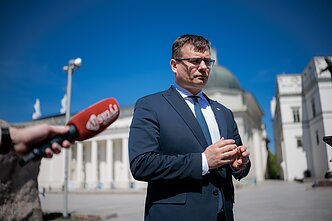
Conservative Homeland Union leader Laurynas Kasčiūnas, a former defence minister, said Lithuania’s current constitutional restrictions prevent it from participating fully in NATO’s nuclear deterrence plans.
He noted that Estonia, Latvia, Finland and Poland do not have the same constitutional prohibition.
Under the existing provision, nuclear weapons cannot be stationed in Lithuania, and even the flight of aircraft carrying such weapons over Lithuanian territory is prohibited, Kasčiūnas said. The restriction also prevents allied vessels carrying nuclear weapons from entering the country’s territorial waters.
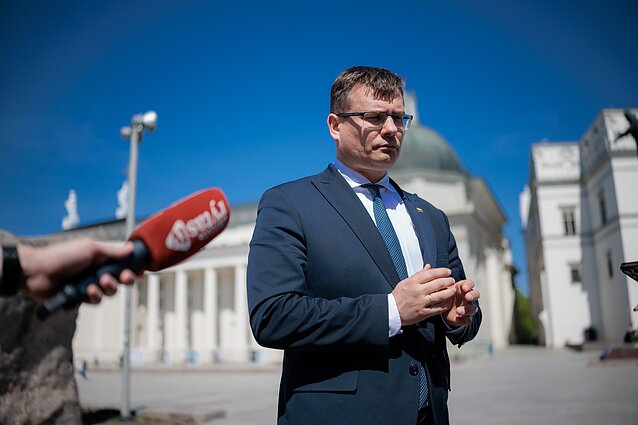
“Given the current restriction, we cannot participate fully in NATO’s nuclear deterrence plans,” Kasčiūnas told parliament, describing nuclear deterrence as a central element of the alliance’s broader deterrence strategy.
Removing the ban would give Lithuania greater flexibility to participate in allied activities intended to deter potential adversaries, supporters argue.
Former Defence Minister Arvydas Anušauskas, also a conservative, said the amendment would enable more comprehensive participation in deterrence exercises, rather than necessarily leading to the deployment of nuclear weapons.
Social Democrat Remigijus Motuzas similarly argued that removing Article 137 would not turn Lithuania into a nuclear-armed state or mean that nuclear warheads would immediately appear in the country.
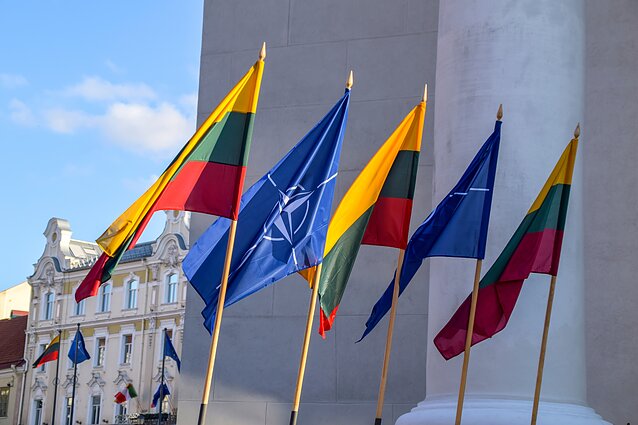
Would nuclear weapons be stationed in Lithuania?
Not automatically. Removing the constitutional prohibition would eliminate one legal barrier, but it would not itself authorize a decision to deploy nuclear weapons in Lithuania. Liberal Movement leader Viktorija Čmilytė-Nielsen said any future decisions on deploying such capabilities would require separate legislation.
“What specific measures will be needed for our security is something we will decide ourselves, of course together with our allies,” she said.
What about chemical and biological weapons?
Kasčiūnas rejected claims that removing Article 137 would open the door to the use of chemical or biological weapons.
He said Lithuania had ratified international conventions in 1997 and 1998 that have the force of law and prohibit the proliferation, production or use of those weapons.
Who opposes the change, and why?
Opposition to the amendment was concentrated among lawmakers from the opposition Nemunas Dawn party. Fourteen of its members voted against the proposal and two abstained.
Aidas Gedvilas of Nemunas Dawn questioned whether parliament should make such a consequential change without a public vote. He called for a referendum, arguing that alternative approaches were available.
Vitalijus Šeršniovas, a member of the Seimas’ mixed parliamentary group, proposed a narrower solution that would address the need to allow aircraft carrying nuclear weapons to fly over Lithuania without removing the entire constitutional provision.
He also argued that the issue should be decided by referendum.
Three other members of the mixed group and one lawmaker from the Lithuanian Farmers and Greens Union and Christian Families Alliance parliamentary group also voted against the amendment.
The existing Article 137 covers both weapons of mass destruction and foreign military bases. The proposal under consideration would remove the provision rather than replace it with a narrower rule.

Newsletter
Every Friday morning.