

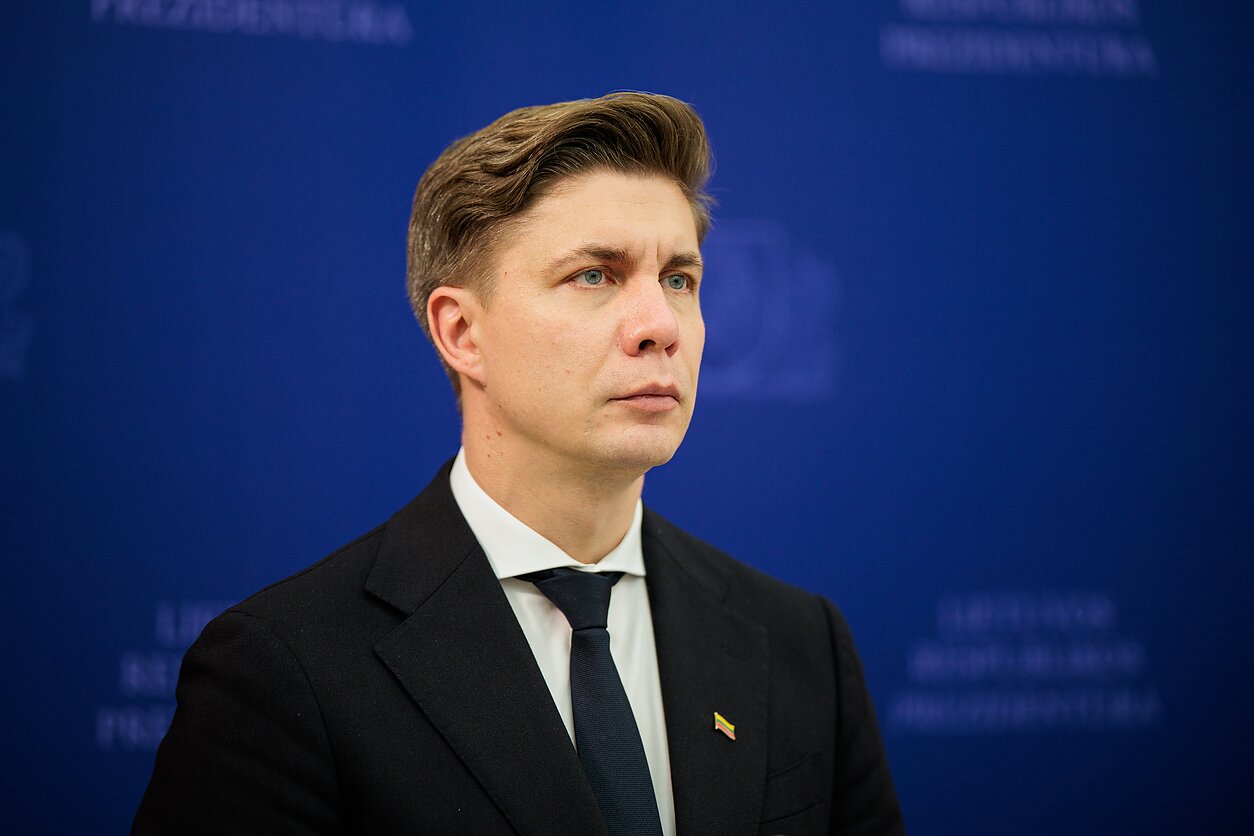
Lithuania plans to allocate about 4.8 billion euros to defense next year, or slightly more than 5% of gross domestic product, Prime Minister Mindaugas Sinkevičius said Thursday.
The planned allocation would be about 36 million euros higher than this year’s military budget. But because of economic growth, defence spending would account for a smaller share of GDP than this year, when the budget provided for 5.38%.
“The priorities for 2027 are to maintain 5% of gross domestic product for defence. As we mentioned, being in the 5% club remains our goal and will be implemented,” Sinkevičius told reporters.
He said the exact figure was still being discussed by the governing coalition and with Defence Minister Robertas Kaunas, who wants defence spending to reach 5.1% of GDP.
“The actual amount, compared with this year’s allocated amount, will still grow, the percentage will decrease, but the actual amount allocated for defence and security will increase,” Sinkevičius said.
He stressed that increasing military spending must be accompanied by efficient and transparent use of the funds.
“Is the budget growth sufficient? You can say that the more, the better probably, but I say we need efficient, transparent, meaningful spending,” he said.
Among the government’s main priorities are air defence, the deployment of a German brigade in Lithuania and development of a national division, Sinkevičius said.
He added that 43.92% of this year's defence appropriations had been spent so far.
Lithuania has sought to maintain defence spending at 5% of GDP as it strengthens its military capabilities in response to Russia’s war against Ukraine and deepens NATO cooperation.
Deficit expected to exceed EU limit
Lithuania’s general government budget deficit is expected to reach about 3.8% of GDP next year, Sinkevičius said.
“It seems that the variation is currently about 3.8%,” he said at a news conference when asked about the projected deficit.
That would put Lithuania above the 3% deficit limit set under the European Union's fiscal rules.
Sinkevičius said the government had already made about 1.5 billion euros in planned spending cuts after negotiations to keep the deficit from rising further.
He has previously said that without allowing a larger deficit, the government would not be able to meet its commitments on military spending and other planned increases in expenditure.
The EU’s Maastricht criteria generally require member states to keep their general government deficit below 3% of GDP.
Criticism from Nemunas Dawn
Remigijus Žemaitaitis, chairman of the opposition Nemunas Dawn party, criticised the decision to maintain defence funding at its current level next year.
According to the lawmaker, defence acquisitions are delayed, scandals arise over the use of funds, and some purchases are made outside public procurement procedures. Žemaitaitis said some funds have already been paid in advance, but the goods will be delivered only in one or two years, so he proposed reducing the budget and completing projects already under way first.
Žemaitaitis said he sees no value in being in the so-called 5-percent club, referring to countries that allocate at least 5 percent of their gross domestic product to defence.
“We can leave that 5 percent club. What is the point of being in that club now if you sit in it and do not use the money? We did not use the money, we paid the advance invoices, and we will get the goods a year or two later. I ask, why throw such money into advances, better invest in education, invest in the economy, actually in raising the gross domestic product, in what boosts the economy and what will allow paying off debts in 2028, 2029,” the lawmaker said.

Newsletter
Every Friday morning.