
















Lithuania’s system for financing innovation lacks a coherent pathway to help projects progress from scientific research to market-ready products, the country’s National Audit Office said Tuesday, warning that promising ideas are being lost at multiple stages of development.
The audit found that while more than 3 billion euros has been allocated through 174 funding measures to support business innovation between 2022 and the first half of 2025, the funding system operates as a collection of separate instruments rather than an integrated framework.
According to the audit, the largest share of funding, 1.83 billion euros, is earmarked for product development and exports, while substantially less is allocated to research and prototype development, at 206.7 million euros and 491 million euros, respectively.
As a result, innovation projects can stall both when moving from one stage of development to the next and when seeking intellectual property protection for products that have already been created, the National Audit Office said.
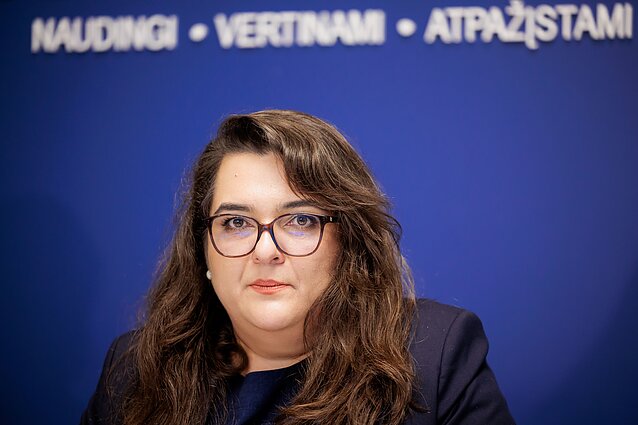
“Innovation policy cannot end with the allocation of funding,” Auditor General Irena Segalovičienė said in a statement. “The state’s goal should be to create conditions that allow as many ideas as possible to complete the journey from scientific research to the market and become solutions protected by intellectual property rights. This requires not isolated measures but a coherent system that turns public investment into long-term benefits for the national economy.”
The audit found no projects that had received funding at two consecutive stages of the innovation development process, suggesting businesses struggle to secure continuous support from research through commercialisation.
The report also highlighted weak protection of intellectual property. Of 30 projects reviewed, 27 resulted in products that were developed or commercialised, but only one was patented.
Lithuania’s patenting activity remains well below the European Union average. In 2024, the country recorded 45 patent applications per 1 million inhabitants, compared with an EU average of 152, according to the audit.
The National Audit Office attributed the gap to structural problems, noting that obtaining a patent typically takes between two and five years, while reimbursement schemes for patenting costs remain available for only one to 24 months, limiting companies’ ability to use the support.
The auditors recommended replacing the current patchwork of funding measures with an integrated innovation support system that would ensure continuous financing throughout all stages of development. They also called for consistent financial and expert assistance during the patenting process.
If the recommendations are implemented, the National Audit Office said it aims to increase the share of projects receiving funding at two consecutive stages of innovation development from zero to 30% and raise the share of research and development projects protected by patents or other intellectual property rights from 3% to 20%.

Newsletter
Every Friday morning.