
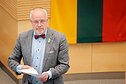








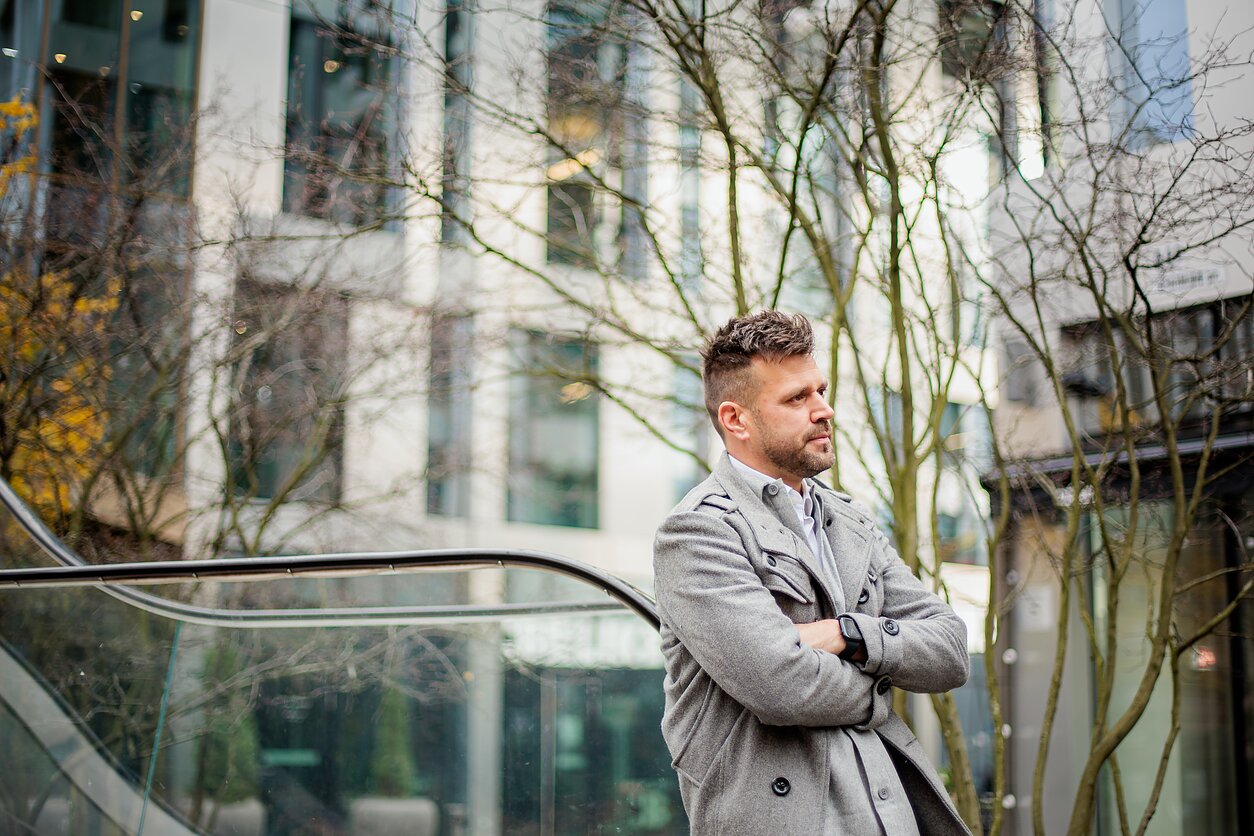
Juan Ignacio Fourment Kalvelis, who introduces himself as Jonas Kalvelis, is one of many Argentinians who have restored his Lithuanian citizenship.
"It is a real honour to become a Lithuanian citizen. A passport is not just a document – it is an honour and a way of growing closer to Lithuania. It is recognition that we exist and that we have the right to restore our citizenship. I am immensely grateful," he says.
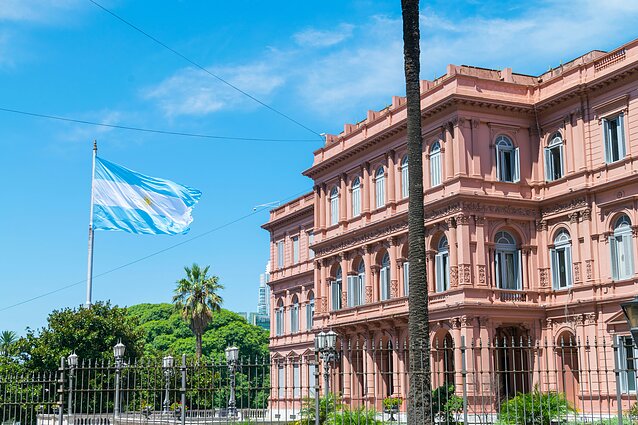
Kalvelis's great-grandparents, Antanas Kalvelis and Angelė Kačiulytė, emigrated to Argentina exactly 100 years ago. Their five-month-old son Jonas became Juan after arriving, as Argentine law at the time did not allow children to be registered with non-Spanish names.
According to Kalvelis, around 35,000 Lithuanians emigrated to Argentina before the Second World War.
Today, he estimates there are around 300,000 people of Lithuanian descent living in the country, although only a proportion are actively involved in the Lithuanian community.
According to Kalvelis, Lithuanian identity has been nurtured in his family since the first generation of emigrants. Both his great-grandfather and grandfather were active members of the Lithuanian community in Argentina.
"Lithuanian identity has always been part of our family. It's a pity my mother died five years ago – it would have been an honour for her to see her son regain Lithuanian citizenship. I think she would have been very happy," he says.
Kalvelis says that the process of restoring citizenship is not straightforward. Applicants must gather numerous documents and submit them to the migration authorities, while not every descendant has preserved their family's archives.
"It's a long and complicated process. For some it's easier because their family has kept the documents. But if everything is submitted properly, it is certainly possible to restore your citizenship," he says.
According to Kalvelis, an increasing number of people of Lithuanian descent in South America are applying to restore their citizenship, and he often advises fellow community members on how to prepare for the process.
However, he believes Lithuanian citizenship should represent not only rights but also a commitment to preserving Lithuanian identity.
"We always encourage people who want citizenship to become involved in the Lithuanian community and devote time to Lithuania. It is both a responsibility and a duty to give something back to Lithuania. Not everyone does that," he says.
While some people view Lithuanian citizenship primarily in terms of its practical benefits, Kalvelis says the Lithuanian community in South America encourages people to see it in a much broader way.
"For some it is an opportunity to be in Europe and the European Union. But we certainly don't encourage that. We encourage people to take part in the Lithuanian community," he says.
According to Kalvelis, more and more third- and fourth-generation descendants of Lithuanians want to learn about their roots, study the Lithuanian language and discover which part of Lithuania their grandparents or great-grandparents came from.
"As community representatives, we provide information from various sources and do our best to help people feel closer to Lithuania," he says.
Kalvelis's own citizenship restoration process took just over six months, although he says others often have to wait much longer.
"I was very lucky – it took just over six months. For some people the process lasts a year and a half or even two years. I'm very grateful everything happened so quickly for me," he says.
Having regained Lithuanian citizenship, Kalvelis says he intends to exercise his right to vote. However, he points out that taking part in Lithuanian elections is not easy for Lithuanians living in South America.
"At the moment there is no Lithuanian embassy in South America – only the Consulate General in São Paulo – so the voting process takes time. We hope that one day an embassy will be opened, making it easier for Lithuanians in South America to deal with the government and vote," he says.
Tracing his family's roots in Lithuania
Kalvelis says that after regaining Lithuanian citizenship, he has continued researching his family's roots in Lithuania. So far he has established that his grandfather was baptised in Vabalninkas, prompting him to visit the town and its surroundings a few years ago.
"Two years ago I had the chance to visit the very church where he was baptised almost 100 years ago," he says.
However, he has not yet managed to determine where his great-grandfather Antanas Kalvelis was born. He believes the family may have originated from what is now Biržai District, but the search continues.
"I've found the Kačiulytė branch of the family, but I'm still looking for the Kalvelis side. I think I'll find them," he says.
Most of what he knows about his grandfather comes from stories told by his mother and older members of the Lithuanian community in Argentina who had known his family personally.
Speaking about his great-grandparents' emigration, Kalvelis says Argentina actively encouraged immigration during the 1920s, while Europe was experiencing economic hardship and growing political tensions.
"I used to speak to immigrants, and they would tell me that even after the First World War people felt something bad was going to happen in Europe. The economic situation was difficult, so many hoped to find peace and stability in Argentina. They found work almost immediately," he says.

Newsletter
Every Friday morning.