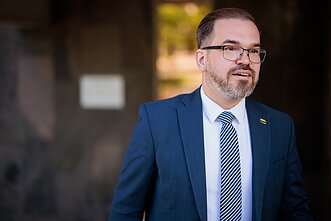


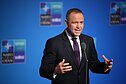







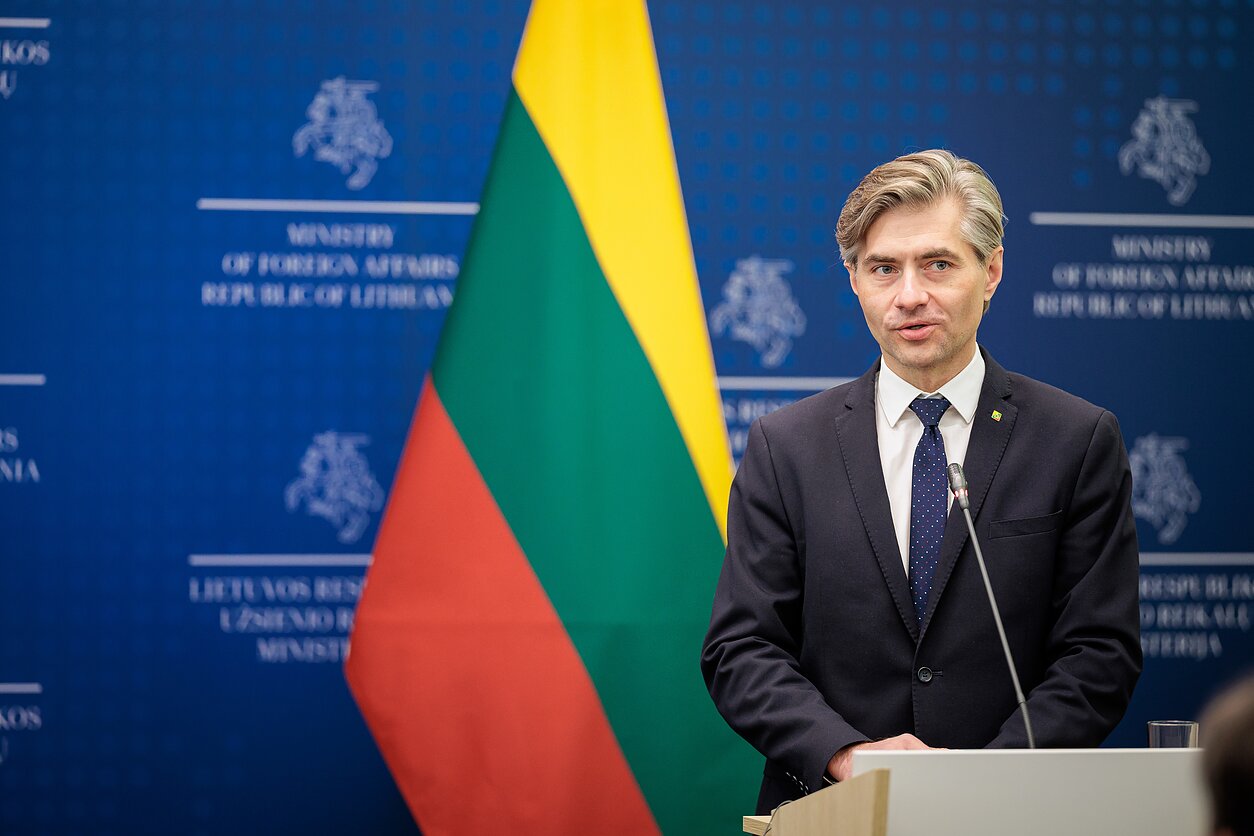
Lithuania’s acting Foreign Minister Kęstutis Budrys said Thursday that the country’s policy toward Belarus remains unchanged despite concerns over revised wording in the new government’s program.
“Lithuania’s interest in relations with Belarus is ensuring security. Belarus is a source of hybrid threats and various actions carried out against Lithuania. As long as Belarus continues them, Lithuania will maintain a strict policy and seek additional sanctions. This is our position, and I see no changes here,” Budrys told the radio Žinių Radijas.
Questions about the government’s stance emerged after the 21st government’s programne altered its wording on Belarus. While the previous programne pledged to maintain the international isolation of both Russia and Belarus, the new version refers explicitly only to Russia in that context.
However, another provision states that Lithuania will strengthen the isolation of and pressure on Belarus if Minsk continues to support Russia’s war against Ukraine or carries out hybrid attacks against the European Union or Ukraine.
Budrys said the government’s action plan would further reflect Lithuania’s approach toward Belarus.
“The government programme should not be viewed as a threat assessment document or a national security strategy that lists the full range of risks and threats. It is a political document that sets out what we specifically intend to do,” he said.
He also said Lithuania would continue to push for the extension of sanctions against Belarus as long as Minsk’s policies remain unchanged.
“If those conditions remain, we will maintain our position. If the conditions change, we will act differently. Whenever the Foreign Ministry submits proposals, it will explain why they are in Lithuania’s interest. It is not because someone else needs it or because someone simply wants sanctions to continue,” Budrys said.
Lithuania began imposing sanctions on the government of Belarusian President Alexander Lukashenko in 2020 following a crackdown on anti-government protesters after the country’s disputed presidential election. It later also moved to halt the transit of Belarusian potash fertilisers through its territory.
Further reading

Newsletter
Every Friday morning.