















Russia is more likely to resort to hybrid provocations than launch a conventional military attack against NATO’s eastern flank, Lithuania’s ambassador to the alliance said, as officials and analysts urged calm following renewed warnings about possible Kremlin actions in the Baltic states or Poland.
The comments come after two NATO eastern flank countries warned last week that Russia could stage provocations in the Baltic states or Poland in the near future.
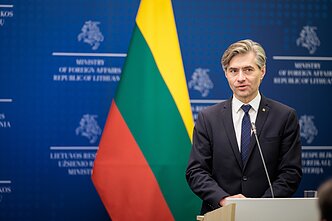
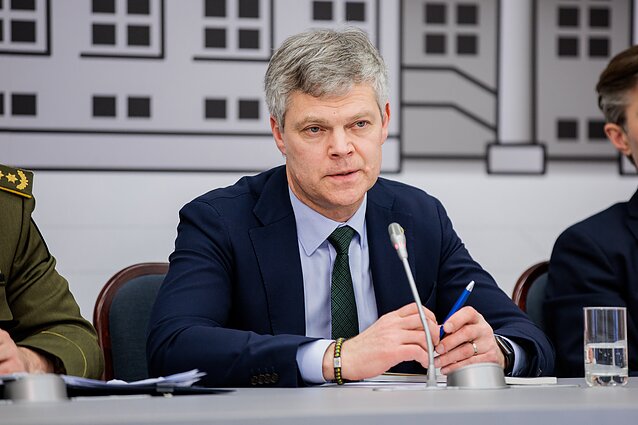
“We probably should not expect conventional threats,” Lithuania’s ambassador to NATO, Darius Jauniškis, said. “I would first think about elements of hybrid warfare. Those are probably the easiest to carry out.”
Possible hybrid actions could include missile or drone incursions, according to Latvia’s intelligence services, which have warned that such incidents could be intended to pressure Western countries to reduce their support for Ukraine.
Security experts say Russia’s broader objective would likely be to test NATO’s resolve rather than influence policy on Ukraine directly.
“I think this would be an attempt to test NATO itself, and especially the United States, in light of recent developments,” said Tony Lawrence, an analyst at the Tallinn-based International Centre for Defence and Security. “It would be optimistic to think that another provocation in a NATO country could divert attention away from Ukraine.”
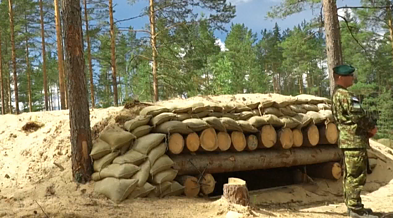
The warnings come as Estonia continues to strengthen its defences along its nearly 300-kilometre border with Russia, building trenches, bunkers and anti-tank barriers known as “dragon’s teeth”.
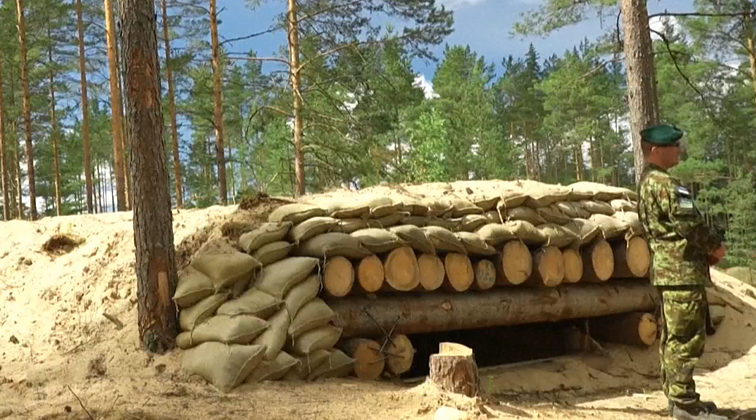
“So far we have built one company stronghold in the northeast and another in the southeast, largely to show people what we are doing and why,” Estonian Lt Col Ainar Afanasjev said. “But these positions were built according to plan. They are not randomly scattered around the area.”
Estonia hopes the fortifications would help deter or at least slow any potential Russian advance.
Western intelligence agencies have offered differing assessments of when Russia might be capable of threatening NATO militarily. Some estimate Moscow could be prepared for aggression against the alliance by the end of the decade, while others argue Russia’s military remains too depleted by the war in Ukraine to mount a conventional attack.
Latvian security analyst Janis Karlsbergs said Russia has a long history of using “hybrid tactics” and that the latest warnings should not be viewed as unprecedented.
“This has been happening for many years,” said Karlsbergs, an analyst at NATO’s Strategic Communications Centre of Excellence. He pointed to bombings near a synagogue in Latvia during the 1990s that authorities linked to Russian efforts to portray the country as a fascist state.
“So why are we now talking about other methods? Of course, everything is possible, but the consequences for Russia would be quite severe. It would bring Russia much closer to suicide,” he said.
Baltic security experts cautioned against sensationalising warnings that focus exclusively on the region, arguing that any Russian threat should be viewed in the context of the alliance as a whole.
“I think the headlines in Western media emphasising the Baltic states or individual regions are not accurate,” said Linas Kojala, director of the Geopolitics and Security Studies Centre in Lithuania. “We are talking about a threat that Russia poses to NATO as an alliance, or it does not.”
Even so, analysts warned that Russia could become more unpredictable as the war increasingly reaches its own territory, with Ukrainian strikes targeting areas around Moscow and St Petersburg.

Newsletter
Every Friday morning.