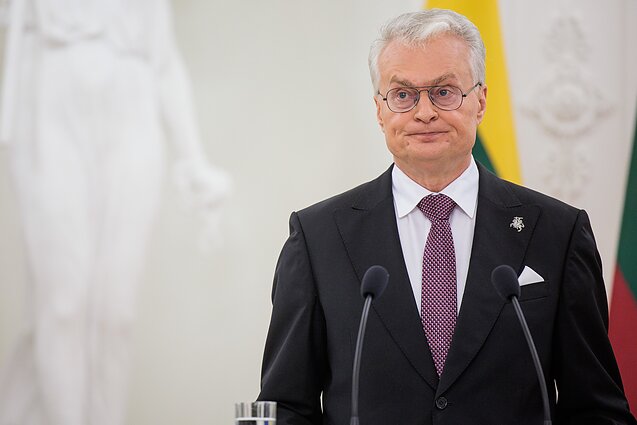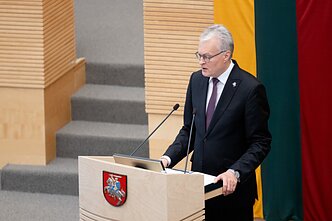


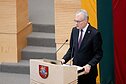



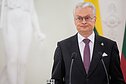
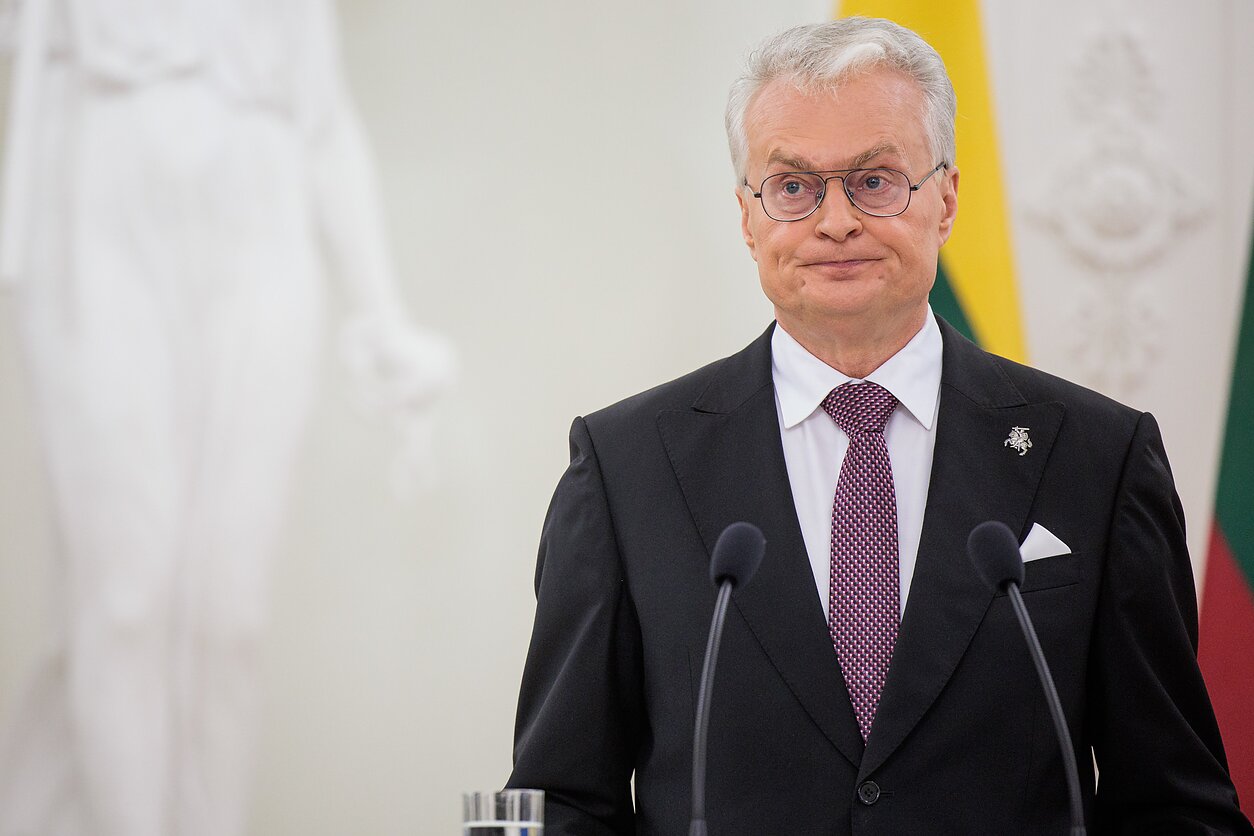
President Gitanas Nausėda has urged the leader of the Social Democratic Party to declare his intentions on the premiership and pressed all coalition parties to conclude negotiations swiftly, while also defending the foreign minister against calls for his removal.
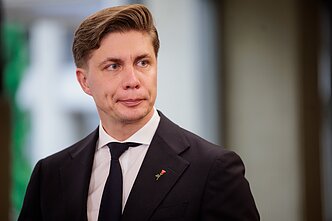
Speaking to reporters on Sunday, Nausėda called on Social Democratic leader Mindaugas Sinkevičius to be clear about whether he intends to become prime minister.
"I would like the leader of the Social Democratic Party, Mindaugas Sinkevičius, having said A, to clearly say B. I see a desire to take on the leadership that Lithuania needs in the executive branch today," the president said," the president said.
Sinkevičius's public comments in recent weeks have fuelled speculation that he may seek the premiership himself rather than backing incumbent Inga Ruginienė, though he has yet to confirm this.
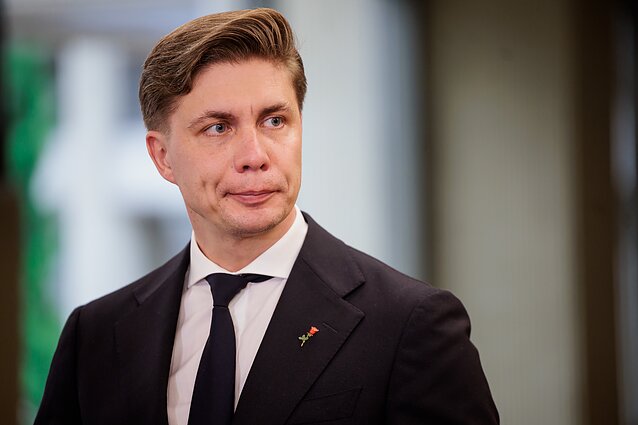
Coalition negotiations began after the Social Democrats decided to exclude the Nemunas Dawn party from the ruling coalition and instead seek to form a majority with the Democratic Union "For Lithuania" and the Lithuanian Farmers and Greens Union. They are expected to conclude next week.
The three parties together hold 75 seats in the Seimas, giving them a workable majority.
Nausėda warned against drawn-out negotiations driven by personal ambition.
"I do not think now is the right time for lengthy negotiations where both sides slam doors," he said. "I very much hope there will be enough political awareness that we will soon have a new government and can prepare for the very important tasks ahead."
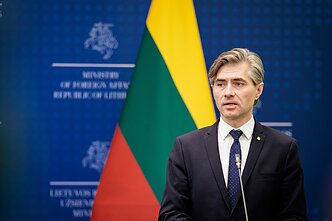
The president also pushed back against Social Democratic calls to replace Foreign Minister Kęstutis Budrys, questioning what grounds there were for removing him.
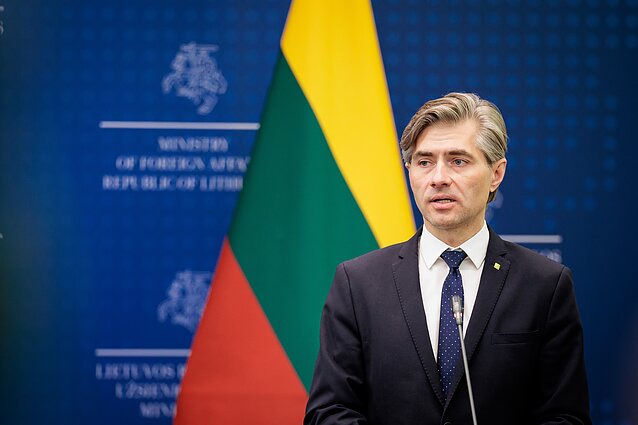
"I would like to ask once again all those who constantly raise this question in the public sphere: what is wrong? Answer honestly and directly, what is wrong?" he said.
The coalition has repeatedly criticised Budrys, accusing him of continuing the foreign policy of the previous Conservative-led government rather than implementing the Social Democratic programme.
He has faced particular criticism for what some see as insufficient effort to restore diplomatic relations with China, and for remarks about NATO's potential to strike the Russian exclave of Kaliningrad.
However, the president defended the foreign minister's record, praising the continuity of Lithuania's foreign policy, support for Ukraine, strong transatlantic ties and efforts to strengthen the military presence of both the United States and Germany in Lithuania.
"We are working, we all agree on this, and I see no problem here," President Nausėda said.
Budrys has served as Lithuania's foreign minister since late 2024.

Newsletter
Every Friday morning.