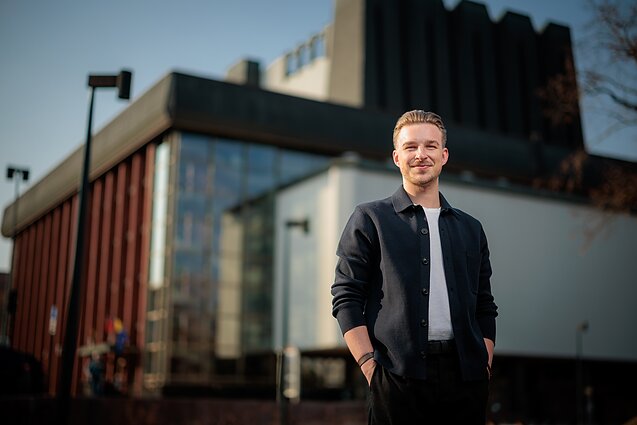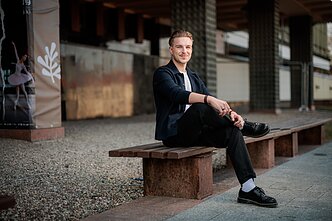










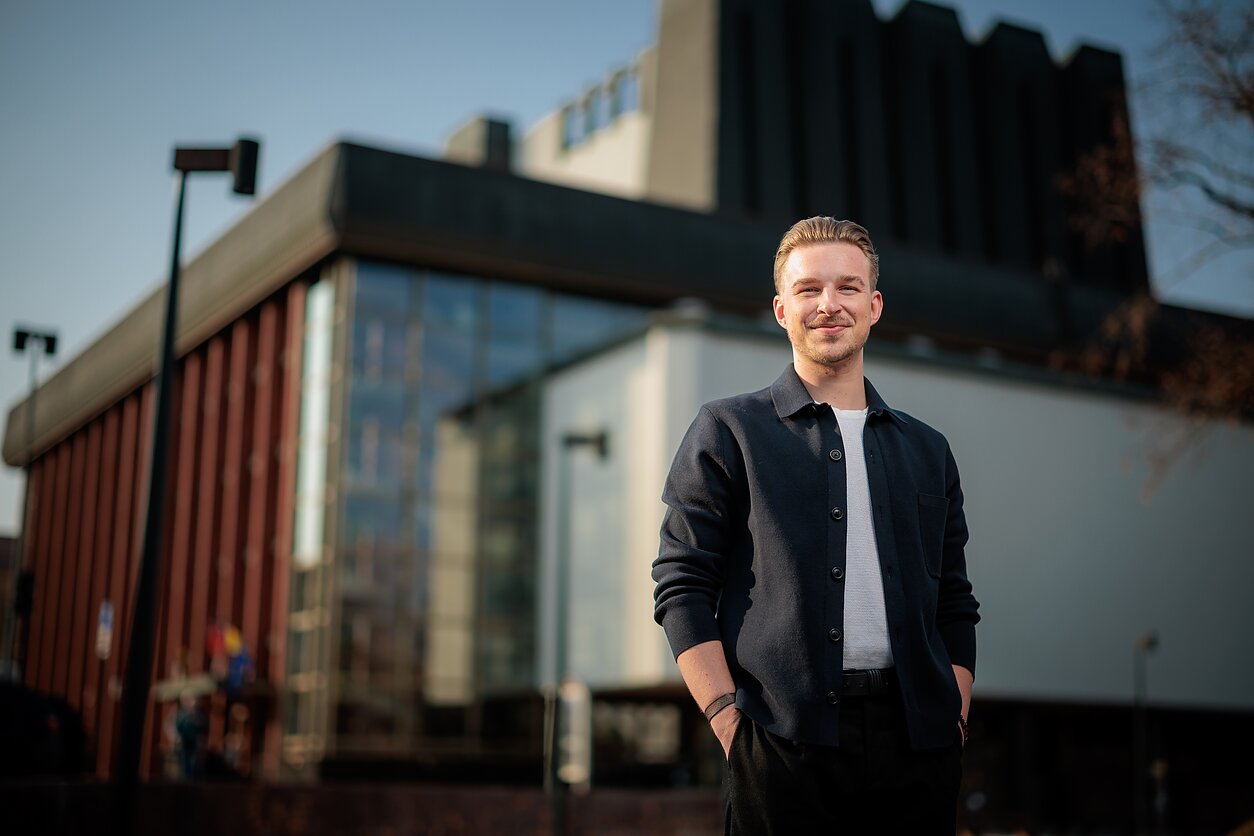
Tadas Račkauskas grew up across the Atlantic, but decided to move to Vilnius last year. “Everything about Lithuania is interesting and important to me,” he says. That is why he also began sharing his discoveries on Instagram.
Tadas’s father is Lithuanian; his mother is a Ukrainian-Turkish woman born and raised in the United States. Tadas did not speak Lithuanian at home – only English. For a time, however, he visited Lithuania quite often, where strongly patriotic relatives awaited him.
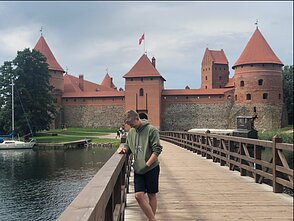
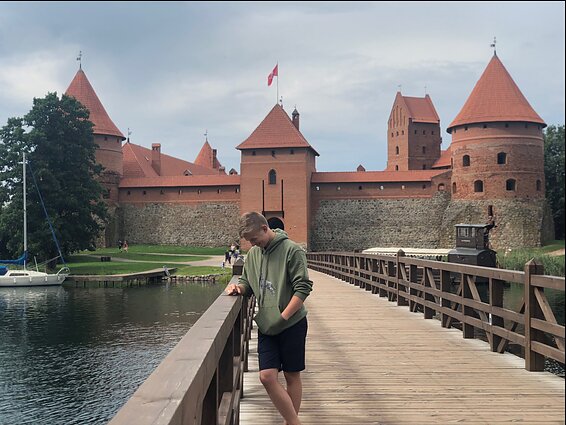
His grandparents sang in a choir, took part in song and dance festivals, and cooked traditional dishes. His earliest memory connected to Lithuania is of Trakai Castle. Over the years, though, his family drifted away from his father’s homeland.
“I don’t remember exactly, but I suppose it was my parents’ choice. Something happened, and we grew apart. My father worked on his accent and wanted to fit in in America,” he says.
While still at school, both he and his father began turning back towards Lithuania, seeking to rebuild that connection. Tadas says that during visits, he felt something was missing – his Lithuanian side.
“My father is Lithuanian, born and raised there, so it was easy for him. He tried to reconnect with friends and family. For me, it was different – I had to learn the language. It’s been a long process, and I’m still in it,” he says.
He admits he came to his Lithuanian and Turkish identity relatively late and now has to navigate both as an adult.
“I never learned Lithuanian or Turkish, and knew nothing about the cultures. Now I wish I had – it’s not easy. I have to deal with everyday life while also learning languages and understanding what it means to be Lithuanian or Turkish.”
Growing up, he did not realise how strong the Lithuanian community in the US was, assuming he might be the only Lithuanian in his part of Florida near Miami. Only after discovering the LISS summer programme for students of Lithuanian descent did he learn about diaspora communities.
“I became very interested in the diaspora. I never knew it existed – now it’s a big passion of mine.”
Sharing Lithuania on social media
Today, Tadas feels a responsibility to learn everything important about Lithuania, and believes the process of building that connection will never end. The more he learns, the more curious he becomes.
About seven months ago, he created the Instagram account, @wanderingbaltics, where he shares stories about Lithuania and the Baltic states, increasingly adding facts about Turkey.
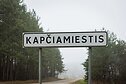
“Everything about Lithuania is interesting and important to me. I want to experience different things. I want to visit every village. Every lunch break, I look up a fact – an interesting village or a local festival,” he says.
Covering more than Lithuania was a deliberate choice. He believes it helps attract a wider audience, who may come for one country but then become interested in Lithuania. Having studied linguistics, he is particularly drawn to languages and cultures, especially those less often in the spotlight, and enjoys explaining linguistic nuances in his videos.
“For example, I made a post about how Latvians didn’t have a word for ‘yes’ for a long time. These are quite specific, linguistic, historical – maybe a bit too academic for the general public,” he says with a smile.
Alongside language, he also discusses history, culture, traditions and everyday life.
Wanting to understand life in Lithuania
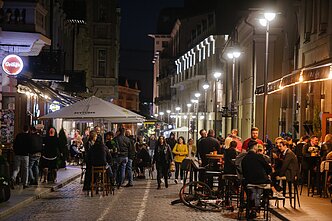
Tadas moved to Lithuania nearly a year ago for a simple reason: he wanted to experience everyday life, not just short visits.
“I’d been here many times, but I wanted to know what it’s like to go to the shop, decide what to cook, and understand what’s available. I wanted to visit my grandfather and have coffee. I didn’t want it to be just one trip a year.”
His decision surprised no one in his family.
“Lithuania isn’t a strange place to move to now. People with no connection to it are moving here. My father had already lived here for seven or eight years. He’s a businessman, so I saw there were opportunities. Maybe not the same as in California, where I lived, but you can have a good life here. And my Lithuanian family were very happy.”
He says settling in was not difficult, especially with family nearby. The biggest challenge, he jokes, was winter.
“It’s no joke – it was my first time living somewhere with real seasons. In South Florida, near Miami, where I grew up, there are just wet and dry seasons. In Los Angeles, where I studied, there are seasons in theory, but not like in Lithuania. That was the hardest part. I liked it, but I’m glad it’s over,” he laughs.
Finding a safe place
Tadas says he could list many reasons why he enjoys living in Lithuania: healthcare, a sense of safety, and short distances that make a car unnecessary.
“I don’t want to repeat the usual things Americans say about Europe, but it really changes your daily life. Many Americans don’t understand that until they live here. I could go for a walk at 04:00 and nothing would happen. I wouldn’t recommend it, but I could,” he says. “In Los Angeles, where I lived, you definitely couldn’t do that.”
In Vilnius, he feels he has found calm and a sense of safety. While the country’s small size can sometimes seem like a drawback, it can also be an advantage.
“There aren’t that many places to go, but it’s nice not having to choose from thousands of options. Life feels easier.”
He says he feels happy every day and has never regretted moving. Nor does he want to return to live in the US, citing social tension and cultural differences.
“Many Americans don’t really think about the wider world. That may sound harsh, but they live in their own bubble. I wanted to learn more about the world and connect with my countries, Turkey and Lithuania. It’s hard to break out of that bubble if you live in the US.
“But if you’re from somewhere like Oklahoma and have no connection to other countries, the US has a lot to offer – beautiful nature. Still, it’s far from everything, and the work culture is intense. In Lithuania, the work-life balance is much healthier. Work is part of life here. I have friends in the US who only work.”
A sense of home in different places
Although Tadas is considering living elsewhere in the future, he sees Lithuania as his long-term home.
“Maybe when I start a family and have children, I’d want to be in Lithuania. I want that sense of calm. I won’t say I’ll never leave, but the plan is to come back.”
Having lived in several places, he says he now sees the idea of “home” differently.
“I don’t want to sound too philosophical, but this has always been my path. Where is home? That’s a big question. I live in Vilnius now – this is my home. I lost the idea long ago that home has to be one specific place. My mother lives in California, and almost none of my family is in South Florida anymore, where I grew up. I have no reason to go back, even though I lived there for 18 years.
“I’d say I feel at home in Vilnius, Istanbul and California. I know I could move to London and make a home there too. I will always be American, always partly Lithuanian and partly Turkish. I will never be only Lithuanian. That’s my reality. It may have been hard to accept before, but now I see it as something positive.”

Newsletter
Every Friday morning.