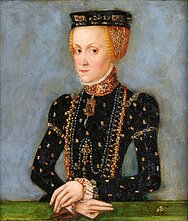














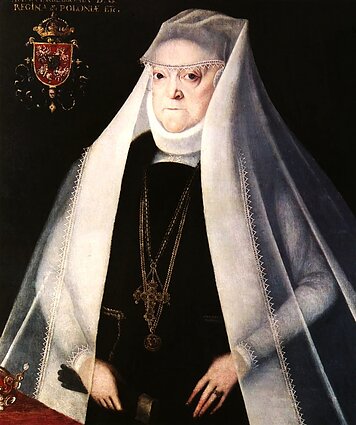
Four and a half centuries after she was crowned queen of Poland and grand duchess of Lithuania in 1575, Anna Jagiellon is stepping out of the margins of history – no longer “the plain one”, but a resilient figure shaped by loss, power and quiet determination.
In her new novel Nemeilė (Loveless), Lithuanian writer and journalist Ilona Skujaitė paints a portrait of a ruler long overshadowed by her siblings and dismissed by contemporaries.
“She was called neither the wisest nor the most beautiful – just ‘nothing’,” Skujaitė said in an interview. “But how can a person – especially a woman from one of the most famous royal families – be ‘nothing’? That question stayed with me.”

Reclaiming a forgotten queen
Skujaitė, whose previous historical novel about Catherine Jagiellon won a literary prize, first encountered Anna while researching her sister’s life. What she found in historical sources – often written by men – was a one-dimensional and often harsh portrayal.

Accounts described Anna as unattractive, politically inept or even bitter. But deeper research, including letters written by the queen herself, revealed a more complex figure navigating one of the most turbulent periods in the history of the Polish-Lithuanian Commonwealth.
After the death of her brother, the last king of the Jagiellonian dynasty Sigismund II Augustus, in 1572, the state plunged into uncertainty. A foreign ruler, Henry of Valois, briefly took the throne before fleeing back to France. Anna was later elected – a rare and historic moment – but her reign came with conditions.

A crown and its cost
At 52, Anna was crowned on the condition that she marry Stephen Báthory, a Transylvanian prince and military leader needed for war against Ivan the Terrible of Muscovy.
According to Skujaitė, Anna wept during her coronation – not only from the weight of the moment, but because she was required to renounce her inheritance.
Her marriage proved distant and emotionally strained. Though formally granted the title of king, Anna wielded little real power, as Báthory ruled independently. Court gossip painted her as controlling and unsuccessful, narratives the author believes were shaped by bias and political rivalry.
Yet even in a cold marriage, Báthory refused pressure to divorce her in favour of a younger wife who could produce heirs, honouring his vows instead.

Power beyond politics
Denied full political authority, Anna carved out influence in other ways, as a patron, builder and guardian of dynastic memory. She funded churches, restored castles and commissioned Renaissance tombs for her family at Wawel Cathedral in Krakow.
“She preserved the legacy of the Jagiellonian dynasty,” Skujaitė said. “In our culture, women were often the keepers of memory – and she embodied that role.”
Her greatest political achievement came late in life. At 64, Anna helped secure the throne for her nephew, Sigismund III Vasa, ensuring dynastic continuity after years of instability.
“It’s often said life begins at 40,” Skujaitė noted. “Anna shows it can begin at 64.”
Between myth and reality
Anna’s life was also shaped by rumour and fear. Some contemporaries accused her of poisoning rivals – claims unsupported by evidence but common in a time when royal courts were rife with suspicion.
Monarchs feared poison so deeply that they carried supposed antidotes, including the prized “unicorn horn”, often actually narwhal tusk, believed to neutralise toxins.
A ‘blue heart’ that endured
For Skujaitė, Anna’s story is ultimately one of emotional endurance. She describes the queen as having a “blue heart”, bruised by betrayal and hardship, yet still capable of compassion.

Despite losing her inheritance, enduring a loveless marriage and facing constant scrutiny, Anna remained devoted to her family, her faith and her cultural legacy.
The novel has struck a chord with readers, becoming a bestseller at the Vilnius Book Fair. Skujaitė attributes its success to a growing interest in overlooked perspectives, especially women’s stories.
“We know the stories of Elizabeth I or Catherine de’ Medici,” she said. “But our own history is just as rich. For centuries, we didn’t have the freedom to explore it fully. Now we do.”
As for what comes next, the author hints at a broader ambition – perhaps even a saga of the Jagiellonian dynasty.

Newsletter
Every Friday morning.