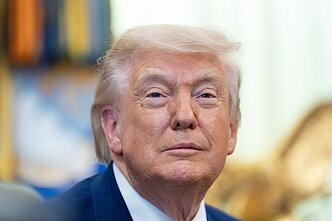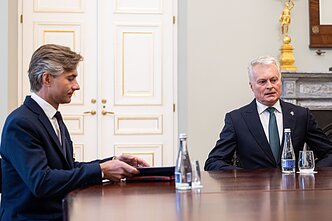







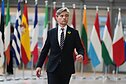

Lithuanian President Gitanas Nausėda held a phone call with European Council President António Costa on Friday to discuss the European Union’s competitiveness, ways to strengthen the single market, and internal strategy and policy issues.
The conversation was held ahead of an informal EU leaders’ meeting in Belgium on February 12, the presidential press service said.
“We support holding an informal discussion on competitiveness, with the hope that concrete decisions will be made at the European Council meeting in March,” President Nausėda said. “So far, we have not managed to significantly deepen the single market or remove obstacles limiting the EU’s competitiveness.”
He highlighted challenges such as relatively high electricity prices and limited access to cheaper capital, which he said must be addressed urgently to support manufacturers and service providers.
President Nausėda also called for reducing administrative burdens and internal barriers across EU markets to compete globally in high-tech sectors, artificial intelligence, and information technology.
"That is why it is important for Lithuania, as a start-up country, to have a so-called 28th regime in place, which would allow start-ups to establish themselves, operate, and attract capital quickly based on unified rules across the EU market," he pointed out.
Concrete action is also needed to diversify Europe’s trade relations. Nausėda cited the recently signed free trade agreement with India as a positive example, and stressed reducing dependency on Russia and China following the past four years of war in Ukraine.
The president added that the EU should aim not only to deepen the single market but also to expand it to include Ukraine, Moldova, and the Western Balkans. Lithuania is ready to support the European Market Action Plan and implement it during its EU presidency in 2027.

Newsletter
Every Friday morning.