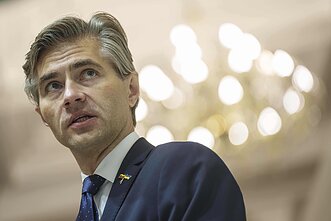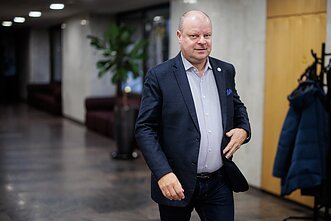










Lithuania’s position on Belarus remains among the toughest in the European Union and its support for extending and tightening sanctions on Minsk is unchanged, Foreign Minister Kęstutis Budrys said.
“Lithuania’s position on European Union sanctions against Belarus is clear and unchanged. With this stance, I believe we are among the toughest countries in the EU. We say the sanctions must be extended,” he told LRT on Thursday.
His comments come amid domestic debate over whether restrictions on Belarus could be eased and relations with Minsk cautiously improved. Prime Minister Inga Ruginienė recently told BNS there were no grounds for doing so while Belarus continued what she described as aggressive behaviour.
Last week, Remigijus Motuzas, chair of the parliamentary Committee on Foreign Affairs, said no specific meeting between Lithuanian and Belarusian deputy ministers was currently planned. However, discussions are taking place in Vilnius about what possible talks with Minsk might involve and whether neutral venues could be considered.
Budrys said such discussions were hypothetical.
“The conversations I see taking place in Lithuania concern what would happen if EU sanctions did not exist. In that case, there would be scenarios B, C and D. We would consult within the region and look first at the positions of Poland and Latvia,” he said.
“Perhaps we would take new initiatives, but I see no basis for that at present. We are working on the main scenario, and our efforts are focused on securing a decision to extend sanctions in February,” Budrys added.
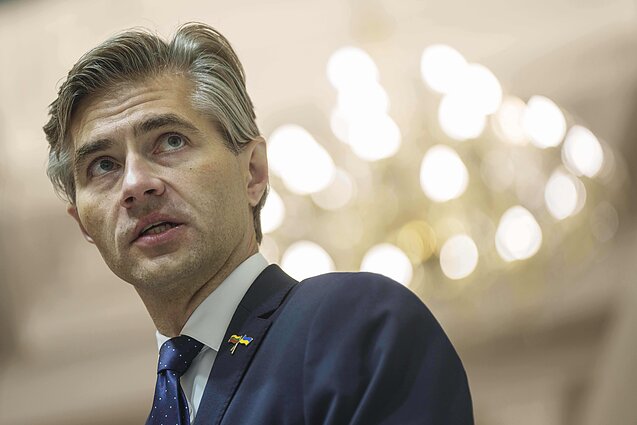
Tsikhanouskaya’s relocation
Saulius Skvernelis, leader of the opposition Democrats “For Lithuania”, has suggested that the governing parties may seek to improve relations with Minsk following the relocation of Belarusian opposition leader Sviatlana Tsikhanouskaya from Vilnius to Warsaw.
Budrys rejected claims that she had been forced out.
“I disagree with the suggestion that Sviatlana Tsikhanouskaya was forced to leave Vilnius – that is not true. Her office continues to operate with the same accreditation as before. We ensure security for the Belarusian opposition and for all other opposition forces facing threats from hostile states’ intelligence services to the maximum extent,” he said.
He added that he would take any implication that Lithuania no longer prioritised security as “a personal insult” and showed disrespect to the country’s services and efforts.
Earlier this week, Belarusian opposition figure Maria Kalesnikava, recently released from prison, urged Lithuania during a visit to Vilnius to restore more intensive transport links with Belarus. She told LRT that resuming Belaruskali transit through Lithuania could be considered if it brought tangible benefits.
Budrys said Lithuania supported the Belarusian opposition but stressed the importance of a united position.
“Lithuania has never dictated an agenda to them, regardless of what the Belarusian KGB might claim. I believe this is the right moment for them to sit down together and clarify their positions. What is problematic is when different messages come from different opposition representatives,” he said.
“International attention to Belarus is already limited, and we are trying to increase it. If the opposition spoke with one voice, that would certainly help,” the foreign minister added.
US talks and border incidents
The European Union has imposed wide-ranging sanctions on Belarus over human rights abuses, its support for Russia’s war in Ukraine and hybrid attacks against the bloc.
Last week, Lithuania’s government approved the extension of national sanctions against Russian and Belarusian citizens until 2028, subject to parliamentary approval.
Budrys said that during a visit to Washington he had discussed Belarus with John Coale, an envoy of US President Donald Trump. He said the United States remained open to continuing talks with Minsk aimed at securing the release of all political prisoners.
“Our key message is that relations with Belarus must not give Lukashenko additional leverage to pressure allies in the region through hybrid attacks or other means. The commitment conveyed by the special envoy after his recent visit to Minsk must be fulfilled. Otherwise, it would amount to a clear sign of disrespect towards the United States,” he said.
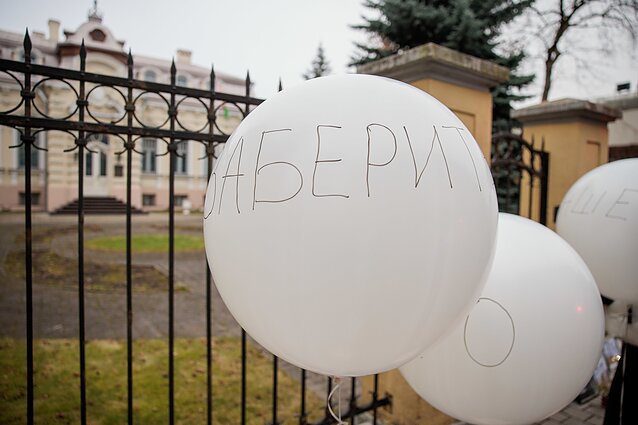
The number of incidents involving smuggling balloons had declined after Coale’s visit to Minsk in mid-December, when he said Belarusian leader Alexander Lukashenko had promised to halt the flights.
However, the largest such incursion this year was recorded in late January, forcing Vilnius Airport to suspend operations three times and disrupting travel for around 1,700 passengers.
Following the incident, Lithuania’s Foreign Ministry handed a diplomatic note of protest to the chargé d’affaires at the Belarusian embassy.

Newsletter
Every Friday morning.