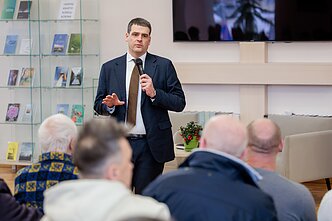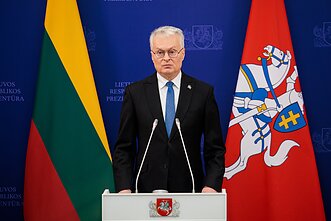





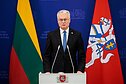







Lithuanian President Gitanas Nausėda met with residents of Kapčiamiestis on Thursday amid persevering opposition to a planned military training ground in the area, acknowledging local concerns while stressing the site’s strategic importance.
Residents who attended the meeting said key questions remained unanswered, and Nausėda was escorted out to chants of “no to the training ground”.
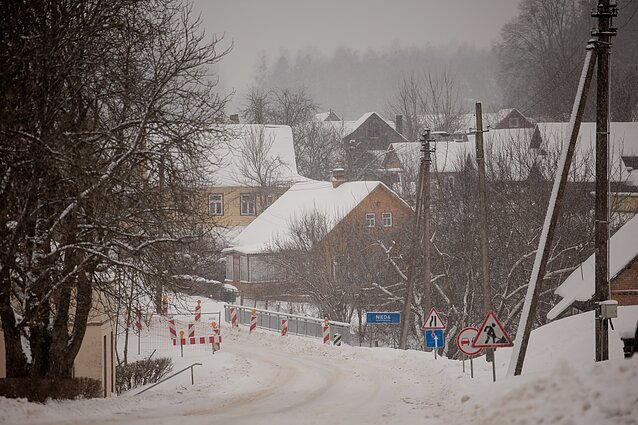
The president and several ministers travelled to the southern Lithuanian town after weeks of protests against the proposed military polygon. Before the meeting, some residents said they had modest expectations.
“What can you really expect?” one resident said. “The president has his position, we have ours.”
Another said people hoped at least some issues would be addressed. “He is the head of state, so maybe he can help,” the resident said.
Only registered residents were allowed into the meeting, many of whom own property within the planned training area. Journalists were barred, but the community livestreamed the discussion on social media.
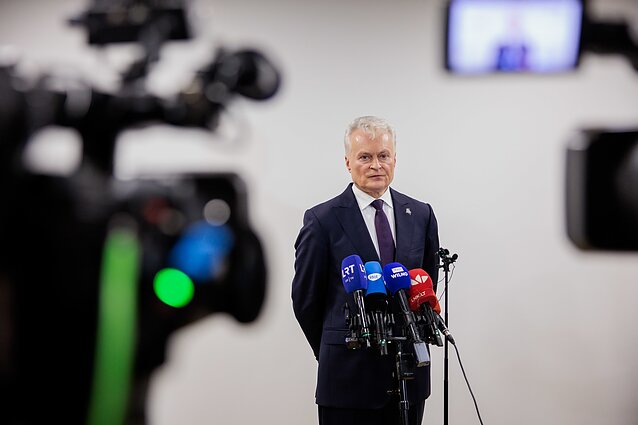
Residents warned that the project would affect a recreational and environmentally sensitive area.
“You have to understand the shock this has caused people,” one resident said. “This is a recreational territory.”
Nausėda said he did not want to create false expectations.
“I did not come here to tell fairy tales,” the president said. “I do not want to create the illusion that no trees will be cut or that there will be no noise. I don’t want to mislead you.”
The meeting lasted about 90 minutes. Residents raised concerns about the future of their businesses, environmental protection, compensation and possible relocations. As Nausėda left, the crowd chanted, “No to the training ground.”

Afterward, residents said they did not receive answers to what they consider fundamental questions.
“We still don’t know why this location was chosen, how noise levels were calculated or how relocations would work,” one resident said. Another added that limited time prevented meaningful discussion. “What did we want clarified? That the training ground should not be here.”
Asked whether the community remained open to dialogue, residents responded with a clear message: “Kapčiamiestis is for living, not for a military training ground.”
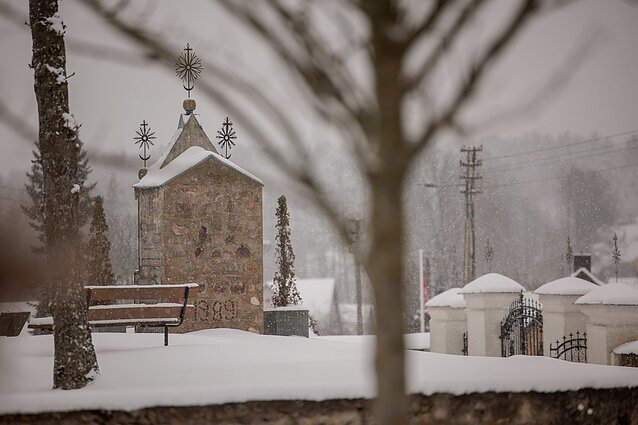
Nausėda said the meeting was constructive despite unresolved issues.
“We were able not only to answer questions but also to gain food for thought on issues where there are no concrete answers yet,” he said. “These meetings help refine solutions so they do not raise doubts.”
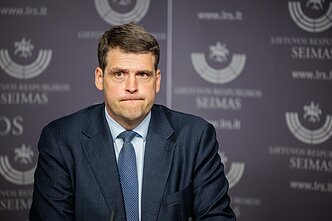
At roughly the same time, Remigijus Žemaitaitis, leader of the Nemunas Dawn party, met residents in nearby Lazdijai as part of his tour of the Dzūkija region. Opinions there were mixed.
“Of course [the training ground] is needed, but it’s sad that one of Lithuania’s most beautiful corners will be damaged,” one attendee said. Others cited the current geopolitical situation as justification for the project.
Žemaitaitis, who had previously expressed doubts about the Kapčiamiestis site and the need for a new facility, said Thursday he was not categorically opposed but criticised the lack of early communication.
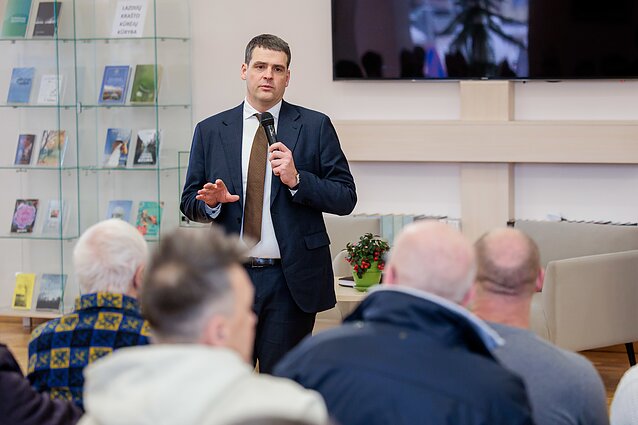
“Today we don’t really have another option – the location has already been chosen,” Žemaitaitis said. “The real issue is why people were not consulted earlier. If the community can sit down and resolve things, then there is no problem.”
In response to growing concerns, the Defence Ministry has begun individual consultations with residents living near the proposed site.
Questions are also being raised across the border in Poland. On Friday, the Sejny County Council is expected to discuss its political stance on the training ground, which would be located less than half a kilometre from the Polish border.
Poland’s defence minister has indicated a willingness to cooperate with Lithuania, including the possibility of joint military exercises.

Newsletter
Every Friday morning.