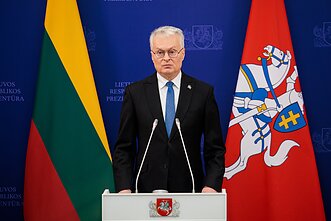

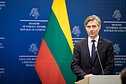

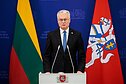





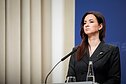
Washington understands the security sensitivities of the Baltic region, Lithuanian Prime Minister Inga Ruginienė said Friday, commenting on the United States’ new National Security Strategy released last week.
“America understands the situation of the Baltic region, understands how sensitive the zone is, and that communication is quite smooth,” Ruginienė told reporters after a meeting of Baltic prime ministers in Riga.
She said the United States has given assurances that it will not withdraw its roughly 1,000 troops stationed in Lithuania “for two more terms”. American forces have been deployed in Lithuania on a rotational basis since 2014, with a heavy battalion present since 2019 and reinforced with an artillery unit since 2022.
The US strategy identifies ending Russia’s war in Ukraine and restoring strategic stability with Moscow as key goals. Ruginienė said discussions with Washington have not included any suggestion of a thaw in relations or renewed dialogue with Russia.
The document also portrays Europe as overregulated and lacking self-confidence, and warns of what it calls the risk of “civilizational erasure” from migration. It further criticises Europe for relying on American “generosity”.
Latvian Prime Minister Evika Siliņa cautioned that the strategy should not be viewed as representing all aspects of US foreign policy.

“There are many things in there that we are doing already. All three Baltic states have just announced that we have reached 5 percent for our defence spending,” Siliņa said.
She added that the document also touches on migration and other issues the region is addressing. “There are many aspects […] that should be assessed positively, especially the fact that we must first take care of our own security.”
Estonian Prime Minister Kristen Michal said the US administration expects Europe to continue investing in defence.
“It is very important for us to remember that our security problem is related to Russia and Putin, not Trump,” he said.
US Defense Secretary Pete Hegseth has recently praised several NATO members – including the Baltic states – for increasing military spending, saying he sees “positive changes” in their military budgets.

Newsletter
Every Friday morning.