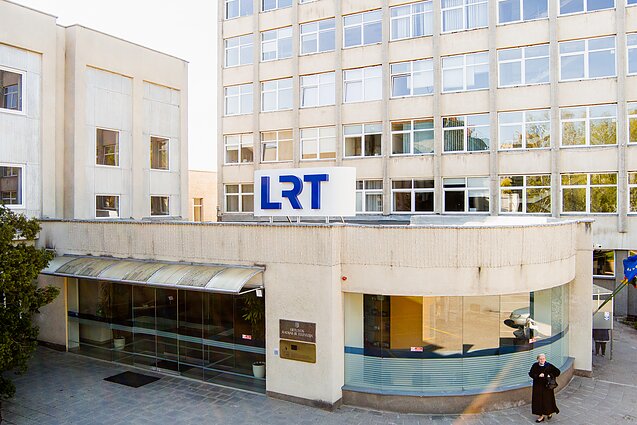
















The Council of Europe has warned against a proposal to make it easier to dismiss the Director General of LRT and against plans to freeze, then cut, LRT funding.
“Several ongoing initiatives in Lithuania have raised concern about risks to the independence and effective functioning of the public broadcaster, Lithuanian National Radio and Television (LRT)," the Council of Europe said in a statement on Wednesday.
The draft law on dismissing the LRT director general was prepared by Remigijus Žemaitaitis, leader of the Nemunas Dawn party and one of the initiators of an audit of LRT.
If the amendment were adopted, six out of 12 votes in the LRT Council would be enough to dismiss the director general – down from the current requirement of a two-thirds majority. The vote would also be held by secret ballot.
The LRT Council is made up of 12 members – four are appointed by the president, four by the parliament (two by the parties in power, and two by the opposition), and four by various civil society organisations.
The Council of Europe highlighted that several organisations have already warned that these changes may be incompatible with the European Media Freedom Act, which requires that the appointment and dismissal procedures for public broadcasters’ leadership be designed to safeguard independence.
Further reading
“Earlier public comments by some politicians discrediting LRT have also contributed to concerns about pressure on the broadcaster,” the Council of Europe added.
Earlier, the European Broadcasting Union (EBU) also expressed concern about the proposal. The International Press Institute has likewise issued a warning about another proposal from Žemaitaitis and 17 other MPs seeking to change LRT funding.

The Council of Europe also stressed the importance of sustainable funding.
“Lithuania already allocates one of the lowest levels of GDP-based funding to public service media in the EU, and LRT has warned that prolonged financial constraints would hinder its legally mandated role as the country’s primary source of crisis and emergency communication, including its ability to maintain uninterrupted broadcasting during national emergencies,” it said.
Pressure from the Seimas
Seimas Speaker Juozas Olekas said on Wednesday that he viewed positively the proposal to simplify the procedure for dismissing the head of LRT.
He said the changes would enable the public broadcaster’s council to perform its functions more effectively.
“We need to assess the audit materials, and the appointment or dismissal of leaders, I believe, should be similar to other organisations. It seems to me there are significant constraints that make the work of the LRT Council – which is responsible for appointing and dismissing the head – very difficult,” Olekas told Žinių Radijas on Wednesday.
“These changes could be introduced and adopted so the LRT Council can carry out its assigned functions,” he said.
Lithuania’s media watchdogs have already appealed to MPs over the proposal, saying that it resembled an attempt by politicians to take control of the public broadcaster.

Newsletter
Every Friday morning.