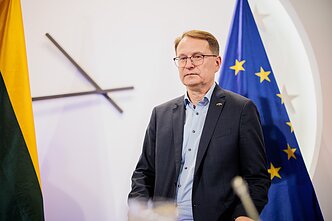
















President Gitanas Nausėda is proposing new tax incentives and social policy measures aimed at lifting Lithuania’s declining birthrate, with his advisers saying the goal is to raise the fertility rate to 1.5 children per woman.
Vaidas Augustinavičius, the president’s chief adviser on economic and social policy, said Tuesday that reversing Lithuania’s sharp drop in births will be difficult but necessary.
“The president stresses that it is vital to slow the decline in the birthrate, at least to stop it. We’ve had a steep drop over the past few years,” Augustinavičius told LRT RADIO. “If the indicator could increase from 1.1–1.2 to 1.5, that could be the target we should strive for.” He added, “Of course, this is difficult to change.”
Nausėda is proposing a five-year personal income tax exemption for each child born in families with two or more children and is calling for discussions on profit tax incentives for employers who hire such parents. He also wants to set a social insurance base for young families taking maternity and paternity leave, explore refunding part of tuition payments when a child is born, and give families raising children access to rent-to-own housing as municipalities expand housing in the regions.
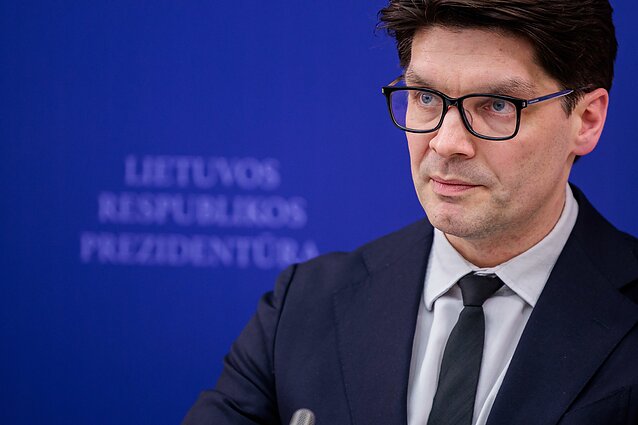
Augustinavičius said many young adults in Lithuania have not ruled out having children but have delayed parenthood. International organisations, he noted, categorise Lithuania as one of the countries where decisions to form families have been postponed rather than abandoned.
“If these are delayed decisions, then this is the time for politicians to intervene with additional incentives,” he said.
Opposition lawmaker Gintarė Skaistė of the conservative Homeland Union said some of Nausėda’s proposals could influence family planning decisions but questioned whether the income tax break would be effective. Direct payments, she argued, generally have a stronger impact.

“Tax incentives are typically used to reduce poverty, not to change motivation or behaviour,” Skaistė told LRT RADIO. “People usually don’t see the money behind tax breaks and think it’s just part of their wages.”
A November survey conducted by Spinter for the Auginu Lietuvą initiative found that about 52% of Lithuanians view the demographic crisis as a bad or very bad development.
The International Monetary Fund reported in October that Lithuania faces mounting demographic pressure driven by low birthrates and years of negative migration. Between 1998 and 2019, the working-age population fell from 2.34 million to 1.81 million, though it edged up to 1.89 million in 2024.
The European Union’s total fertility rate fell to 1.38 in 2023, down from 1.46 the previous year and far below the replacement level of 2.1. Malta had the bloc’s lowest rate at 1.06, followed by Spain at 1.12. Lithuania’s rate stood at 1.18.

Newsletter
Every Friday morning.