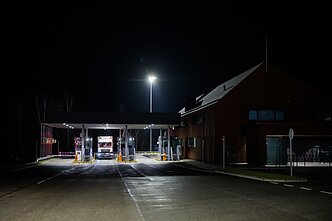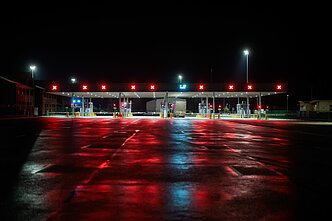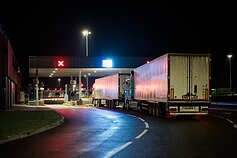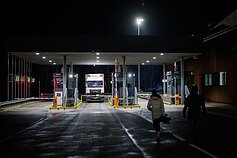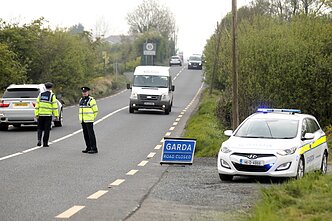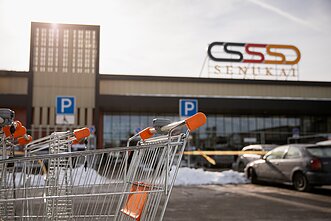

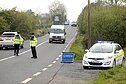







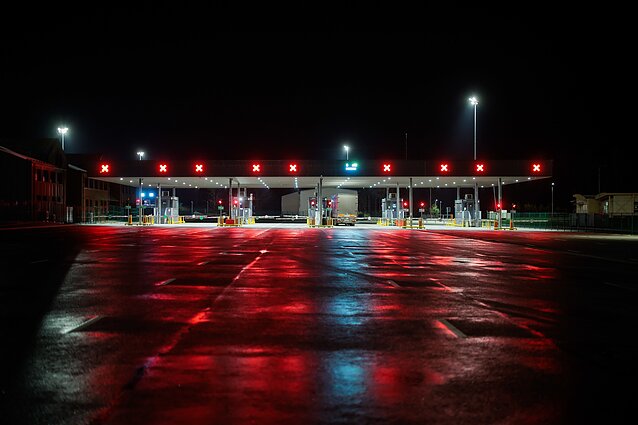
Two key Lithuanian border checkpoints with Belarus reopened at midnight Thursday, allowing several dozen travellers to cross in both directions after weeks of disruption that forced people to reroute through Poland or Latvia.
By early morning, a steady but modest stream of cars and trucks was moving through Medininkai, where many travellers said they were simply relieved to resume their routines.
A BNS journalist spent roughly 90 minutes at the Medininkai crossing, observing the first wave of traffic. Drivers waiting in line expressed gratitude that the government reopened the border but declined to say whether they believed Lithuania or Belarus was responsible for the prolonged closure.
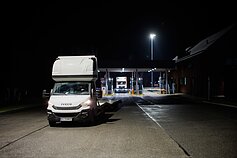
“Thank God they opened it,” said a Belarusian man transporting medications from Germany in a cargo van. “Now Minsk is much closer.”
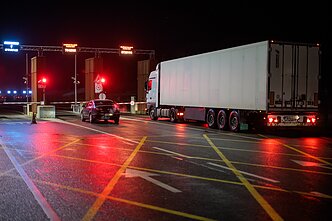
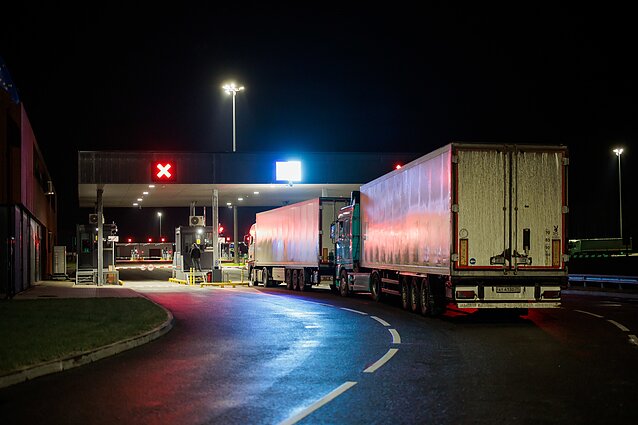
Most of the early travellers heading east were bound for rural properties or family homes. About 10 trucks lined up with cargo destined for Belarus, and several drivers from Belarus returning to Lithuania said they were coming back to work.
One man said he had waited in line for about a day and a half. “I can’t believe I’m going home,” he told reporters.
The Medininkai and Šalčininkai checkpoints had been scheduled to remain shut until the end of November, but the Lithuanian government reversed course on Wednesday. Officials said the decision followed signals from Minsk that it was ready to cooperate on threats linked to contraband balloons launched from Belarus.

The reopening also came amid mounting pressure from Lithuanian transport companies; after the closure, Belarus refused to let Lithuanian-registered trucks leave its territory, relocating them to designated lots and warning that drivers could face daily parking fees of €120.
Shortly before midnight, about 30 vehicles were waiting to enter Belarus. Most were Belarusian-registered, but cars with Lithuanian, Polish, Armenian and Kyrgyz plates were also in line.
One driver from Hamburg said he frequently delivers medical and veterinary materials to Belarus, two or three times a month, and that the closure significantly complicated his travel. “Thank you for reopening the border. Now I don’t have to drive in circles,” he said.
For some Lithuania-based Belarusians, the closure caused ongoing challenges. Ivan, who lives in Lithuania but regularly travels to Belarus to maintain property he owns, said the weeks-long shutdown created logistical headaches.
“In summer I go more often, every week or two. I have to maintain my land. If you don’t, you get fined,” he said.
Another Belarusian, Artūras, said, in Lithuanian, he travels to Belarus only once a year but was heading back this time to handle paperwork. “We prepared to go through Poland, but this is closer and more convenient,” he said.

Traffic from Belarus into Lithuania was thinner during the first hour of reopening. Several drivers said they were heading to jobs in Lithuania, where some have lived for more than a decade. Andrei, who works in Lithuania, said he had been traveling through Latvia while the border was closed.
Despite the reopening, Lithuanian-registered trucks were not initially seen crossing from Belarus. Russian trucks carrying transit cargo to Kaliningrad were among the earliest heavy vehicles to pass through, along with a single Polish truck.
When asked who they believed was to blame for the border crisis, most travellers avoided the question. “It’s politics; let them sort it out,” said Vitaly, a Belarusian driver working in Lithuania. “We ordinary people just need to live our lives.”
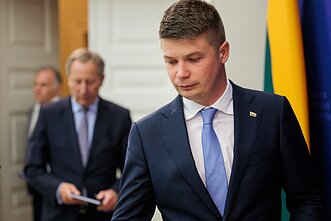
Others echoed that sentiment, though many expressed hope the checkpoints remain open. Prime Minister Inga Ruginienė has said Lithuania reserves the right to close the border again if threats from Belarus reemerge.
“I really hope the border stays open for a long time,” Artūras said.

Newsletter
Every Friday morning.