











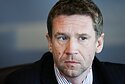

Questions have emerged over the appointment of Aleksandras Brokas as Lithuania’s new vice minister of culture, following reports linking him to a pseudoscientific movement and concerns about possible political affiliations.
Brokas, appointed Tuesday by acting Culture Minister Raminta Popovienė, denied being nominated by the coalition partner Nemunas Dawn and said he volunteered for the post himself.
“Seeing the prime minister’s call and hearing about the search, I simply proposed my candidacy through the prime minister’s team,” he said, adding that the proposal was discussed and approved.
Prime Minister Inga Ruginienė said Brokas was chosen as an independent representative of the cultural community. “I wanted someone independent who would represent the culture sector. He convinced me that he has strong ties with the cultural community,” Ruginienė said.

However, several cultural organisations have expressed discontent, accusing the ruling coalition of deceiving them and demanding that no representatives of the Nemunas Dawn party serve in the ministry. The Lithuanian Culture Assembly rejected an invitation to meet with the new vice ministers and announced plans for a nationwide protest on November 21.
Brokas has also drawn attention for his past involvement with ‘rhythmology’, a controversial method claiming to regulate time by influencing the past, present, and future, often described as pseudoscience. Brokas said he became involved only for a film project.
“To understand how processes work, naturally you get involved – you show films, you talk,” Brokas said, explaining that he lectured at the European Institute of the Harmonious Human and studied rhythmology as part of research for an upcoming documentary.

He added that his interest was sparked by Russian author and astronomer Evdokia Luchezarnova-Marchenko, who created the rhythmology method. Brokas said her ideas are “not favourable to the Russian government”.
But former defence minister and conservative parliamentarian Arvydas Anušauskas disputed that claim. “It’s practically impossible to deny the Russian roots of that organisation,” he said. “In Russia, that sect was never persecuted and still operates freely.”
In addition to Brokas, two other vice ministers, representing the Social Democrats and the Electoral Action of Poles in Lithuania, were appointed this week. Cultural community members say they feel “betrayed” by the government’s handling of the selection process.
Kęstutis Vilkauskas, chair of the Seimas Committee on Culture, said he was not consulted on Brokas’ appointment. “I have questions – where did this candidate come from? I learned about the appointment from the media,” he said.
Parliament Speaker Juozas Olekas said the president is expected to approve a permanent minister soon.

Newsletter
Every Friday morning.