














With young specialists moving from small towns to big population centres, medical institutions are being left understaffed. In response, municipalities have begun engaging in fierce competitions, offering tens of thousands of euros in hopes of attracting doctors.
The Telšiai District Municipality in northwestern Lithuania has been successfully attracting doctors, despite being far from the country’s main cities.
“We can see that competition, specifically over doctors, has increased,” said Raimonda Stanevičienė, head of health affairs at the municipality.
“For a recent example, a university hospital in Klaipėda lured away two of our resident doctors who were in their last year of residency. After graduation, they were supposed to get jobs at the regional Telšiai hospital for five years,” she said.
To entice talent to stay, the Telšiai municipality has approved incentives to attract newcomers.
“For a needed specialist, we are offering a one-time payment of €30,000 – the monthly salary is not included in this sum. We also offer to either match rent payments up to €500 per month or travel expenses to work,” said Stanevičienė.
“We have also set aside funds to pay for the studies of resident doctors. The municipality pays for the residents’ studies, in exchange for their work in Telšiai for some time,” she added.
Jovita Seiliuvienė, director of the Regional Telšiai Hospital, said financial incentives alone are not enough to attract doctors.
“The human factor is extremely important. I’m talking about empathy, good energy among coworkers, the sense of security. Cultivating a work environment in which a young specialist could say: ‘I love going to work,’” she said.
“I also noticed that the doctors who tend to stay longer are those who come with their families, put down their roots in Telšiai. You shouldn’t fear the countryside,” Seiliuvienė.

Lithuania’s rural regions have been depopulating as young people tend to move to the urban centres for studies and work opportunities.
According to Seiliuvienė, the government also has a role to play in attracting talent, including by modernising medical institutions.
However, some hospitals are weary of throwing money in hopes of attracting doctors.
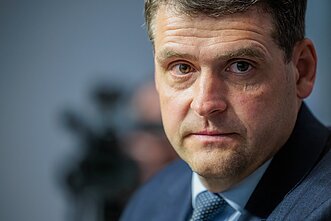
“They always want more and more. It’s disgusting to me; the market is out of control,” said Martynas Gedminas, the former Joniškis hospital director and current head of a private clinic in Šiauliai, northern Lithuania.
“I think public medical institutions should have a salary ceiling. While we don’t have one, there will always be a competition between municipalities over who can offer more and buy-out a doctor from a different district. Everyone is looking out for themselves and their district's patients,” Gedminas added.
He also suggested another model on how to improve patient care.
“I think that if the soon-to-be doctor’s studies were paid for by the government, then the doctor has the obligation to provide the planned amount of free labour. If he doesn’t, he loses his doctor’s license. In this way, privately working doctors wouldn’t only consult people with money,” said Gedminas.

Newsletter
Every Friday morning.