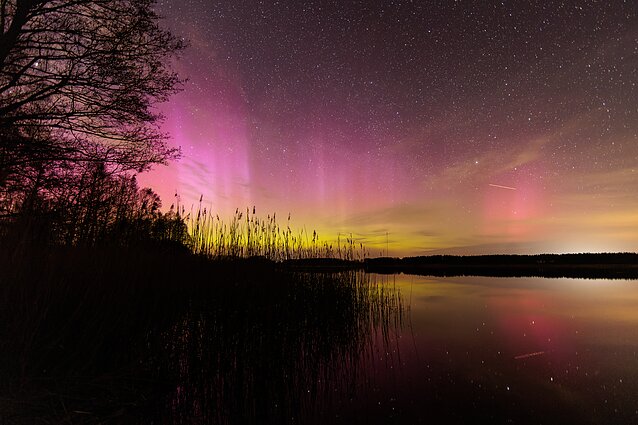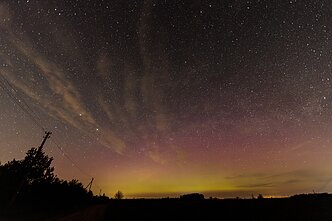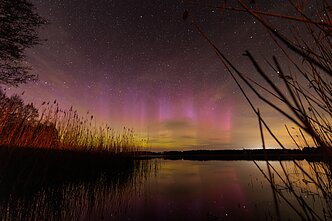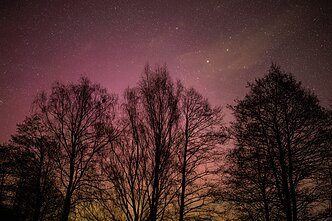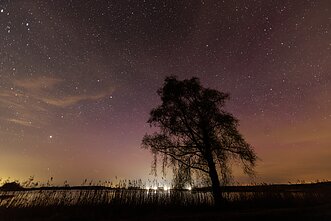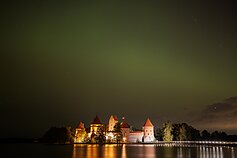








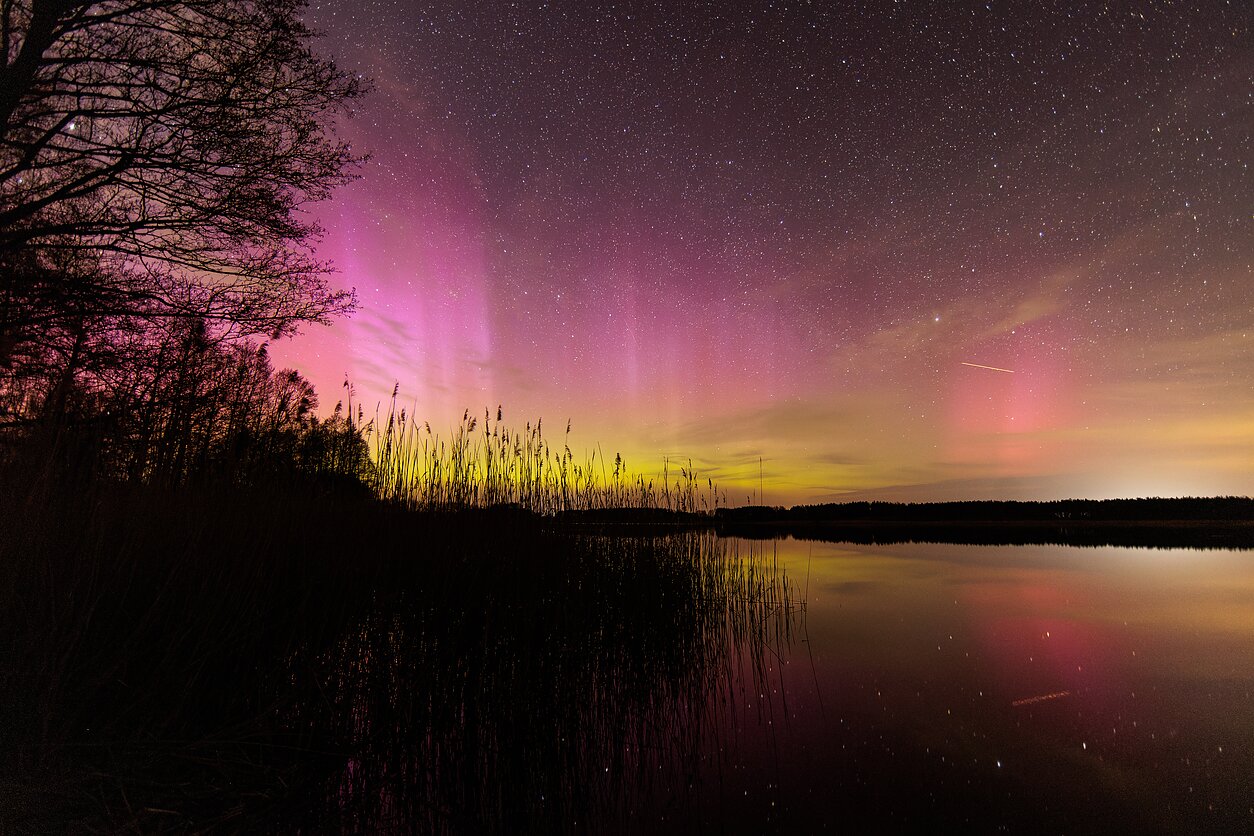
Skywatchers in Lithuania may still have opportunities to see the northern lights even though the Sun has passed the peak of its activity cycle, according to Vilnius University astrophysicist Vidas Dobrovolskas.
In recent years, aurora enthusiasts have enjoyed what Dobrovolskas calls a “golden age”, as heightened solar activity made it possible to observe auroras at unusually low latitudes, including Lithuania.
“The Sun has already passed its activity peak, but the aurora season is not over,” Dobrovolskas said.
The Sun operates in 11-year cycles that reach a maximum of activity, during which sunspots and solar wind – streams of charged particles – increase. When these particles reach Earth, they can trigger auroras.
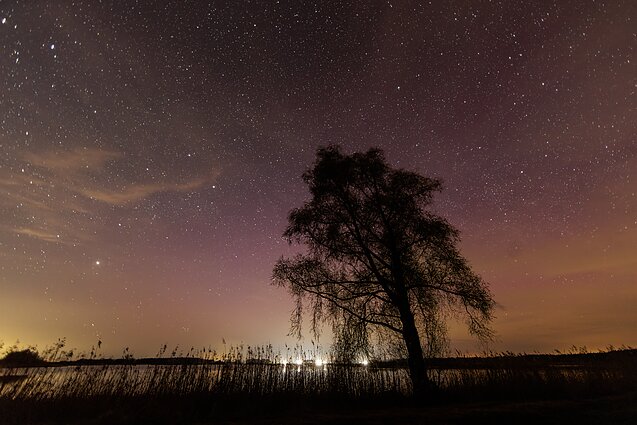
“Normally, the solar wind is weak, and only a small portion of its particles reach the upper atmosphere,” Dobrovolskas explained. “But when the Sun is near or at its maximum, short, powerful bursts of solar wind occur. These can make auroras extremely bright and visible even far from the polar regions. At such times, the auroras seen in Lithuania can rival those in Iceland or Norway.”
The previous solar cycle, which began in 2008, was among the weakest on record, leading scientists to expect similar behaviour from the current, 25th cycle. “However, this cycle turned out to be 20 to 25 percent stronger than forecast. While the difference may not sound large, it’s quite significant for scientists,” Dobrovolskas said.
Researchers still struggle to explain why the current cycle has been more intense. The causes of solar flares and other activity indicators lie deep beneath the Sun’s visible surface, in the movement of plasma currents that cannot yet be directly observed.

“Our understanding of solar structure and the processes within it allows us to predict general patterns of activity over long periods,” Dobrovolskas said. “But when it comes to specifics, such as predicting when and where a solar flare will occur, we can only forecast a few days in advance. Still, modelling techniques and both ground and space-based observatories are improving rapidly.”
The peak of the current solar cycle occurred in August 2024, and the Sun is now in a gradual decline phase.
“Solar activity seems steady only when viewed over months or years,” Dobrovolskas said. “In shorter periods, days or weeks, sudden bursts or calm intervals can still happen. Even during the decline phase, strong flares are possible.”
That means Lithuanians may still catch a glimpse of the aurora for some time yet. “Compared to last year, the likelihood will gradually decrease through the end of the decade,” Dobrovolskas said. “But both this year and next remain part of the heightened activity period, so we will certainly see the aurora more than once again.”
The next solar minimum is expected around 2030–2031.

Newsletter
Every Friday morning.