






Belarus still holds about 1,300 political prisoners, but the release of 52 detainees last week has triggered the first significant thaw in years between Minsk and Washington. Could this mark a turning point for Belarus and a potential realignment? Observers are sceptical.
Last Thursday, 51 freed prisoners unexpectedly arrived in Lithuania, some of them foreign nationals but also Lithuanian citizens. One released prisoner, the veteran opposition leader Mikalai Statkevich, refused to leave Belarus and returned home.
In exchange, the United States announced it would lift sanctions on the state-owned airline Belavia and expressed interest in reopening its embassy in Minsk.

“This is a clear signal that [President Alexander] Lukashenko’s regime is trying to recalibrate its relations with the West, especially the United States, while still keeping close to the Kremlin,” Maryna Rakhlei, a senior fellow at the German Marshall Fund, told LRT.lt.
Birthday greetings from the Trumps
The deal came during a visit by John Coale, a special envoy of President Donald Trump, who personally delivered birthday greetings signed by Donald and Melania Trump to Lukashenko. Analysts said the gesture amounted to tacit recognition of the Belarusian leader, who has clung to power through repression since the violent crackdown on mass protests in 2020.
“Few expected the US to move so proactively on sanctions relief and personal contacts with Lukashenko,” said Artyom Shraibman, a Belarusian analyst and founder of Sense Analytics Consultancy. “In essence, America recognised his legitimacy. This is a big change compared to how things looked in 2024.”

Former Belarusian diplomat Pavel Slunkin, now a visiting fellow at the Center for European Policy Analysis in Washington, said the release saves lives but falls short of the leverage Washington could apply. “Given the tools the US has against Lukashenko, they probably could have negotiated a better deal,” he said.
Belavia was chosen deliberately, analysts noted, since as a civilian airline the move can be framed as helping ordinary Belarusians. Still, some fear Russia’s embattled aviation sector could also benefit.
High-profile opponents remain behind bars
Despite the releases, Lukashenko continues to hold prominent opposition leaders including Viktar Babaryka, Maryya Kalesnikava and Andrei Pachobut. “He saves his most important cards for the endgame,” Shraibman said.

Reports suggest Minsk even struck several names from the US list of requested releases, particularly allies of Babaryka. Slunkin argued Lukashenko assigns a “price” to each prisoner and avoids freeing figures capable of uniting Belarusians abroad, as seen during the 2020 protests.
The Belarusian leader is believed to be eyeing broader concessions, including the lifting of European sanctions and restoration of trade routes through Lithuania. In return, he could offer to ease the migration crisis his government engineered and rein in the worst abuses by security forces.
The surprise continued when American military observers were invited to attend Zapad 2025, large-scale Russian-Belarusian military exercises. Minsk also said the drills would be moved further from the western border and involve fewer troops, an apparent effort to ease tensions.

Hopes of realignment premature
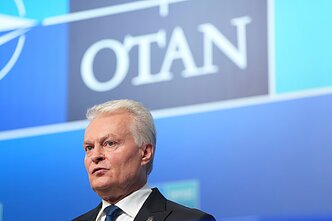
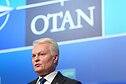
Washington may hope to pry Belarus slightly from Moscow’s grip, but Lithuanian President Gitanas Nausėda called the idea “naïve”. Slunkin agreed: “Lukashenko knows his survival depends on Russian support. Without it, his regime is doomed.”
Still, experts predict some European leaders may follow Washington’s lead in calling for sanctions relief. But Baltic and Polish officials are expected to block such moves, citing security risks from both Russia and Belarus.

For now, Lukashenko retains vast repressive power. “He could release all 1,300 prisoners tomorrow without any risk to his rule,” Slunkin said. “He has rebuilt the system so completely over the past five years that no one inside the country can threaten him as long as the Kremlin stands behind him.”
That means Belarus is unlikely to see renewed protests or genuine liberalisation – only a controlled illusion of reform designed to secure more concessions from the West.


Newsletter
Every Friday morning.