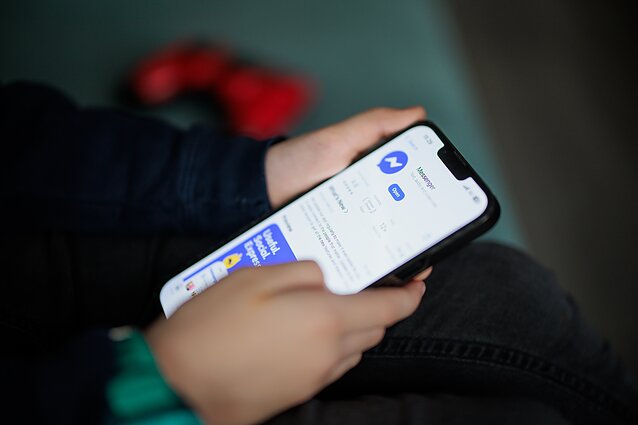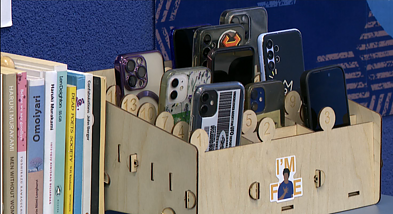















Lithuania’s Education Ministry has yet to adopt a nationwide rule on student phone use in schools, but an increasing number of schools are introducing their own bans, while others say they plan to continue using mobile devices in the classroom.
One of the first municipalities to restrict phones was Akmenė, in the north-west of Lithuania, which banned their use several years ago. Venta Gymnasium has operated phone-free for three years, and its headmistress credits the policy with boosting academic performance and reducing bullying.
“Last year we rose from 107th place to 30th in the national rankings,” said Daiva Gricienė. “Exam results are above both the national and district average. Students are more physically active, bullying has significantly decreased, and we have more students achieving very good and excellent results.”
In the northern town of Šiauliai, phones were previously banned only in individual classrooms. Starting this school year, most schools in the town intend to enforce schoolwide bans, with some doing so from September 1 and others introducing rules in the coming weeks.

“They interfered with learning,” said Stanislava Prazauskienė, director of Romuva Progymnasium. “Phones will be kept in backpacks and used only for safety reasons, for calling parents.”
Lithuania does not regulate student phone use at the national level, leaving schools to follow ministry guidelines. Some schools, instead of banning phones, integrate them into lessons.
“I use phones quite actively in my Lithuanian language classes,” said Mindaugas Malcevičius, a teacher at Sandora Progymnasium in Šiauliai. “We search for information, scan QR codes, work in teams. Our education system has many digital learning tools.”

Public opinion largely supports restrictions. A survey conducted in spring by Baltijos Tyrimai for LRT found that nearly 70% of Lithuanians favour banning phones in grades 1 through 10. Experts say students already spend several hours per day on screens.
“They no longer know how to communicate in person,” said school social worker Rasa Noreikienė. “Everything happens in chats, Snapchats and other apps, some of which I don’t even know. The influence is really negative.”
Several European countries, including France, Italy, Norway, Germany, Sweden and Finland, as well as the United Kingdom and parts of the United States, have already imposed school bans on mobile phones.

Newsletter
Every Friday morning.